
En esta noticia
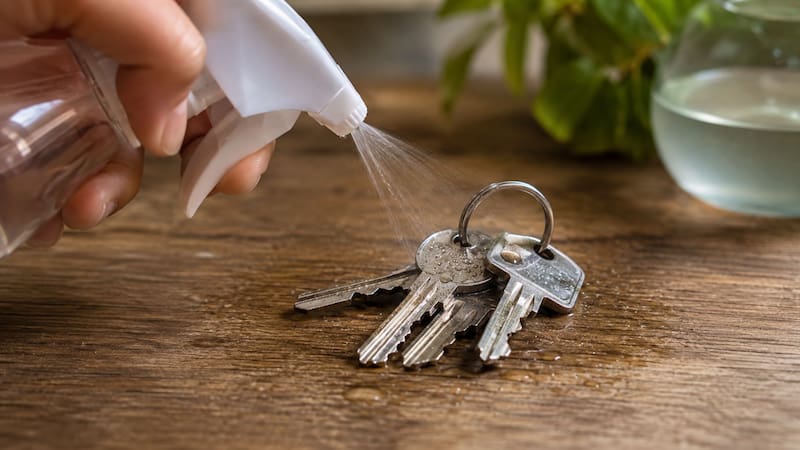
House keys are used every day and, over time, can collect dirt, stains, and signs of oxidation that affect their appearance. Although many people turn to conventional cleaning products to restore their shine, there is a household ingredient that can help treat that buildup.

This product contains acetic acid, a compound with cleaning properties that can act on certain residue buildup on metal surfaces.
To understand why this ingredient is used and what happens when it comes into contact with a rusted surface, it is necessary to know the chemical reaction it produces and the precautions to keep in mind before applying it.
What Spraying Vinegar on House Keys Is For
House keys are exposed to constant contact with hands, moisture and different surfaces, so they can accumulate dirt, stains and signs of wear over time. In some cases, they may also show traces of rust or lose the original shine of their surface.
That is why, to treat certain stains, one of the household products used is white vinegar.
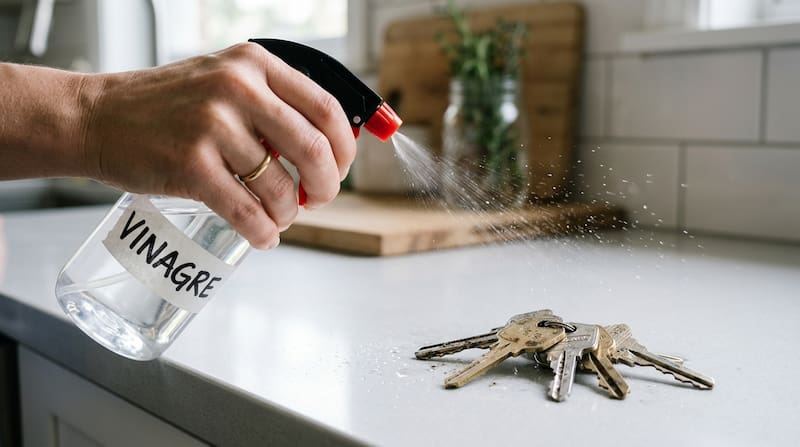
Spraying vinegar on house keys: What problem does it help solve?
According to New Mexico State University, vinegar contains acetic acid, a compound that works as a mild acidic cleaner. Using it can help remove rust stains, mineral deposits and the darkening that appears on metals such as brass and copper.
For that reason, it can be useful for cleaning certain metal keys that have surface stains.
How to Apply Vinegar to House Keys Step by Step
The process consists of simple steps:
- Put white vinegar in a spray bottle and spray the keys until the metal surface and grooves are covered.
- Let it sit for a few minutes to help loosen built-up dirt and stains.
- Gently scrub with a soft-bristle brush, paying attention to the small ridges.
- Rinse with a little water to remove any vinegar residue.
- Dry completely with a clean cloth or paper towel to prevent moisture from remaining.