
En esta noticia
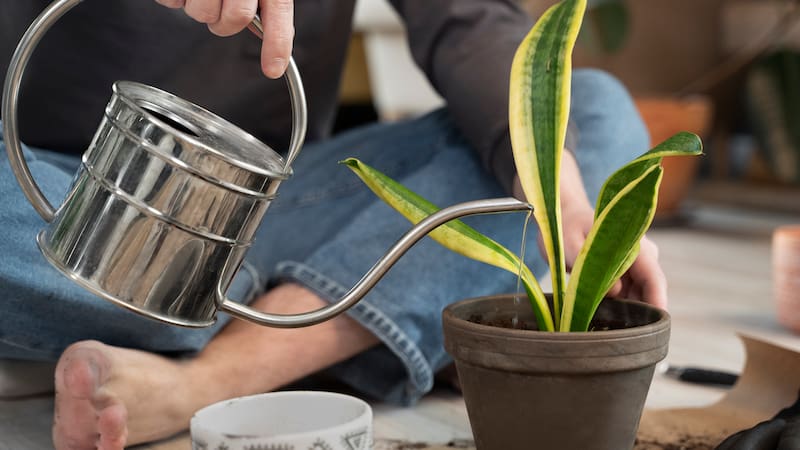
Snake plant, also known as Sansevieria, is one of the plants most chosen by those looking for a species that is easy to care for and resistant. Its ability to adapt to different spaces and its few maintenance requirements made it a common choice for keeping at home.
Now, a video shared on Instagram by the account raicessn caught the attention of gardening enthusiasts by showing a simple way to obtain new specimens from an adult plant.
The post explains two alternatives for reproducing mother-in-law’s tongue without having to buy a new one: separating the plant through its rhizomes or using its own leaves to generate new specimens.
How to reproduce mother-in-law’s tongue by division and obtain new plants
One of the techniques shown in the video is the division of the shoots that grow around the main plant. These small specimens appear over time and usually develop when the Sansevieria already occupies much of the available space in the pot.
To begin, it is necessary to carefully remove the plant and observe how the different shoots are connected. The connection is found beneath the soil, through a rhizome, which is the structure from which new roots and shoots develop.
The cut must be made precisely to separate each specimen without damaging it. A key point is to make sure that each new plant retains a segment of rhizome and its own roots. That way, the separated shoots will be able to continue developing independently once transplanted.
The trick to prevent snake plant cuttings from rotting
After separating the new specimens, there is an important step to encourage their development and reduce the chances of the cut deteriorating. Before placing them in soil, it is recommended to let the cut parts rest for one or two days, until the area can heal.
This waiting period helps reduce the risk of rot and other moisture-related problems. Once that time has passed, the cuttings can be planted in the chosen substrate.
If it is necessary to transplant immediately, as happens in the video, it is also possible to do so without first letting the cut dry. In that case, the recommendation is to not water for approximately one week.
The key is to avoid excess moisture during the first few days, as it can encourage rot and make it harder for the new specimens to develop their roots properly.
How to reproduce snake plant from its leaves
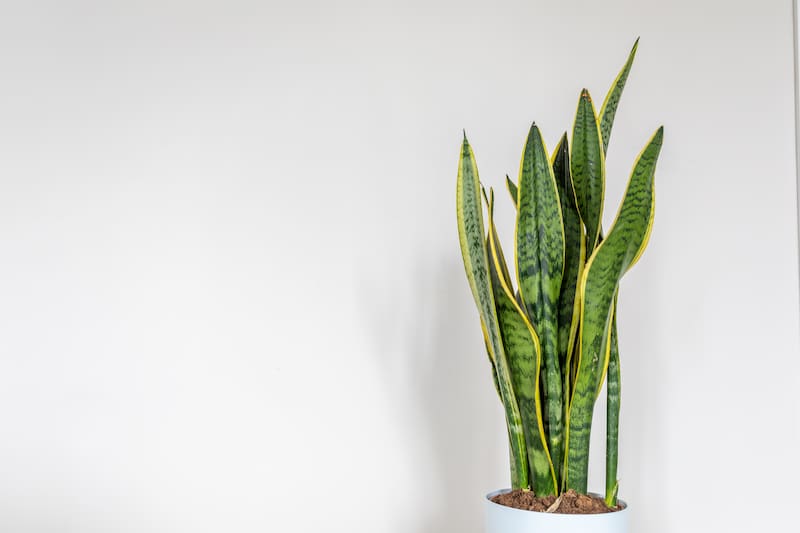
Another of the alternatives shown in the video for multiplying a Sansevieria consists of using its own leaves. The procedure requires selecting a healthy leaf and cutting it into different parts to obtain several cuttings.
In this case, there is a fundamental aspect that must not be overlooked: each fragment must retain the same orientation it had on the plant. The content creator sums it up forcefully: “If we put it upside down, it won’t work”.
For this reason, before starting the cuts it is advisable to identify which was the top of the leaf and which the bottom. She also advises preparing more than one cutting, since there is a possibility that some will not develop. According to her, roughly half may not thrive, so making several attempts increases the chances of obtaining new plants.
Once the fragments have been obtained, the procedure requires another waiting period. As with propagation through rhizomes, it is recommended to leave the cut parts for about two days so that the area can heal before placing them in water or directly in the substrate.

What happens with new snake plants
There is an important difference between the two reproduction techniques, especially for those who have a Sansevieria with particular characteristics and want to preserve them in the new specimens.
Cuttings obtained from a leaf can give rise to plants with a different appearance from the original. This is especially noticeable in varieties with variegated leaves, since the new shoots may grow completely green and lose some of the visible characteristics of the mother plant.
The situation is different when reproduction is done through division of the rhizome. In this case, the new plants retain the genetic characteristics of the plant from which they were separated, so it is the most suitable method when the goal is to preserve their original appearance.
Thus, with the same Sansevieria it is possible to obtain new specimens through different techniques. The choice of method will depend, among other factors, on whether the goal is simply to multiply the plant or to preserve the particular characteristics of the original variety.