
En esta noticia
Silver cutlery can lose its shine over time as its surface reacts with sulfur-containing compounds in the environment. The result is a dark layer of tarnish that can make spoons, forks and knives look worn even when they are otherwise in good condition.
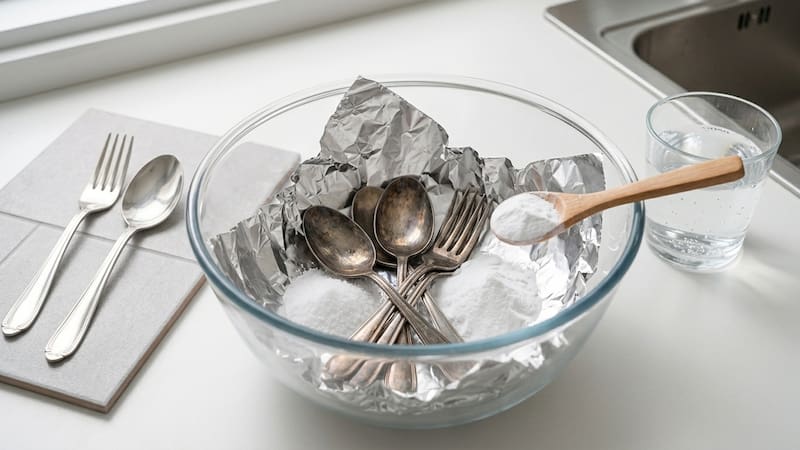
A simple household method combines aluminum foil, salt, baking soda and hot water to help restore the appearance of tarnished silver. The University of Arkansas System Division of Agriculture Cooperative Extension includes this technique in its guide to homemade cleaning products.
Unlike ordinary scrubbing, the method relies on an electrochemical reaction to help remove the dark discoloration from the silver’s surface.
Why aluminum foil, salt and baking soda can clean silver
The dark coating that develops on silver is often silver sulfide, which forms when silver reacts with sulfur-containing substances. Removing it can be difficult with water alone.
When silver comes into contact with aluminum in hot water containing salt and baking soda, an electrochemical reaction can take place. Aluminum acts as the material that gives up electrons, helping convert the tarnish back into metallic silver. The process can transfer sulfur from the silver to the aluminum rather than simply scraping away the surface layer.
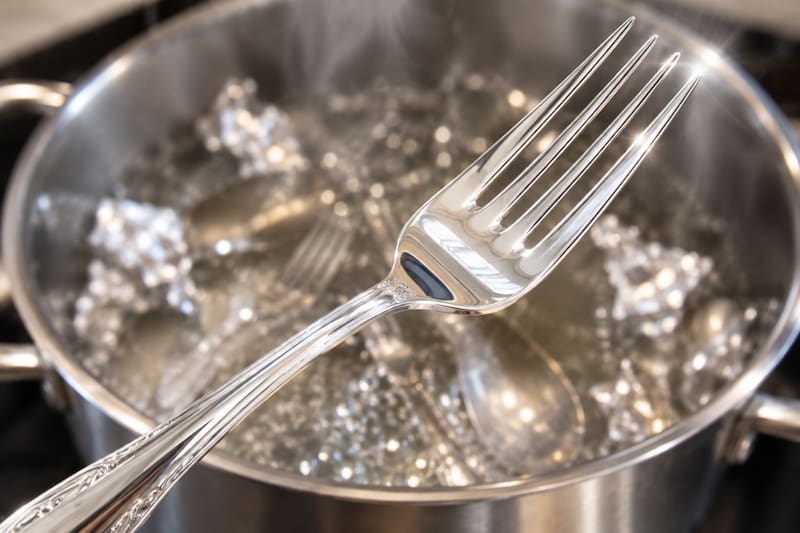
The salt and baking soda help the water conduct electricity, allowing the reaction to occur more effectively. Heat also helps the process move along.
This is why the technique differs from using baking soda as an abrasive. Instead of relying mainly on friction, it uses a chemical reaction to reduce the tarnish.
How to use aluminum foil and baking soda to clean silverware
The University of Arkansas Extension guide provides a simple recipe for treating tarnished silver with common household ingredients.
You will need:
- 1 quart of water (about 950 milliliters)
- 1 teaspoon of baking soda
- 1 teaspoon of salt
- A piece of aluminum foil
- A heat-resistant bowl or container
Follow these steps:
- Line the bowl with aluminum foil. Make sure the foil covers the inside of the container.
- Place the silver cutlery in the bowl. Arrange the pieces so they can make contact with the aluminum foil.
- Add the salt and baking soda. Sprinkle both ingredients into the container.
- Pour in boiling water. Use enough to cover the silverware, taking care to avoid splashes and burns.
- Let the silver soak. Leave it in the solution until the tarnish begins to disappear. The time required depends on how heavily the silver is tarnished.
- Remove, rinse and dry. Carefully take out the cutlery, rinse it thoroughly with clean water and dry it with a soft cloth.
The Extension recipe does not specify an exact soaking time. Check the silver periodically instead of assuming that every piece will need the same amount of time.
Which silver items can benefit from this method?
The technique is intended for tarnished silver items, including suitable silver spoons, forks and knives. It may also be useful for other solid-silver household pieces that have developed a dark coating.
However, not every item that looks silver is made entirely of silver. Silver-plated cutlery has a thin layer of silver over another metal, and repeated or unsuitable cleaning can damage its finish.
Avoid this method on pieces with glued components, delicate decorative details, gemstones or an intentionally darkened finish. Antique silver and valuable collectibles may require specialized care because removing tarnish can also remove a desirable patina.

What to keep in mind before cleaning silver
Although this method uses everyday ingredients, hot water can cause burns, so handle the container and cutlery carefully. Do not use the technique on items unless you know their material and finish are suitable.
The process also does not replace washing. Once the tarnish has been treated, rinse the silver thoroughly and wash it as appropriate before using it for food.