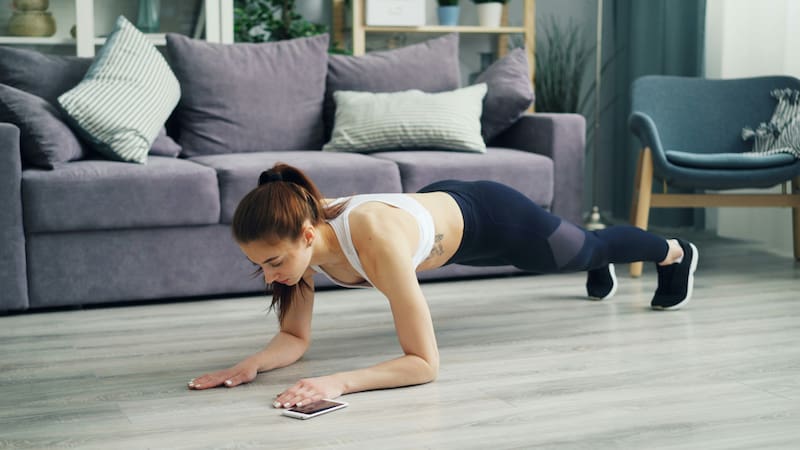

The plank, also known as the plank, is one of the most commonly used exercises in functional training routines because of its many benefits.
It is an isometric movement: instead of doing repetitions, the person holds a position for a set period of time.
While staying in that position, it works different muscle groups, including the abs, lower back, glutes and shoulders.
Regular practice helps build core strength and stability, a group of muscles that plays a key role in balance and body control.
It also helps improve posture and strengthen the midsection. Still, one of the most common questions is how long you should hold the position to get good results.


How long you should hold a plank, depending on your training level
Although many people think that lasting several minutes in a plank position is a sign of better fitness, duration is not the only factor that matters. Proper form is essential to getting the most out of the exercise.
Throughout the exercise, the body should stay aligned, with the abdomen engaged and the back in a stable position.
It is also important to avoid letting the hips drop or rise too much and to keep breathing steadily.
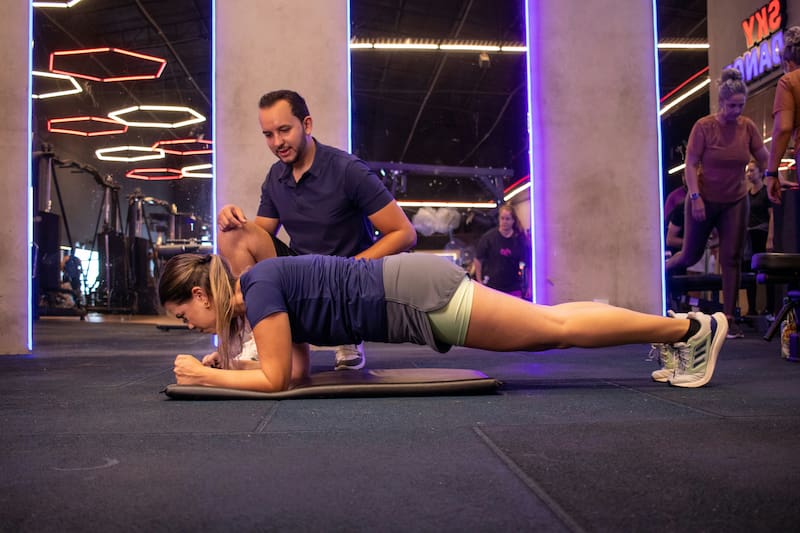
If fatigue makes it impossible to maintain proper form, it is best to stop the exercise and rest before trying again.
The time can vary depending on each person’s experience and fitness level. For beginners, sets of 15 to 30 seconds are recommended, with the goal of learning the technique and getting the body used to the effort.
As strength and control improve, the intervals can increase. At an intermediate level, people can hold the position for 30 to 45 seconds, while those who are more trained can usually hold it for 45 to 60 seconds.
When holding the position for a minute is no longer a challenge, there is not necessarily a need to make the exercise longer. One option is to add variations that increase the difficulty and allow you to work on stability from different positions.
Options include a front plank with side-to-side foot movements, a side plank with controlled arm movements and a reverse plank, which is done facing upward while supporting the body on the hands and heels.