
En esta noticia
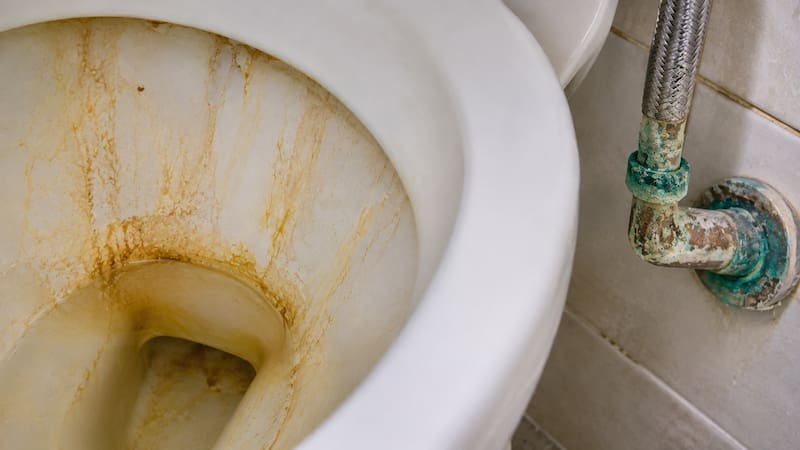
Not all stains that appear in the toilet are the same, and they are not all caused by poor cleaning. Some form from the buildup of minerals in the water, while others may be linked to pipe corrosion and the presence of metals.
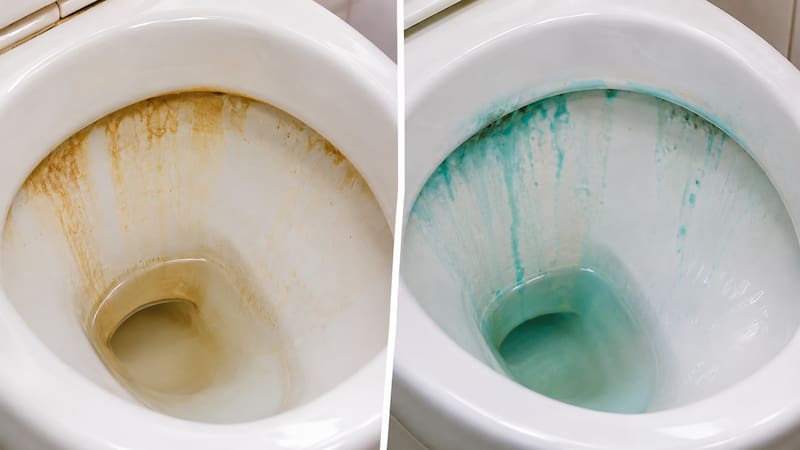
Figuring out whether it is brown or blue scale is important to determine what is causing the residue and how to remove it without damaging the toilet surface.
What causes brown scale and how do you remove it?
Brown scale usually forms from the buildup of minerals in the water, especially iron and manganese deposits. When these elements come into contact with oxygen, they can oxidize and create brown, reddish or orange stains.
To remove them, you can use white vinegar or a specific limescale remover. It is recommended to apply it to the affected area, follow the dwell time indicated by the manufacturer and scrub with a brush to remove the deposits. If the stains are stubborn, it may be necessary to repeat the process.
How does blue scale form, and what products can be used to remove it?
Blue or greenish stains may be related to the presence of copper in the water. This metal can leach from pipes due to corrosion and leave residue when the water comes into contact with different surfaces.
To treat these stains, you can make a paste with equal parts flour, white vinegar and salt. Apply it to the affected area, let it sit for an hour, and then scrub with a brush. Finally, remove the residue with warm soapy water.

Where can you find each one?
Brown scale usually builds up at the toilet waterline, around the drain and in areas where water sits still or evaporates. It can also appear on faucets, showers and other bathroom fixtures.
Meanwhile, blue or greenish stains can be found around water outlets, inside the bowl and near areas where water comes into contact with surfaces. If they keep appearing, it is a good idea to check the pipes and test the water quality to determine whether copper is present.