
By Pedro Bianco
En esta noticia
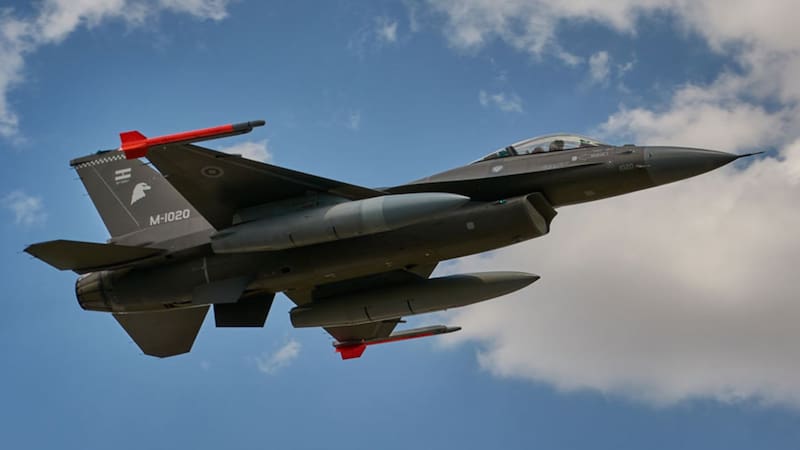
The United States took the formal step that unlocked Peru’s biggest air modernization in decades: the State Department approved the sale of F-16 Block 70 fighter jets, the most advanced version of that line.

That authorization was the starting point for a process that later included a selection, an initial payment, a major political crisis and, more recently, the approval of funding for a second batch of aircraft.
Peru’s Congress approved funding to buy a second batch of 12 F-16 Block 70 fighter jets, which will complete a total fleet of 24 state-of-the-art combat aircraft. The decision, taken in early November 2026, unlocks the final stage of the deal.
What the U.S. State Department approved
The key fact behind the entire deal is concrete and verifiable: in September 2025, the U.S. State Department approved a foreign military sale of F-16 Block 70 aircraft to Peru and notified Congress through the Defense Security Cooperation Agency (DSCA).
That is the formal step with which Washington authorizes a deal of this kind when it involves U.S. military technology: it sets a price ceiling and gives the green light for the buyer to move ahead. In practice, it was the approval that opened the door to everything that followed.
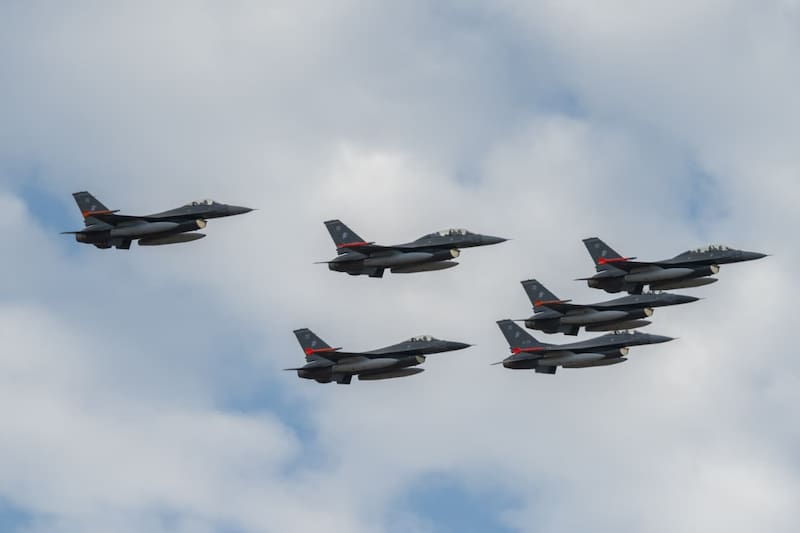
The full program calls for 24 F-16 Block 70 fighters for the Peruvian Air Force (FAP), split into two lots of 12 aircraft each. Understanding this two-batch structure is key to avoiding confusion over the figures and payments, which moved forward in stages.
The first lot and the first payment
In April 2026, Peru completed the first phase of the deal: it officially selected the F-16 Block 70 over the Swedish Gripen, moved ahead with the signing of the agreement for the first lot of 12 aircraft, and made a first payment of $462 million, equal to about 13.5% of the program’s total value. It was the moment when the purchase went from paper approval to a real financial commitment.
The pushback: the political crisis that followed
What followed immediately was a political storm. Almost at the same time as that first payment, Peru’s then-interim president, José María Balcázar, raised the idea of deferring the decision to the next government, arguing that a transitional administration should not commit such a large sum.
The reaction was immediate: the defense and foreign ministers resigned, and the United States issued diplomatic warnings over what it saw as a “bad-faith” negotiation. For several weeks, the deal was under strain. Still, it did not collapse: the first-lot agreement continued, and the purchase stayed on track.
The second lot: the latest approval
The latest development confirms that the deal not only survived the crisis, but expanded. On Nov. 1, 2026, Peru’s Congress approved a supplemental credit that includes funding for the first installment of the second lot of 12 F-16 Block 70 fighters, worth about 1.197 billion soles, or roughly $345 million.
With this step, Peru is moving ahead with the purchase of the 12 aircraft still needed to complete the program’s 24 jets. According to the report, that first installment would be paid in the following weeks and the contract with Lockheed Martin for the second lot would be signed before the end of the year, by December at the latest.
When the aircraft would arrive
As of now, Peru has not received any of these fighters yet. These are aircraft that still have to be built, and the first deliveries are scheduled for around 2029, with full operational capability expected in the early 2030s. In other words, for now the deal is moving forward in terms of contracts, payments and production; the aircraft will not reach Peruvian territory for several years.