
En esta noticia
Latin America has gained a rail project with Chinese involvement. A state-owned company from the Asian country set up a factory on March 25, 2026, in Brazil to produce dozens of trains for one of the region’s most important subway systems.
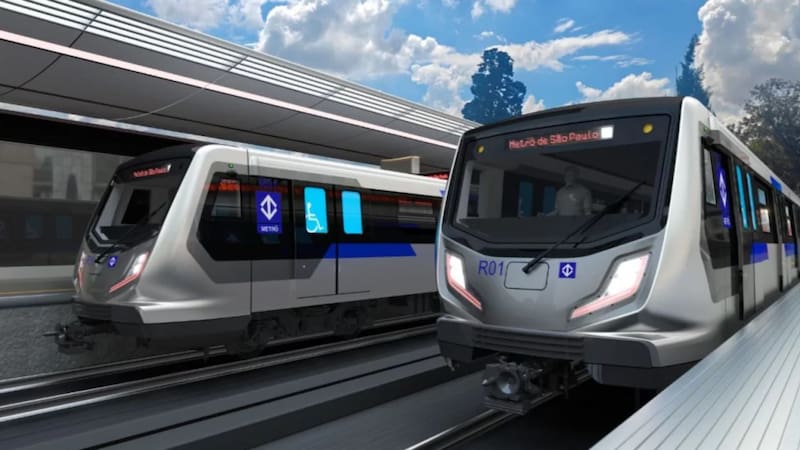
It is CRRC, which will be responsible for building 44 train sets for the Sao Paulo Metro. The trains will be assigned to three lines and will be able to carry up to 1,800 passengers each.
The initiative also aims to strengthen Brazil’s rail industry, with local production and new investment in the sector. The first deliveries are scheduled for 2027.
What the factory China set up in Brazil is like, and what trains it will produce
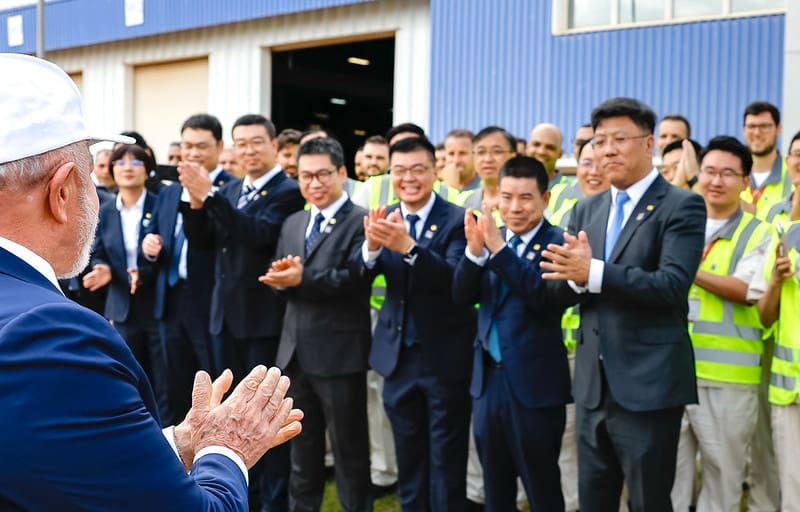
The Chinese state-owned company CRRC launched the installation of its rail plant in Araraquara, in the state of Sao Paulo, Brazil. On March 25, 2026, Brazilian President Luiz Inacio Lula da Silva visited the facility, which occupies part of a former plant belonging to South Korean company Hyundai Rotem. The project is part of a strategy to revive local rail production and strengthen the country’s transportation industry.
From this factory, CRRC will produce 44 train sets for the Sao Paulo Metro, under a contract worth about 3.1 billion reais. Each train will have six cars and will be able to carry up to 1,800 passengers, with a top speed of 100 kilometers per hour. In all, the 44 train sets will total 264 cars.
Which Sao Paulo Metro lines the 44 trains will run on and when they will start operating
The new train sets will be assigned to Sao Paulo Metro lines 1-Blue, 2-Green and 3-Red, according to the contract signed between the Metropolitan Transportation Secretariat and the CRRC Sifang Brasil consortium. Adding the trains will help bolster service on these three lines, especially Line 2-Green, which is undergoing an expansion to new stations.
According to information released by the Araraquara City Council, the first deliveries are scheduled for 2027. The new trains will have high-performance motors, a top speed of 100 kilometers per hour and systems designed to improve service frequency, passenger comfort and reliability.