
En esta noticia
The Donald Trump administration tightened the standards for obtaining U.S. permanent residency by changing immigration policy on “public charge.” The measure, pushed by the Department of Homeland Security (DHS), eliminates a 2022 regulation that limited the factors officials could consider when deciding whether a foreign national might depend financially on government assistance.
The new rule was announced on July 16, 2026, published in the Federal Register on July 20 and took effect on September 18, 2026. From that date on, USCIS has broader discretion to review the financial and personal circumstances of green card applicants and may consider a wider range of public benefits when determining whether they could be a burden on the U.S. government.
Benefits that may be included in that review include Medicaid, SNAP food stamps and certain housing assistance programs and financial aid.

What changed at USCIS in green card approvals
The Donald Trump administration scrapped the “public charge” regulation set by Joe Biden’s administration in 2022, which had limited the criteria immigration officials could use to evaluate permanent residency applicants. The measure took effect on September 18, 2026 and gave officials broader discretion to determine whether a foreign national could become an economic burden on the U.S. government.
One of the key changes is that USCIS no longer limits the review mainly to people who received cash assistance to support their income or who remained in state-funded institutions for long periods. Officials can now consider other means-tested public benefits and review each applicant’s individual circumstances. The new rule applies to adjustment of status applications (Form I-485) filed on or after September 18, 2026, since benefits received before that date remain subject to the previous standard.
What public benefits can affect immigrants applying for permanent residency
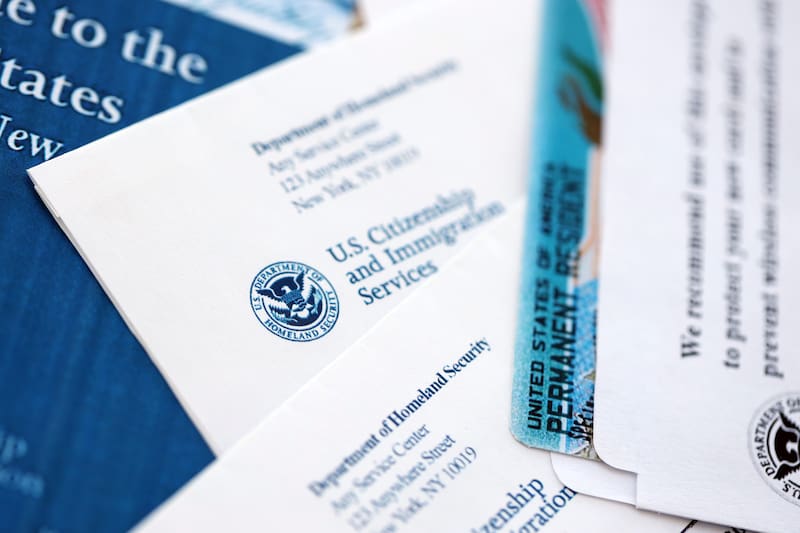
Among the benefits USCIS can consider under the new guidelines are SNAP food assistance, housing aid, certain Medicaid services, cash assistance and financial aid for college. The agency can also review other similar income-based programs.
However, officials must assess each case individually and consider the totality of the foreign national’s circumstances. The change does not take away the right of people who qualify to apply for or receive public assistance; it changes how certain benefits may affect an immigration review.

Who the new public charge rule affects and what factors USCIS reviews
The rule applies to most foreign nationals applying to adjust status to obtain permanent residency, including those filing family-based petitions, such as spouses, children or parents of U.S. citizens, and those seeking a green card for employment reasons. However, some categories are exempt, including refugees and asylees.
To decide whether a foreign national may be considered a public charge, USCIS must weigh five factors established by law: age, health, family status, financial resources, financial situation, and education and job skills. It may also consider the Affidavit of Support (Form I-864), under which another person agrees to provide financial support to the applicant. The agency reviews all of these factors together, so having a sponsor or not having received public assistance does not, by itself, guarantee approval of residency.