
En esta noticia
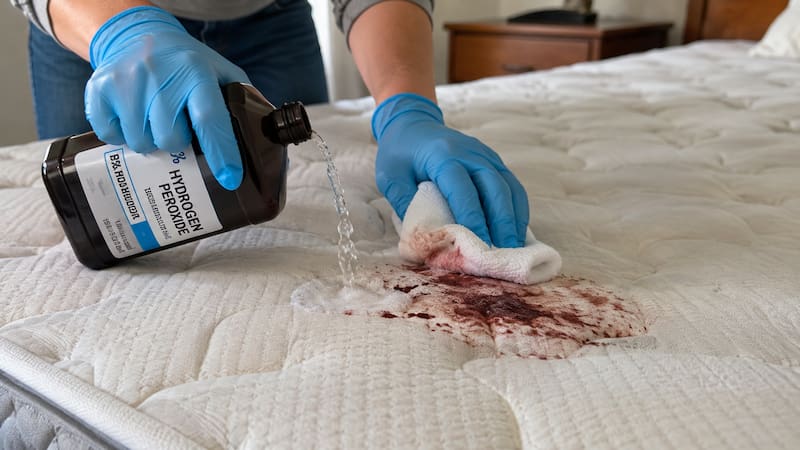
A bottle of 3% hydrogen peroxide, cold water and a clean towel are usually enough to get blood out of a mattress. The routine is simple enough for parents to teach their children, especially for the nosebleeds and period stains that tend to happen overnight.
Hydrogen peroxide is sold as a 3% solution at most grocery stores and pharmacies. Stronger versions exist, but the 3% bottle is the most common one and the right one for this job.
The method works because of a chemical reaction that starts the moment peroxide touches blood. That means less scrubbing and less risk of damaging the mattress fabric.

Why does hydrogen peroxide work on blood stains on a mattress?
Hydrogen peroxide is water with an extra oxygen atom attached, which makes the molecule unstable and quick to break apart. Blood speeds that up dramatically because it contains catalase, an enzyme found in red blood cells and most other cells in the body.
When the two meet, catalase splits the peroxide into water and oxygen gas almost instantly. That’s the white fizz on the stain. The bubbles help push blood out of the fibers so it can be blotted away.
Peroxide also oxidizes the pigment that gives blood its red color, which lightens whatever is left. Because that’s a mild bleaching effect, it’s worth testing first on a hidden spot of a dark or patterned mattress cover.
Temperature matters, too. Blood is full of proteins, and heat makes them bond to fabric the way an egg sets in a hot pan. That’s why every step uses cold water and why a hair dryer is off the table.
How do you remove blood from a mattress with hydrogen peroxide?
Before starting, open a window or turn on a fan so the room is well ventilated. Then strip all the bedding off the mattress and follow these steps:
- Pour a few teaspoons of hydrogen peroxide directly onto the stain.
- Blot up the foam with a clean cloth as it forms.
- Let the peroxide sit for about 15 minutes.
- Dampen a clean microfiber towel with cold water and dab the area to rinse it.
- Blot, don’t rub, to pull out as much moisture as possible.
Let the spot air-dry. If it needs to dry faster, aim a fan at it. Don’t put the sheets back on until the fabric is completely dry, because trapped moisture can lead to mold.
Stubborn stains may need a second round. Another common approach is to mix hydrogen peroxide and dish soap in a 2-to-1 ratio and repeat the same steps.
Why should parents teach children the hydrogen peroxide trick for blood on the mattress?
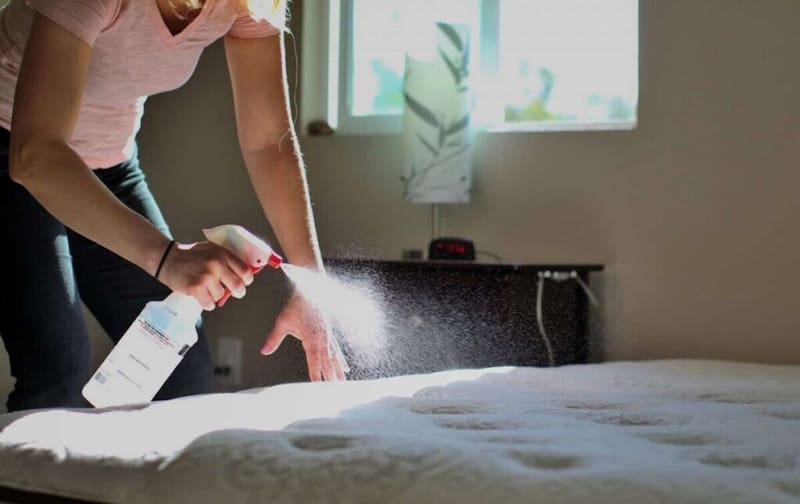
Nosebleeds and period leaks often happen at night. A child who knows what to do can treat the stain before it dries, without waking anyone up or feeling embarrassed about it.
Tweens and teens can usually learn the steps after one walkthrough. Keeping a bottle of 3% peroxide and a microfiber towel in the bathroom or a nightstand drawer makes it easy to start right away.
Younger kids should leave the peroxide to an adult. It can irritate the eyes and shouldn’t be swallowed, so it belongs out of reach of small children.
The one rule worth repeating at any age is no bleach. It can damage mattress fibers and irritate the lungs when inhaled, however bad the stain looks. A washable mattress protector also helps: it catches stains, sweat and dust mites, so the next cleanup is just a trip to the washing machine.