

En esta noticia
In Taos, New Mexico, United States, architect Michael Reynolds, 81, has spent decades developing an idea that challenges traditional construction: turning used tires, cans and bottles into homes capable of taking advantage of natural resources.
His proposal, known as Earthship, seeks to reduce dependence on conventional services through its own electricity systems, rainwater harvesting and food cultivation.

How the eco-home project began
The initiative began after Reynolds graduated in Architecture from the University of Cincinnati in 1969. Concerned about the buildup of garbage and the difficulties in accessing affordable housing, he began experimenting with elements that normally ended up as waste.
His first innovation was a block built with empty steel and tin cans, joined with wire. In 1973 he obtained a patent related to one of these components and continued refining his designs over the following decades.
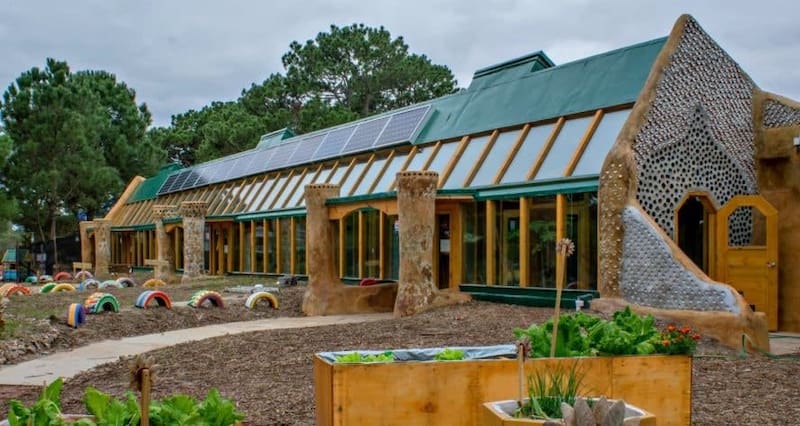
Reynolds’ first constructions were much simpler than the current ones. Over time, he incorporated tires filled with compacted earth to build sturdy walls that also help regulate indoor temperature.
The idea consists of making use of abundant materials and reducing waste. The organization describes these components as “structural, load-bearing and retaining walls made with rammed earth clad with steel-reinforced recycled tires”.
Cans and glass bottles can also be part of the walls. In the latter case, they are integrated with bonding materials and can create decorative effects that let light through.
How Earthship homes work
Earthship homes are designed to take advantage of natural and recycled materials, as well as renewable energy sources. According to the concept developed by Reynolds, construction is organized around six principles: use of recycled and natural materials, passive heating and cooling, solar or wind power generation, food production, water harvesting and wastewater treatment.
- Solar panels allow electricity to be generated.
- The orientation of the windows and the thermal mass of the walls help retain heat. Some models also incorporate buried pipes to promote natural cooling.
- Rainwater is collected from the roof and stored in cisterns for later filtration.
- Attached greenhouses make it possible to grow foods such as tomatoes, peppers, cucumbers and aromatic herbs.

How much it costs to build an Earthship home in the United States and where they can be found
The price depends on the model, size, location and features of each project. The organization published these initial reference values (it is necessary to confirm what each final budget includes):
Among the models mentioned are Refuge and Encounter, with a reference value of approximately $350 per square foot; the Unit model, at about $400; and the Global Earthship, at approximately $425 per square foot.
It is worth noting that the project, which originated in New Mexico, went beyond the United States and reached France, Germany, Mexico and Canada.