
En esta noticia
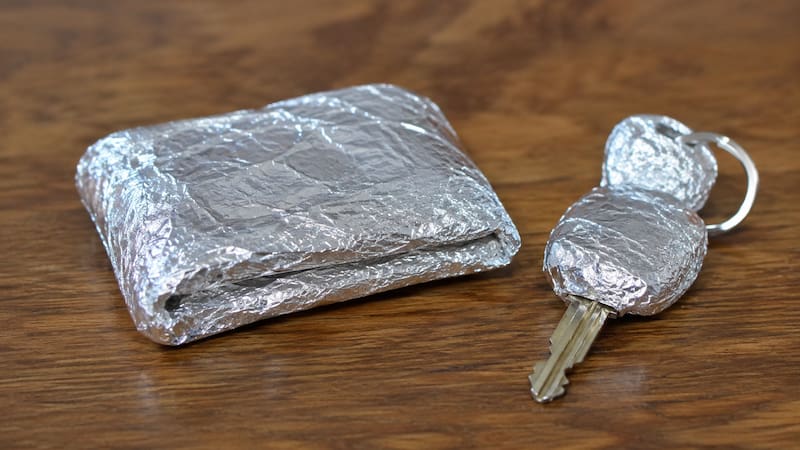
Although it may seem like an uncommon habit, wrapping the wallet and car keys in aluminum foil is a practice that has begun to gain popularity among those looking to protect their belongings from certain wireless technologies.
The reason has nothing to do with how smart keys and cards with RFID or NFC technology work, whose systems can emit or receive radio signals at short range.

Why do they recommend wrapping car keys in aluminum foil?
Many smart keys use a radio signal so the vehicle can detect that the driver is nearby and automatically unlock the doors, without needing to insert the key into the lock.
However, some criminals use a technique known as relay attack or relay attack, which consists of capturing and amplifying the signal emitted by the key to trick the car into believing that the original device is very close.
Completely wrapping the key with aluminum foil can help block that signal, since the material acts in a similar way to a Faraday cage, making it harder for electromagnetic waves to be transmitted outward.
For this method to be more effective, the key must be completely covered, since any open space can allow some of the signal to pass through.
What happens if you wrap the wallet in aluminum foil?
In the case of the wallet, the objective is different, although the principle is the same.
Many credit and debit cards incorporate RFID or NFC technology, which allows contactless payments through a proximity chip.

Wrapping the wallet or the cards in aluminum foil, it can make it harder for electronic devices that try to detect the chip information at short range to read those signals.
Precisely for that reason, there are now wallets with RFID blocking, specifically designed to limit the transmission of these signals without needing to use aluminum.
Does this trick really replace other security measures?
Although aluminum foil can offer an additional layer of protection in certain situations, this method does not replace other security measures.
For that reason, the method is recommended to reduce the exposure of these devices to certain wireless signals, but not as the only strategy to avoid possible attempts at unauthorized access or reading.