
En esta noticia
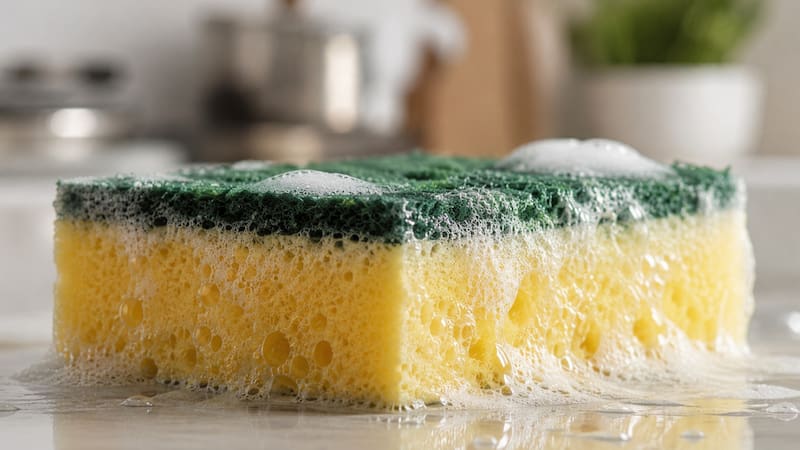
Out of habit, convenience or even to save money, many people use the same sponge for months to wash all the utensils after eating.
However, the sponge can remain wet between one wash and the next, a condition that favors the survival of certain microorganisms.
A study by scientists at the Norwegian Institute of Food, Fisheries and Aquaculture Research (Nofima) compared the presence of bacteria in sponges and brushes and concluded that the second option may be a more hygienic alternative.

Kitchen sponges: what the researchers found
The study, published in the Journal of Applied Microbiology, analyzed sponges and brushes used by people in Norway and Portugal. The researchers’ idea was to identify the quantity and diversity of bacteria present in these items and study how long Salmonella could survive under different conditions.
The results showed a curious difference: the used brushes had lower levels of bacteria than the sponges.
What bacteria were found in kitchen sponges?
The study identified a group of bacteria that appeared regularly in both sponges and brushes.
Among the most frequent were Acinetobacter, Chryseobacterium, Enhydrobacter, Enterobacteriaceae and Pseudomonas. The scientists clarified that they were, mostly, non-pathogenic bacteria.
So, why did the finding draw attention? Because these bacteria show that the sponge does not remain completely clean after washing dishes. On the contrary, it can become a place where different microorganisms remain and accumulate, because it retains moisture and organic matter residue.
The researchers indicated that some of these bacteria, such as Pseudomonas and Acinetobacter, are widespread in the environment and can be found in water, soil and food.
What happens with Salmonella and sponges
Beyond analyzing the bacteria present in utensils used by people, the researchers carried out specific experiments with Salmonella, a bacterium that can indeed cause foodborne illness.
In those tests, the amount of Salmonella did not decrease in the sponges, regardless of how they were stored. In contrast, when the contaminated brushes were left to dry overnight, the amount of bacteria decreased.

Why it is not advisable to leave the sponge wet, according to the researchers
The sponge retains water and can remain wet for a long time, while the brush drains more easily and dries faster.
One of the scientists explained that everyday sponges practically never dry out, and that is why bacteria survive better in them.
One of the study’s main conclusions was that brushes can be a more hygienic alternative than sponges for washing dishes.
While the sponge absorbs water and can remain wet for quite some time, the brush allows the liquid to drain more easily and dries faster.

The practices they recommend adopting to prevent microorganisms from remaining on utensils
A previous study by the same Nofima team, with laboratory experiments and a survey of nearly 10,000 consumers from ten European countries, evaluated different ways of cleaning sponges and brushes.
The study determined that washing them with bleach, boiling them, or cleaning them in the dishwasher produced more efficient results in reducing Salmonella.
The scientists also recommended replacing or cleaning those that may have been in contact with pathogenic microorganisms, for example after washing utensils that touched raw meat.