
By Julián Kaper
En esta noticia
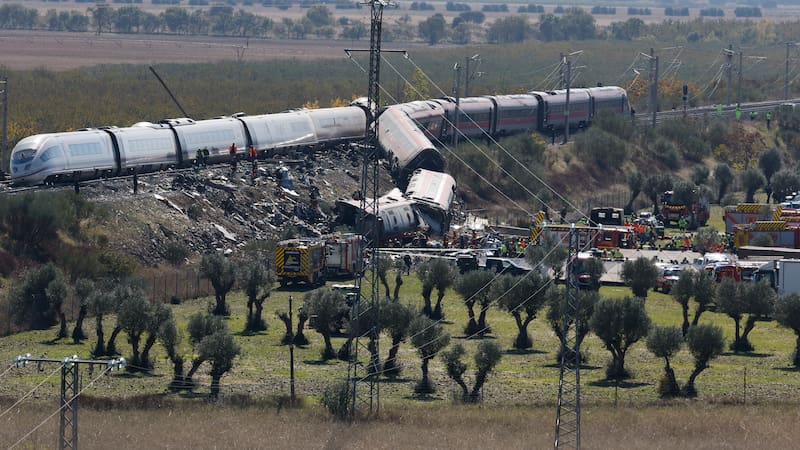
At least 68 people were killed, 58 were injured and 15 remain in critical condition after a high-speed train collision involving more than 500 passengers was reported Wednesday near Toledo, according to updated information from the regional government of Castilla-La Mancha, Spain.
This is the second high-speed train accident in 10 months, after two trains, the Iryo 6189 and the Alvia 2384, collided on Jan. 18 in Adamuz, in Spain’s Cordoba province, leaving 46 dead and 292 injured.
Spanish Prime Minister Pedro Sanchez declared three days of national mourning over the train collision and pledged a thorough investigation into the cause of the tragedy. It was also reported that firefighters from the Alcazar de San Juan and Orgaz stations were working at the scene, along with Civil Protection teams from several nearby towns, three medical helicopters and two mobile intensive care units.


Train crash in Spain: The cause under investigation
The first indications, according to Civil Protection, point to the Iryo train being stopped on the tracks and the AVE train hitting it from behind, causing the cars to tumble down an embankment. The Iryo train driver had begun speaking with the Adif control center to resume the trip, although 10 minutes later, before it could get moving again, it was hit by the Renfe train, sources close to the company told EFE.
Those sources said the Iryo train had stopped at 8:30 a.m. because the LZB safety system had failed, but after the ASFA signaling system was activated, it resumed its trip. However, after encountering a “blank signal,” the Iryo train stopped and, “as the protocol requires,” began talks with the control center to manage restarting its journey. Before that could happen, at 8:48 a.m., it was struck by the AVE train.
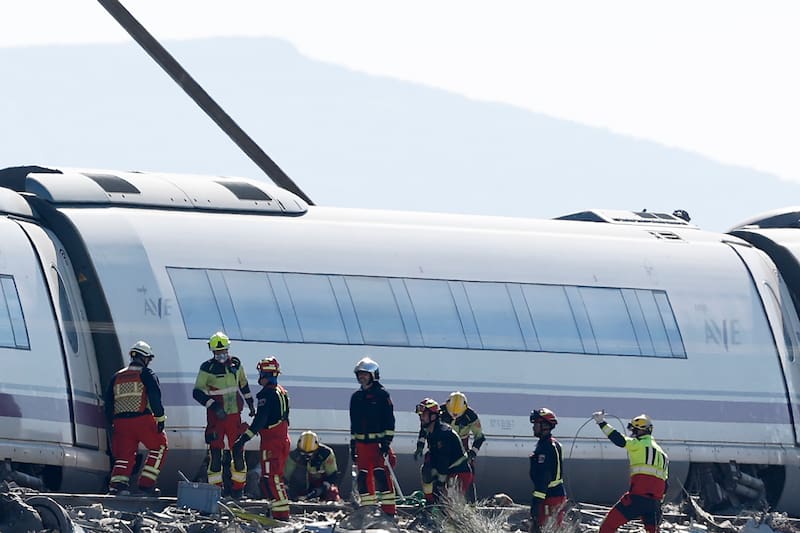
At a news conference in Madrid, Transport Minister Oscar Puente said a failure in the computer communications system deactivated the LZB rail safety control system, causing trains to stop automatically along a 63-kilometer stretch of the line.
However, the control center later authorized a Renfe train to resume its journey despite the red signal that barred it from continuing. The minister said that an “inexplicable” decision by a rail control center to allow a train to keep moving despite a red signal could be the cause of the deadly collision.
Spain’s Transport minister rules out resigning
“Right now, what I’m thinking about is clarifying this. I’m not thinking about myself,” Puente said when reporters asked whether he planned to resign or had offered his post to the prime minister after two serious accidents hit Spain’s high-speed rail network in just 10 months, the Adamuz crash and the Toledo crash.
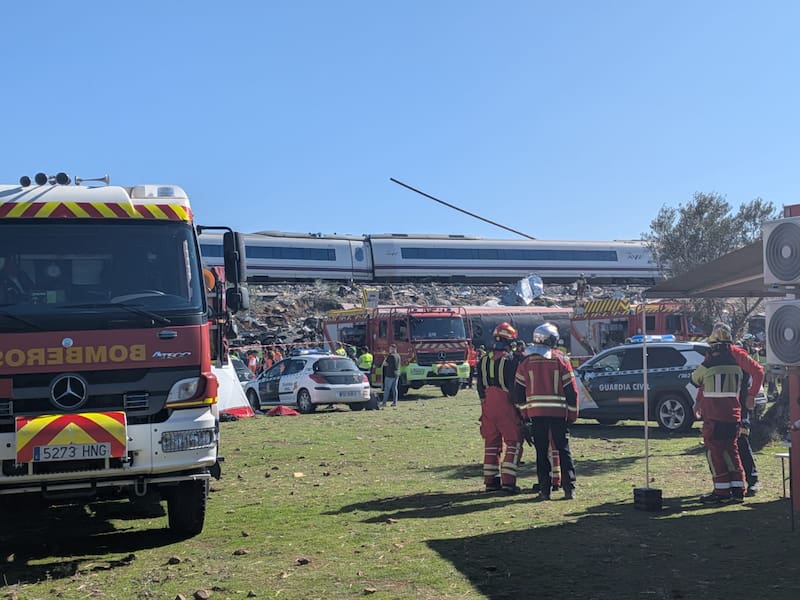
The official defended the safety of the rail network. “Our system is reliable and safe within certain limits, which include the limits of the equipment and human action, which also plays a role. There are many systems, rules and protocols that in this case are very clear. Failures can happen, but we have a railway system that is safe and comparable to that of the countries around us,” he concluded, RTVE reported.