
En esta noticia
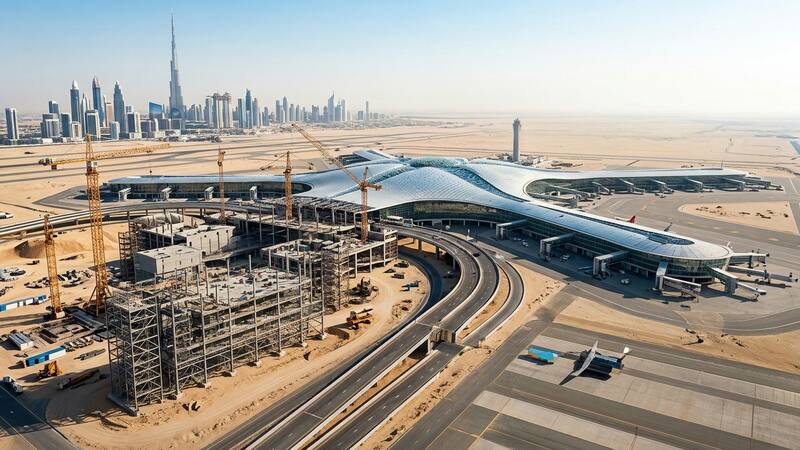
Dubai has launched one of the most ambitious infrastructure projects of the coming years: the expansion of Al Maktoum International Airport.
The project is located south of the city and seeks to turn the current secondary airport into Dubai’s main air connection hub and one of the most important in the world.
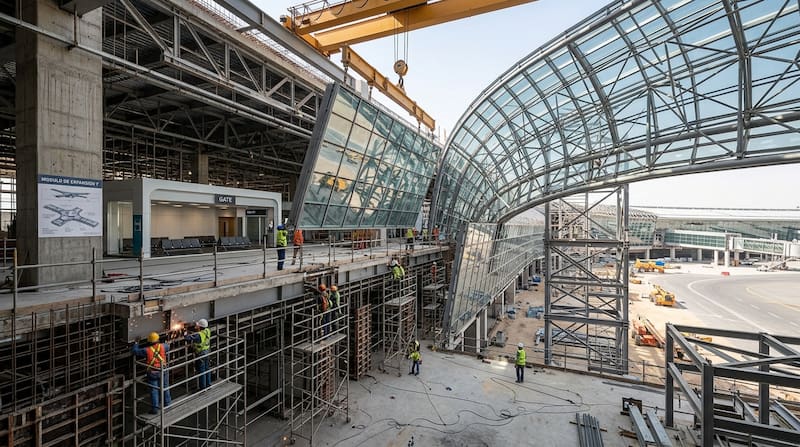
The plan covers an area of 70 square kilometers and a maximum capacity of 260 million passengers a year. The first works include the new terminals, boarding areas, and automated systems for baggage transfer.
The planned investment reaches 35 billion dollars, making the project one of the most expensive airport developments in history.


What Dubai’s new airport will be like
The final design will include five parallel runways and four large terminals. It will also have commercial spaces and green areas integrated into futuristic-looking architecture.
According to Architectural Digest, the project is led by the London firm Leslie Jones Architecture, which designed a structure with large white canopies and spacious interior areas.
The complex, known as Dubai World Central, will also be connected to the Dubai Metro network and to high-speed rail systems.
The infrastructure will also have sectors for executive and private jets, royal aircraft, and cargo operations. The projected capacity for this last segment will be up to 12 million tons per year.
When will Dubai airport be finished
The first stage of construction will take around ten years and will allow capacity for 150 million passengers a year.
However, the full completion of the megaproject will take several decades. According to the planned schedules, the works could extend until 2057.
The final goal is to progressively move operations from the current Dubai International Airport, known as DXB, to Al Maktoum.
DXB received close to 92 million passengers during 2024. Against that figure, the new infrastructure will have a capacity almost three times greater once it reaches full development.
Paul Griffiths, CEO of Dubai Airports, explained that keeping two major airport hubs so close to each other is not convenient and anticipated that DXB services will be moved to the new complex when it has the necessary capacity.
Why will it be the airport with the world’s largest passenger capacity?
Al Maktoum International Airport will have a capacity of more than 260 million passengers per year when it reaches its final development stage. The project includes five runways, four large terminals and 400 boarding gates, in addition to automated systems to speed up passenger and baggage movement.
To understand the scale of the project, the busiest airport in the world is currently Hartsfield-Jackson in Atlanta, in the United States. During 2025 it received 106.3 million passengers, while Dubai International Airport came second with 95.2 million.
The comparison also makes it possible to distinguish capacity from area. King Fahd International Airport, in Dammam, Saudi Arabia, is the largest in the world by land area. However, in 2025 it received 13.7 million passengers and plans to expand its capacity to 32 million a year, a figure far below the one projected for Al Maktoum.
By contrast, Al Maktoum aims to far exceed those figures: its final capacity will be more than 260 million passengers per year. The first expansion stage will allow it to handle up to 150 million passengers a year and, later, the complex will reach its maximum capacity.
In this way, Al Maktoum will not be the world’s largest airport by area, but the one with the largest projected passenger capacity.
Dubai South: the new urban hub around the airport
The airport construction is also part of a much broader urban development project in the area known as Dubai South.
Authorities expect growth in this area to create new jobs and housing for around one million people.
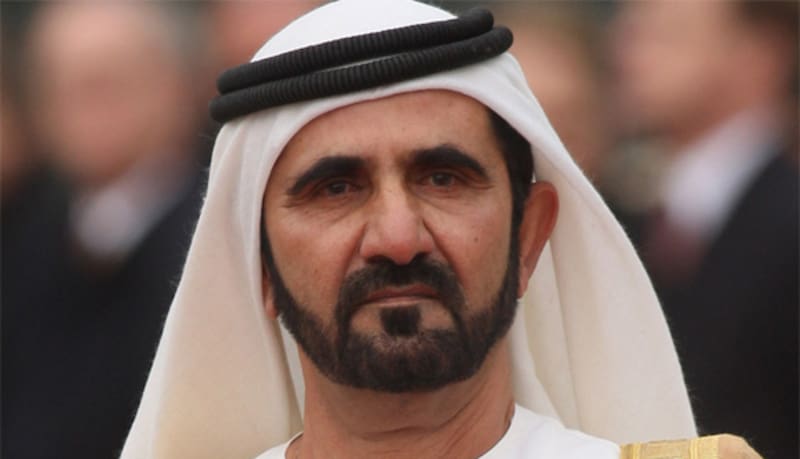
Sheikh Mohammed bin Rashid Al Maktoum also highlighted the project on his social networks and presented it as infrastructure designed for future generations.
In addition to expanding air transport capacity, the new airport aims to strengthen Dubai’s position as a connection point between Asia, Europe and Australia.
The infrastructure currently operating in Al Maktoum began operating in 2010, mainly for cargo flights, and already has runways prepared to receive large aircraft such as the Airbus A380.
With the incorporation of automated baggage systems and technologies aimed at speeding up immigration checks, the project seeks to completely transform the airport experience and concentrate a large part of Dubai’s air traffic in a single complex.