
En esta noticia
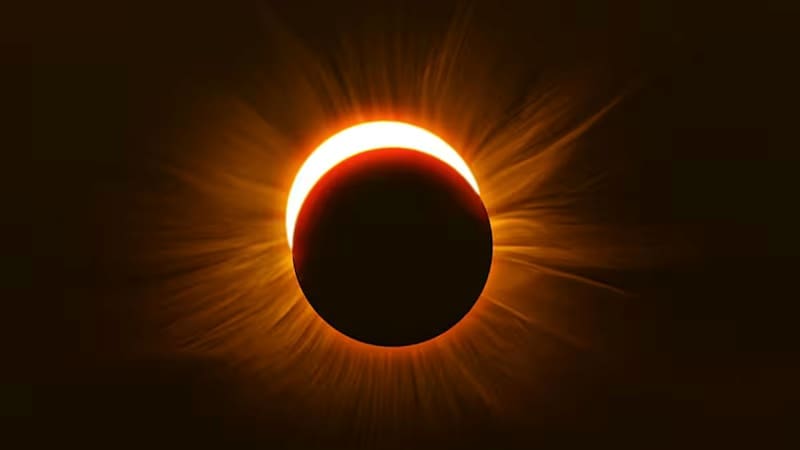
The longest solar eclipse of the 21st century is already all set to become one of the most impressive astronomical phenomena of recent decades.
Thanks to an exceptional alignment between the Earth, the Moon, and the Sun, day will turn into night for 6 minutes and 23 seconds, a time far longer than that of typical eclipses.
This event will mark a milestone for astronomy and will make it possible to observe rare visual effects. After this spectacle, many years will have to pass before another eclipse with similar characteristics can be witnessed.

When will the longest solar eclipse of the 21st century be
The long-awaited phenomenon will take place on August 2, 2027, when an almost perfect alignment between the Earth, the Moon, and the Sun will allow the lunar shadow to cover a large part of the planet for an unusually long time.
At the moment of greatest intensity, the Sun will remain completely hidden for 6 minutes and 23 seconds, becoming the longest total eclipse that can be seen for the rest of the 21st century.

To put its importance into perspective, the total eclipse that occurred on April 8, 2024, visible from much of North America, had a maximum duration of 4 minutes and 28 seconds, a mark that will be vastly surpassed in 2027.
Why this eclipse will be so long and different from all the others
The record duration of the phenomenon is explained by a rare combination of astronomical factors.
Due to the elliptical orbit of the Moon, the natural satellite will be relatively closer to Earth at the time of the eclipse. This will make it appear larger from our planet and allow it to completely cover the solar disk.
As a result, it will cast a shadow about 258 kilometers wide, which will travel nearly 15,227 kilometers across the Earth’s surface.
Specialists point out that this configuration will give rise to an exceptionally wide band of totality, covering around 2.5 million square kilometers, something very unusual for this type of event.
Where the 2027 total solar eclipse can be seen
Those who want to enjoy the eclipse in all its splendor will need to be within the so-called path of totality, that is, the band where the Sun will be completely covered by the Moon.
Among the best places to observe the phenomenon are:
- Tarifa, Spain, the southernmost point on the European continent.
- The coasts of Tunisia.
- Luxor, in Egypt.
These destinations have especially favorable conditions thanks to their low levels of cloud cover, which increase the chances of viewing the eclipse without weather interference.