
En esta noticia
The materials of kitchen utensils are key to making sure they are used properly and with the necessary precautions to keep away those that can be toxic.
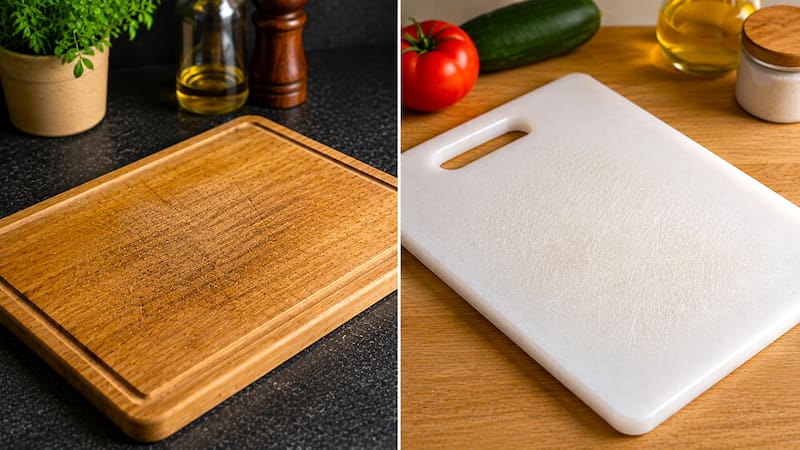
In the case of cutting boards, depending on the material chosen, there may be different consequences and different care must be taken, since both wood and plastic can pose a health risk when cooking.
Wood vs. plastic cutting board: What is the difference?
The different materials for cutting boards have different risks, and different precautions can be taken to avoid negative health consequences.
Wood cutting boards: characteristics and risks
Wood cutting boards are the most practical, but they require certain care because of the material’s characteristics. Among their main benefits is that their surface does not dull knives like other types of boards, in addition to being more aesthetically appealing, which is why they are also often used to serve foods such as cheese or snacks.
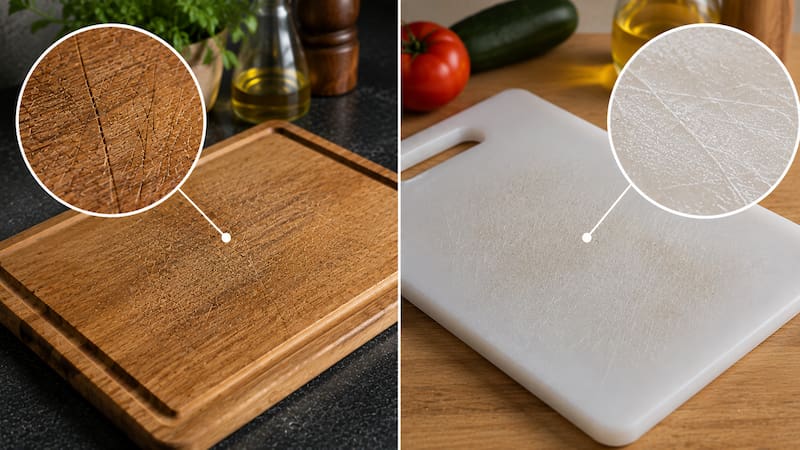
On the other hand, their high porosity makes them a highly absorbent material, so bacteria can build up in the grooves left by knife cuts.
To avoid risks:
- Use wood only for dry foods
- Always wash them by hand with hot water and detergent
- Do not leave them soaking
- Dry it well after washing
Plastic cutting boards: characteristics and risks
This type of board is the most affordable and lightweight because it is made of plastics such as polyethylene or polypropylene, so it scratches very easily with knives. Although grooves form, they are easier to wash since they are not a porous material.
However, the cut grooves can be difficult to clean and encourage the growth of dangerous germs and bacteria. In addition, it can also release microplastics that stick to food.
The following care is recommended:
- Clean and sanitize after each use with hot water
- Weekly disinfection with bleach, white vinegar, or baking soda
- Good usage practices: dry well, use a special board for raw meats, and discard the board when it is too worn

Wood vs. plastic cutting board: Which is worth buying?
The truth is that both are harmful to use if the necessary precautions are not taken. Some experts recommend metal boards for cutting raw meats since they do not scratch or absorb liquids.
However, if you must choose between these options, for cutting meat it is better to use plastic boards since they are easier to clean. And for foods like bread or vegetables, wood is better, in addition to being more durable.