
By Pedro Bianco
En esta noticia
Having a passport up to date is not always enough to travel: its physical condition also matters. The U.S. State Department considers a passport invalid if it has damage beyond normal wear and tear, even if it has not expired. With a document like this, the airline may deny boarding, or authorities at the destination may reject entry, and the only solution is to replace it.

What the State Department says about traveling with damaged passports
The standard is clear: a damaged passport, beyond the wear and tear of everyday use, is no longer a valid travel document. It does not matter how far away the expiration date is: if the damage compromises the integrity of the document or the legibility of its information, the passport is considered invalid and must be replaced with a new one. In these cases, being unexpired does not save the document.
What counts as damage that invalidates a passport
Damage that invalidates the document is damage that goes beyond normal use. For example:
- Water damage (a wet passport, smeared ink, or wrinkled pages).
- Torn, cut, ripped out, or detached pages, or a loose cover.
- Holes, punctures, or burns.
- Significant stains or unofficial marks (for example, notes or drawings) on the pages.
- Any deterioration affecting the data page, the photo, or the chip to the point that they can no longer be read clearly.
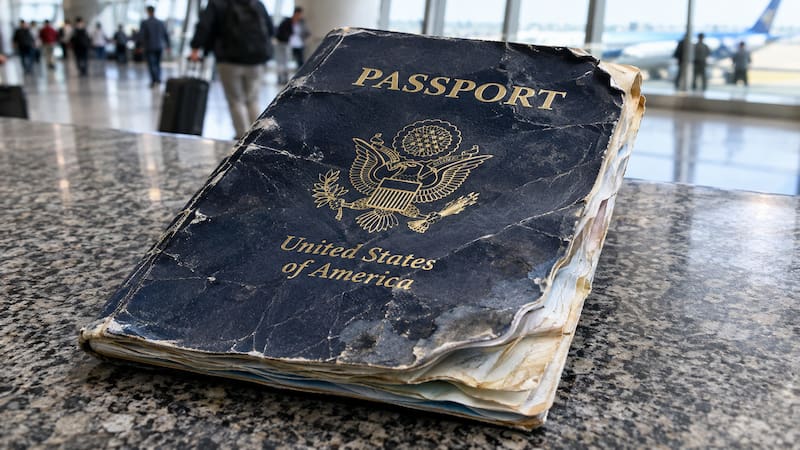
In all these cases, the document is no longer valid for travel, even if it has not expired.
What happens if you travel with a damaged passport
The consequences can come at different points in the trip: from problems at check-in to the airline not allowing you to board, or immigration authorities in the destination country denying entry because they consider the document invalid.
In practice, it is not only the destination country that checks the passport’s condition: airlines also verify that the document is in good shape before boarding. In any case, it is a problem that can ruin a trip and can be avoided with a quick inspection beforehand.