
By Pedro Bianco
En esta noticia
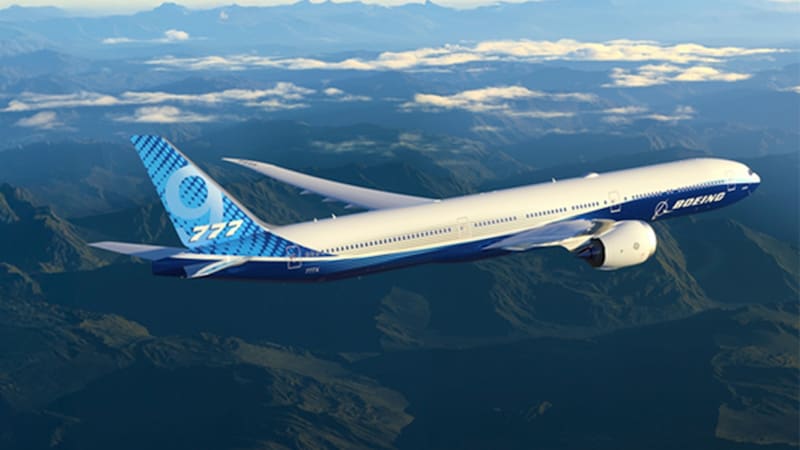
Boeing is about to add another record to commercial aviation: the 777X, the world’s largest twin-engine airplane. It is a colossal aircraft, more than 76 meters long, capable of carrying more than 400 passengers, and it introduces striking engineering innovations, such as wings that fold at the tips and the largest engines ever built for a commercial airplane. After years of delays, the program is moving toward certification.

Boeing Is Building the World’s Largest Twin-Engine Airplane
The 777X is the new generation of the successful Boeing 777, a wide-body, twin-aisle airplane designed for long-haul routes. Its main commercial appeal is combining enormous passenger capacity with better fuel efficiency than its predecessors, thanks to a completely new wing and engines.
The 777X, the larger version, measures about 76.7 meters long, making it the longest commercial airplane ever built, even longer than the Airbus A350 and Boeing’s own 747. And it does so with just two engines: it is the world’s largest twin-engine airplane.
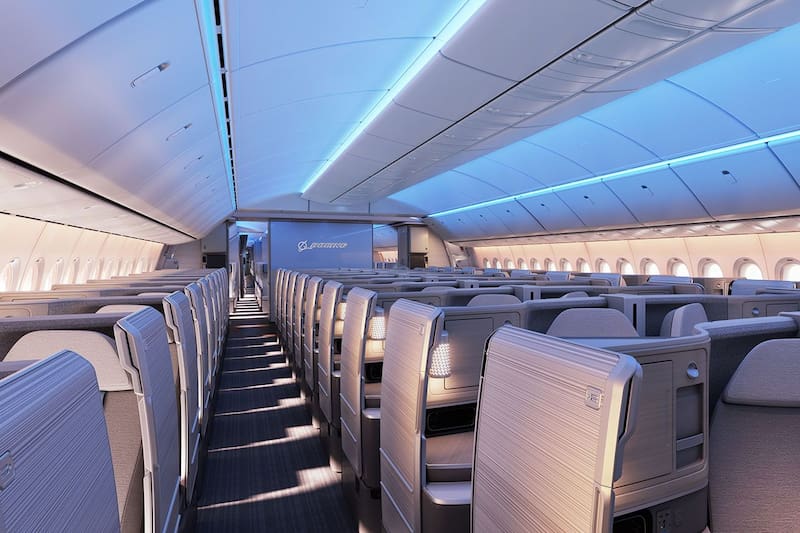
In terms of capacity, it carries around 426 passengers in a standard two-class configuration, a figure that can top 400 by a wide margin — and even approach 450 — depending on how each airline arranges the seating.
Folding wings: A first for a commercial airplane
One of the 777X’s most unusual features is its folding wings. To gain efficiency, the plane has a longer wing (with a wingspan of about 72 meters), but a wing that wide would not fit into boarding gates designed for today’s 777s.
Boeing came up with an ingenious solution: the wing tips fold upward once the plane lands and taxis to the runway, reducing the wingspan so it can fit at standard boarding positions. It is the first time a commercial passenger plane has used this technology.
The GE9X engines: The largest ever built
The other record is in propulsion. The 777X uses two GE9X engines, made by GE Aerospace, which are thelargest engines ever built for a commercial airplane: Their diameter is so large it approaches that of the fuselage of a smaller plane.
Those engines are largely responsible for the greater efficiency and lower fuel consumption the 777X promises compared with earlier models.
How many orders it has and who is buying it
The plane has more than 600 firm orders from airlines around the world. Its biggest customer is Emirates, the Dubai-based airline, which by far has ordered the most units.
Also among the buyers are Qatar Airways, Lufthansa, Singapore Airlines, Cathay Pacific and other major carriers. That backing shows that, despite the delays, airlines are still betting on the model.

When it enters service: The big question
The 777X is still not in service and has not been delivered to any airline. The program is moving through the certification process with the U.S. Federal Aviation Administration (FAA), and certification is now targeted for late 2026 or early 2027, with first deliveries planned for 2027.
The 777X was supposed to enter service in 2020, so it is now about seven years behind schedule. The reasons have been several, from technical and development problems to a tougher certification process (in part because Boeing has faced closer scrutiny after other incidents). That delay has cost the company dearly, forcing it to take billions of dollars in charges tied to the program.