
En esta noticia
The California Department of Motor Vehicles (DMV) sets out a series of safety checks that must be carried out before beginning the practical driving test.

These inspections make it possible to verify that the vehicle meets the minimum conditions necessary to drive safely.
Among the elements checked are the tires, which must meet specific requirements for wear and tread depth.
When are these safety checks carried out in California?
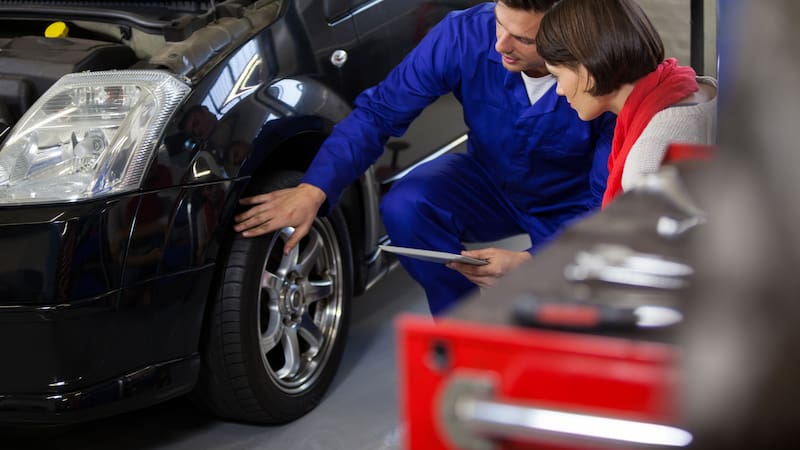
According to the California DMV, the safety checks are carried out before beginning the practical driving test to verify that the vehicle meets the minimum requirements to drive during the evaluation.
These inspections are carried out for those applying for a driver’s license for the first time and for other drivers who must take a practical test, including some cases of renewal due to medical or vision conditions.
In addition to the tires, the lights, brakes, mirrors, and other components are also checked.
What conditions must the wheels meet in order to pass?
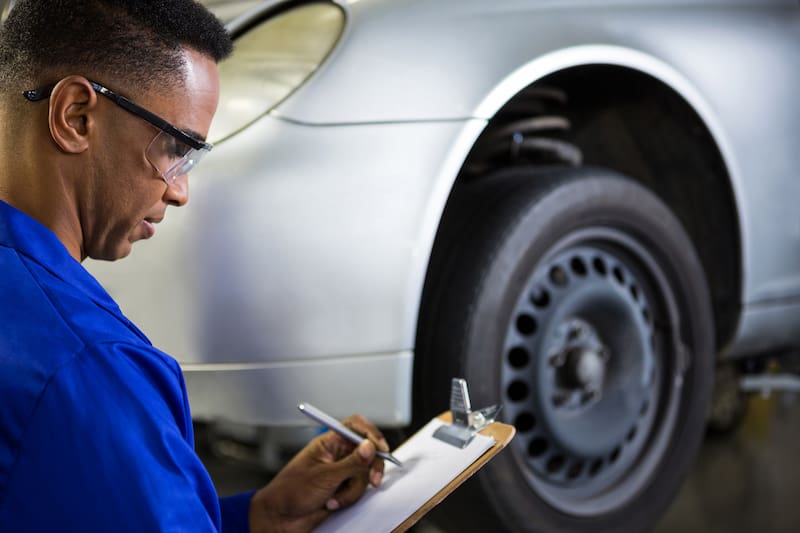
According to the official California DMV criteria, each tire must have a minimum depth of 1/32 of an inch (approximately 0.8 millimeters) in two adjacent grooves of the tread. In addition:
- The wheels cannot have completely worn or bald tires.
- Using a temporary spare tire, known as a donut, is not allowed during the practical test.
According to the Official California Driving Manual, the tires must show even wear and maintain the minimum tread depth.
What happens if the required minimum conditions are not met?
The California DMV states that if any of the components included in the mandatory inspection do not meet the safety requirements, the practical test must be rescheduled.
The agency classifies these violations as mechanical failures, and the driving assessment cannot be started.
Among the conditions that can require rescheduling are:
- Tires with tread depth below the required minimum.
- Brake lights or turn signals that do not work properly.
- Damaged mirrors or mirrors that do not provide adequate visibility.
- Brakes that do not meet the established requirements.
- Faulty seat belts.
Rescheduling does not mean failing the test, but if the applicant cannot demonstrate that four or more of the checks included between points 9 and 14 of the official list are working, the evaluation is considered unsatisfactory.