
En esta noticia
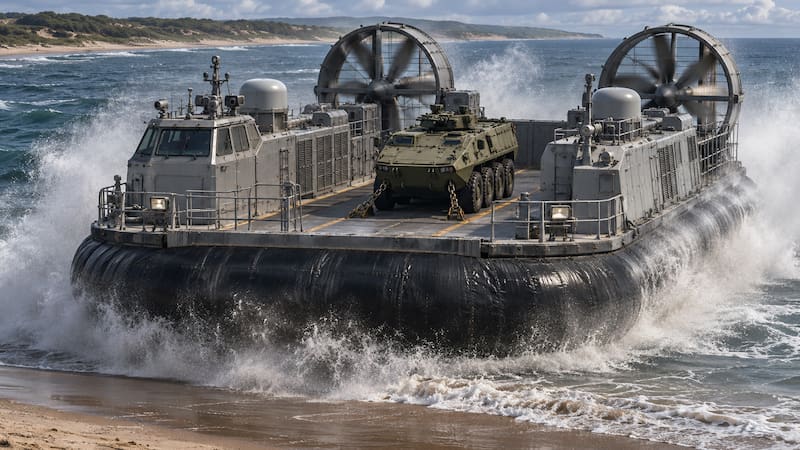
The U.S. Navy received the LCAC 118, an air-cushion landing craft designed to move personnel, vehicles and equipment from amphibious ships to shore.
Acceptance took place Oct. 28, 2026, according to the official statement published two days later. Built by Textron Systems, it is the fourth Ship-to-Shore Connector (SSC) program unit delivered this year.


What it is for and what it can carry
Its role is to link amphibious ships to shore during landings. The statement says these craft can carry weapons systems, vehicles, cargo and assault troops, with a capacity of 60 to 75 tons.
The LCAC 118 expands the ability to move heavy armored vehicles and equipment through contested coastal areas. Its delivery begins the process of joining the fleet and preparing for future operations.
How it moves and what it is like
LCAC stands for Landing Craft, Air Cushion. This system allows these vehicles to operate from the well decks of amphibious ships and travel to the beach and farther inland, the Marine Corps says.
The SSC program technical documentation describes a platform with four gas turbine engines, a five-person crew and a speed of more than 35 knots, or about 65 kilometers per hour.
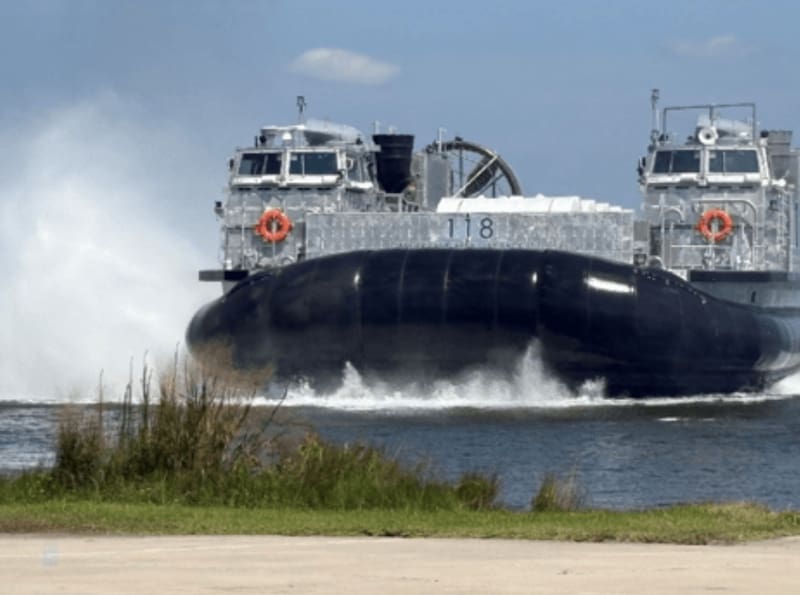
It also lists an approximate length of 28 meters and a projected service life of 30 years. These features correspond to the Ship-to-Shore Connector design.
What tests it passed and how the program continues
Before delivery, the LCAC 118 successfully completed the Navy Board of Inspection and Survey’s acceptance tests. The trials verified its material condition and operational performance against program requirements.
The SSC replaces the previous LCAC fleet and retains its dimensions and compatibility with amphibious ships equipped with well decks. It also adds improvements in reliability and maintenance.
Production continues with LCAC 119 through 131, which are in various stages of construction.