
En esta noticia
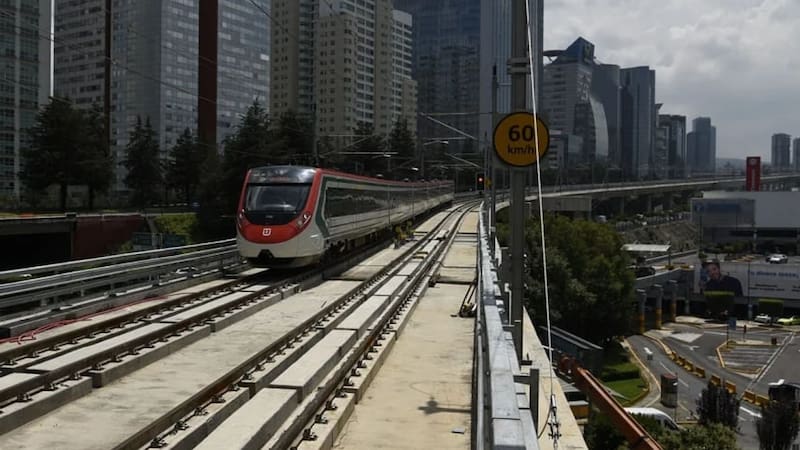
The federal government ordered the temporary occupation of three private parcels in Hidalgo to build infrastructure for the AIFA-Pachuca Intercity Train, a rail project that will connect the State of Mexico with Hidalgo and link into the Mexico City metropolitan area.
The measure covers 8,324.038 square meters in the municipality of Mineral de la Reforma and says owners with documented rights must be compensated. The decree was published in the Official Gazette of the Federation and does not call for a permanent expropriation of the properties to move the passenger rail works forward.

Where will the government take the private land?
The measure covers three private properties located in the municipality of Mineral de la Reforma, in the state of Hidalgo. Together, the properties total 8,324.038 square meters, which will be used for public infrastructure and rail lines for the AIFA-Pachuca Intercity Train.
According to the decree published in the DOF on Nov. 12, 2026, the land is distributed as follows:
- First property: 2,126.384 square meters
- Second property: 97.941 square meters
- Third property: 6,099.713 square meters.
What train will be built, and which states will it connect?
The land will be used to advance the AIFA-Pachuca Intercity Train project, a passenger rail service that will connect the State of Mexico with Hidalgo and the Mexico City metropolitan area.
The route will link Felipe Angeles International Airport (AIFA), located in the State of Mexico, with Pachuca, the capital of Hidalgo. It will also improve connections between different communities in both states and other public transportation systems.
According to the decree, the project aims to make regional travel easier, connect urban centers with airport infrastructure and create job and economic development opportunities in the municipalities involved.
Will the government have to compensate the landowners?
The decree says the Integrated Rail and Public Transportation Agency must pay the corresponding compensation to people who “prove their legitimate rights to the properties.”
The amounts will be set based on appraisals issued by the National Assets Administration and Appraisal Institute (Indaabin). The rail agency must cover the payments out of its approved budget.
The official document does not spell out the individual amounts each owner will receive, although it confirms that the corresponding appraisal reports have already been issued.
Can owners oppose the occupation?
Under Article 3 of the decree, owners have a 10-business-day period after being notified to go through the court process set out in Article 11 of the Expropriation Law.
However, the provision says that the process will have only one purpose: to “challenge the amount of the compensation.”
In addition, the temporary occupation does not mean the government has permanently acquired the properties. The measure will cease to have effect if they are later expropriated or if the properties are acquired through another legal transfer of ownership.
The land can be recovered if the government does not meet the requirements for the works
The decree also includes rights for owners if the properties are not used for the purpose that justified the occupation.
If after five years the land has not been used in whole or in part for the rail project, those affected may request the return of the property, a declaration that the temporary occupation is no longer in effect, or payment for the damages caused, in accordance with applicable law.
That means the federal government may temporarily use the three parcels to move the AIFA-Pachuca Intercity Train forward, but it must comply with the compensation and conditions set out in the official decree.