
En esta noticia
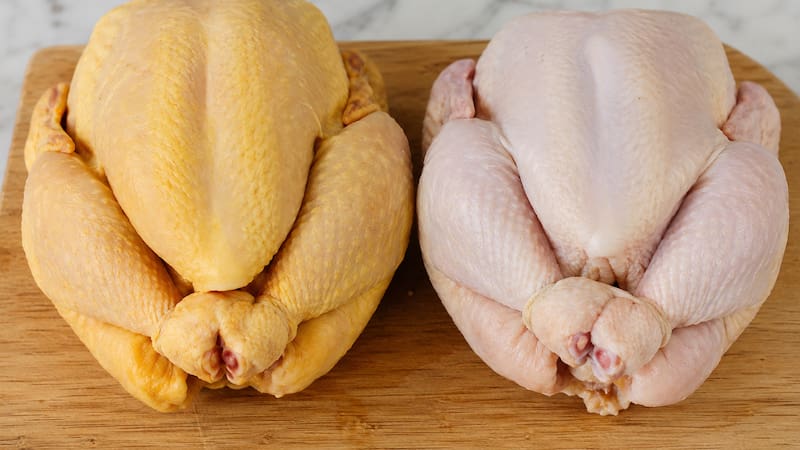
When choosing chicken to cook, it is common to find pieces with skin of different colors, mainly yellow or white. This difference often raises doubts among consumers, who want to know whether one option offers more benefits or better quality than the other.
Although the appearance may catch your attention, the color of the skin does not by itself determine the nutritional value or freshness of the product. In most cases, this characteristic is related to the bird’s diet and the preferences of each market, rather than to differences in quality.


Chicken with yellow skin or white skin? Which is better
The main difference between a chicken with yellow skin or one with white skin lies in the diet it received during raising.
Chickens with yellow skin usually consume foods rich in natural carotenoids, pigments present in ingredients such as yellow corn, alfalfa, or certain flowers.
These compounds are deposited in the subcutaneous fat and give the skin that characteristic golden tone.
By contrast, chickens with white skin generally receive a diet based on grains such as wheat or sorghum, which contain a lower amount of pigments. As a result, the skin remains much lighter in color.
Does yellow skin mean the chicken is healthier?
One of the most common beliefs is that chicken with yellow skin is more natural, tastes better, or has greater nutritional value. However, experts agree that the color of the chicken’s skin by itself does not determine the quality of the product.

In general terms, the meat of both types of chicken contains similar amounts of proteins, B-complex vitamins, and minerals such as phosphorus and selenium. The differences are minimal and are mainly related to the bird’s diet, as mentioned.

Is it worth buying chicken with yellow skin or white skin?
The choice depends on personal preferences, the type of preparation, and the budget.
If a more golden presentation is desired for oven roasting or grilling, many people prefer yellow-skin chicken for its appearance once cooked.
By contrast, those who prioritize nutritional value alone can choose either option, since the meat offers practically the same benefits.
Beyond the color of the skin, when buying chicken, it is worth paying attention to much more important aspects:
- The meat should have a firm and uniform appearance.
- It should not have strong or unpleasant odors.
- The skin should be intact and free of greenish or grayish spots.
- It should always be kept refrigerated or its expiration date respected.