
En esta noticia
Baking soda is one of the most versatile products for household cleaning and is often combined with other ingredients to enhance its effect on dirt. One of the most popular homemade tricks is to mix it with liquid soap to obtain a paste that can make cleaning different surfaces easier.
This preparation is recommended by many people because it helps loosen grease, stains, and stuck-on residue without resorting to harsher cleaners. Although it does not replace disinfecting products, it can be a useful alternative for everyday cleaning when used on compatible materials.
Mixing baking soda with liquid soap: what it is for
Baking soda and liquid soap are two common household products that, when combined, form a cleaning paste useful for removing stuck-on dirt from different surfaces.
Thanks to the slightly abrasive action of baking soda and the degreasing power of soap, this mixture can make cleaning tough stains easier without needing to resort to harsher products.
For that reason, many people use it to clean white sneakers, stovetops, stainless steel sinks, tiles, or utensils with grease residue. However, it is important to use it only on compatible surfaces and test it first on a small, inconspicuous area.
How do you prepare the baking soda and liquid soap mixture?
To make a cleaning paste, you need:
- 2 tablespoons of baking soda.
- 1 tablespoon of liquid soap or dish detergent.
- A few drops of warm water
To prepare it, you need to follow these steps:
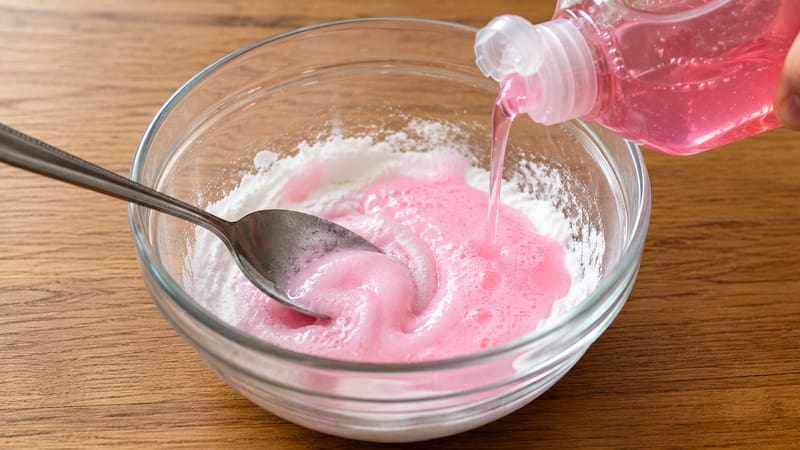
- Place the baking soda in a container.
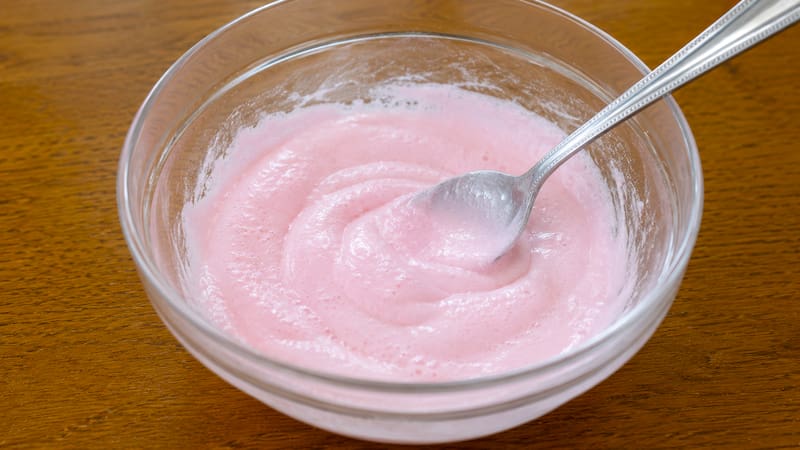
- Add the liquid soap and mix until a smooth paste forms.
- If it is too thick, add a few drops of water.
- Apply the mixture with a sponge or a soft-bristled brush.
- Scrub the surface, let it sit for 5 to 10 minutes, and remove it with a damp cloth or by rinsing with water.
Why do they recommend this mixture?
Many people recommend it because it helps loosen grease, dried dirt, and surface stains using ingredients that are easy to find in any home. Baking soda acts as a mild abrasive, while liquid soap helps remove greasy residue.
However, this preparation does not replace a disinfectant and should not be used on delicate surfaces such as marble, natural stone, untreated aluminum, suede, or sensitive fabrics, as it could damage them or alter their finish. Before applying it fully, the best thing to do is test it on a small, inconspicuous area.