
En esta noticia
Iran’s Shahed attack drones cost an estimated $20,000 to $50,000 apiece, yet U.S. allies in the Persian Gulf have fired hundreds of $4 million Patriot missiles to stop them. The war has cost the Pentagon at least $47.1 billion, much of it to replace interceptors and other munitions.
The figure comes from an estimate the Pentagon gave Congress, covering costs through Oct. 16. The war began with U.S. and Israeli strikes on Iran on Feb. 28. A ceasefire took effect April 8 but collapsed in July after Iranian attacks on tankers in the Strait of Hormuz.
President Donald Trump said Nov. 9 that Iran is “effectively over” militarily. But the U.S. naval blockade of Iranian ports remains in place, there is no deal to end the war, and the costs are still adding up.
How much does a US missile interceptor cost compared with an Iranian drone?
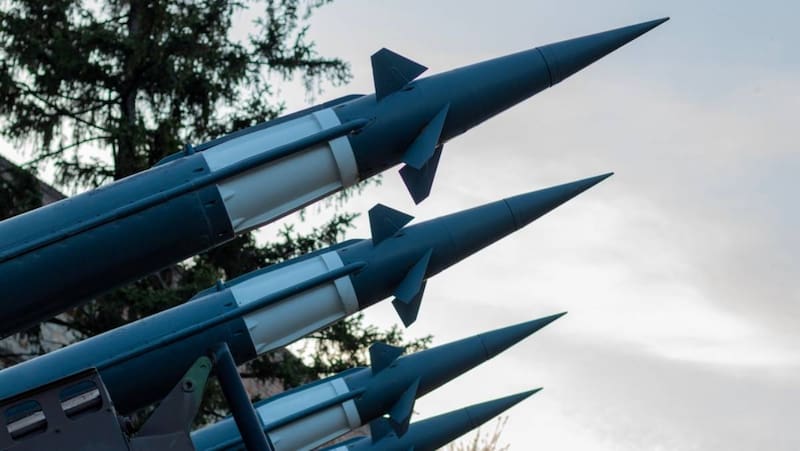
Interceptors are missiles built to destroy incoming missiles or drones in midair. A Patriot costs roughly $4 million, according to the nonpartisan Congressional Budget Office. A high-altitude THAAD interceptor runs about $12 million, and the most advanced Navy Standard Missile-3 about $28 million.
Iran’s Shahed drones sit at the opposite end of the scale. The Center for Strategic and International Studies, a Washington think tank, estimates each one costs $20,000 to $50,000. That makes a single Patriot 80 to 200 times as expensive as a drone it might be fired at.
Gulf partners leaned on their Patriots. By late March, Bahrain may have used up to 87% of its stock, according to the Jewish Institute for National Security of America. U.S. forces fired few, if any, Patriots at drones, CSIS estimates, using air-to-air missiles costing up to $1 million instead.
How much has the Iran war cost the US and its allies so far?
The Pentagon’s $47.1 billion estimate includes about $29 billion to replace munitions, $11.9 billion in added operating costs and $6.1 billion for lost equipment. It does not cover repairs to U.S. bases damaged by Iranian attacks.
A separate CBO analysis put the cost at $38.1 billion through Aug. 1, with interceptors the largest single item at $13.1 billion. At a low level of fighting, each extra month adds $2 billion to $3 billion, CBO estimated.
Allies are paying their own bills. In May, the State Department approved a $4.01 billion sale to restock Qatar’s Patriot batteries with 300 of the newest PAC-3 interceptors and 200 older-model missiles.