
En esta noticia
A Latin American country is moving ahead with construction of a massive desalination plant, an infrastructure project aimed at transforming drinking water supplies in one of the country’s most water-stressed regions.
The project will turn seawater into water fit for human consumption and will directly benefit nearly 994,000 residents.
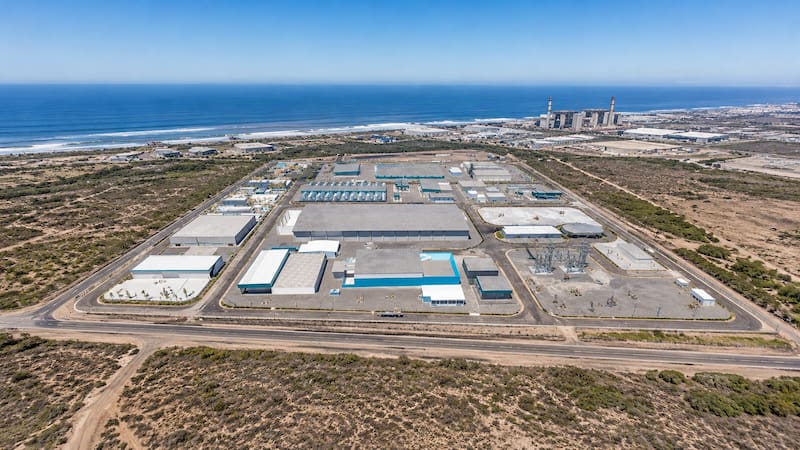
Construction of the Playas de Rosarito Desalination Plant in Baja California, Mexico, began on Sept. 1, 2026, as part of the National Water Plan, and carries an investment of more than $807 million.

The chosen site for the massive desalination plant
The complex will be built in Playas de Rosarito, Baja California, on Mexico’s Pacific coast. Its location will make it possible to use Pacific Ocean water to produce a new supply for the regional water network, through specialized intake, treatment and conveyance facilities.
According to the National Water Commission (Conagua), the project will have an initial processing capacity of 2,200 liters of water per second. That equals about 190 million liters a day that can be added to the regional supply system.
The first phase will directly benefit nearly 1 million people, especially those living near Playas de Rosarito and southwest Tijuana. The infrastructure, in turn, will boost water availability in the region by up to 45%.
The initiative seeks to address a problem that has worsened with population growth and rising demand for water resources.
How does the technology that turns seawater into drinking water work?

The plant will use a reverse osmosis desalination system, a technology that separates salts and other substances in seawater to produce water fit for human consumption.
The process uses special membranes that act as filters. Under pressure, the water passes through these components, which retain much of the dissolved salts and other impurities.
The technology generally includes a process that produces two streams: on one side, desalinated water, which must then go through a post-treatment stage before distribution. At this stage, remineralization is usually carried out by adding minerals such as calcium and magnesium; the pH is adjusted to stabilize the water and avoid corrosive effects in the pipes, and then a disinfection process is applied to eliminate or control possible microorganisms.

On the other, a reject stream with a high salt concentration is produced, known as brine, which must be handled through a specific system.
In this way, desalination makes it possible to tap an abundant resource such as seawater and turn it into an additional water supply for cities that face difficulties guaranteeing service.
When will Mexico’s massive desalination plant be finished?

The construction contract runs through Aug. 31, 2029, according to the official project sheet published by Proyectos México.
During that period, engineering, construction and commissioning work will be carried out on the facilities needed to turn seawater into drinking water.
Once completed, the infrastructure will add a new water source to Baja California’s water system.