
En esta noticia
Sixty-two congressional races were still uncalled Wednesday morning after the midterm elections, and some of the ballots that could decide them are still in the mail. Mississippi’s Senate race is tied at 48.9% apiece. In Alaska, Republican Sen. Dan Sullivan leads Democrat Mary Peltola 48.5% to 47.7%.
The holdouts won’t decide which party runs Congress. Democrats flipped both chambers Tuesday night and hold 54 Senate seats to Republicans’ 44. What’s still at stake is the size of those majorities, which will shape how much room party leaders have to pass bills starting in January.
Besides the two Senate contests, The Associated Press has yet to call 60 House races. The tallies are current as of Wednesday morning. They will keep shifting as election offices process ballots, and some of those ballots won’t be counted until next week or later.


Which uncalled races are still waiting on ballots in the mail?
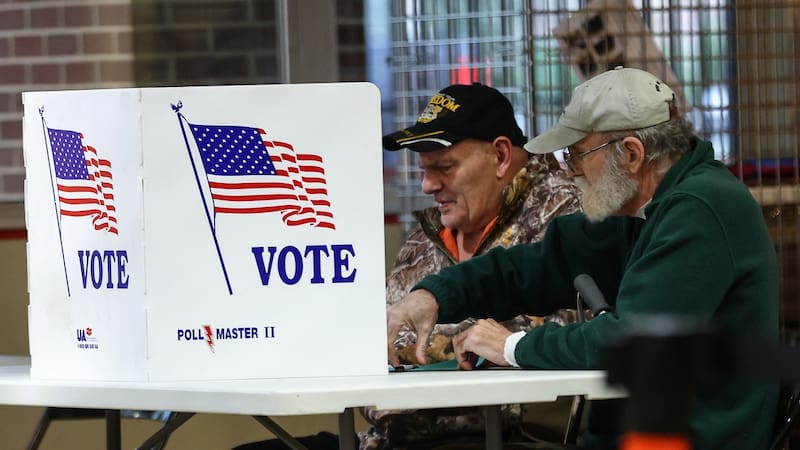
The most closely watched holdouts are in three states. All three count mail ballots postmarked by Election Day even when they arrive afterward, as long as they come in before a state deadline.
Mississippi Senate: Scott Colom vs. Cindy Hyde-Smith
Democrat Scott Colom, a district attorney, led Republican Sen. Cindy Hyde-Smith by a few dozen votes early Wednesday, with about 96% of the vote counted. Independent Ty Pinkins drew about 2.1%.
Mississippi accepts mail ballots for five business days after Election Day, so the cutoff is Nov. 10. Thousands of affidavit ballots also remain to be reviewed. That’s the state’s term for provisional ballots, which are cast when a voter’s eligibility can’t be confirmed at the polls.
Mail voting surged this year. As of Monday, the secretary of state’s office had received 116,453 absentee ballots, well above the total from the 2022 midterms.
Alaska Senate: Dan Sullivan vs. Mary Peltola
Neither candidate has passed 50% of first-choice votes, the threshold for winning outright, with roughly 72% of the vote counted. Mail ballots sent from within the U.S. count if they arrive by Nov. 13. Ballots from overseas have until Nov. 18.
Geography explains the long window. More than 80% of Alaska communities aren’t on the road system, the state told the Supreme Court in a January filing. In 2024, poll workers in the northern village of Atqasuk had to mail their ballots and tally sheets to the state, which didn’t receive them until nine days later.
California House races
Eleven of the 60 uncalled House seats are in California. Nearly every voter there gets a ballot by mail, and ballots postmarked by Election Day count if they arrive within seven days, or by Nov. 10.
Each mail ballot also needs a signature check before it’s counted. Many voters drop off their ballots on Election Day itself, which leaves counties with a large backlog in the days that follow.
Why is it legal to count mail ballots that arrive after Election Day?
The Supreme Court settled the question in June. In Watson v. Republican National Committee, decided June 29, the justices ruled 5-4 that the federal laws setting Election Day don’t require mail ballots to arrive by that date. Justice Amy Coney Barrett wrote for the majority.
The case began with a challenge to Mississippi’s law. The Republican National Committee, the Mississippi Republican Party and the Libertarian Party of Mississippi sued in 2024. A federal appeals court sided with them before the Supreme Court reversed that decision.
That same law now governs the count in Mississippi’s own Senate race. After the ruling, Attorney General Lynn Fitch, a Republican, urged state lawmakers to scrap the grace period, but it remained in place for this election.
Mississippi is one of about 30 states that count at least some ballots arriving after Election Day, though some limit that to military and overseas voters. Others, including Florida, require ballots to be in hand by Election Day.
In these states, the postmark is what counts, and it doesn’t always match the day a ballot was mailed. In December 2025, the U.S. Postal Service said it can’t guarantee that ballots will be postmarked the same day they go into a mailbox. A ballot mailed on Election Day could therefore carry a later postmark and be rejected.
When will the last uncalled races for Congress be called?
Alaska won’t have a final answer before Nov. 18. If no candidate tops 50% once every ballot is in, the state runs a ranked-choice tabulation that day. Certification is targeted for Nov. 25.
Under ranked-choice voting, the last-place candidate is eliminated and those ballots move to each voter’s next choice. That process repeats until two candidates remain. On this ballot, it could matter that a retired teacher named Daniel J. Sullivan Jr. is also running. In the campaign’s final week, allegations surfaced that operatives tied to Peltola had recruited him, and Peltola’s team denied them.
Mississippi’s race won’t end in a recount, because state law provides neither an automatic recount nor a way for candidates to request one. A losing candidate could still go to court over whether specific ballots should be counted. The U.S. Senate could also take up a dispute, since the Constitution makes each chamber the judge of its own members’ elections.
California counties must report results for most ballots by Nov. 16, the 13th day after the election, and have until Dec. 3 to finish counting. Close House races there can take a week or two to call.