
En esta noticia
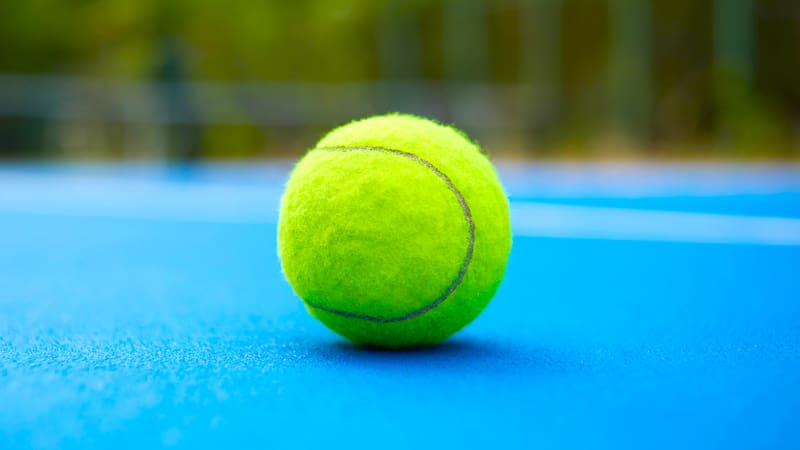
The yellow color of tennis balls makes them easy to spot in any setting. That’s no accident: experts say it wasn’t an aesthetic choice, let alone a random one, but a strategy designed for broadcasting the sport.
Although grass court tennis as such began to develop in the 1870s the decision to adopt yellow as the color of the balls only arose in 1972 with a clear purpose: to improve tennis broadcasting.


Why tennis balls are yellow: the 1972 decision that remains in place to this day
The International Tennis Federation (ITF), now called World Tennis, explains that although the balls used to play from the beginnings of this sport were black or white depending on the court, in 1972 the decision was made to incorporate yellow balls into the rulebook.
This came about because a study showed that the color yellow was much more noticeable than white or black for those watching the sport on television.
However, the ITF explains that Wimbledon only incorporated the then “new” yellow balls in 1986, about fourteen years after they were officially included in the rulebook.
The test all tennis balls must pass to be used in official tournaments
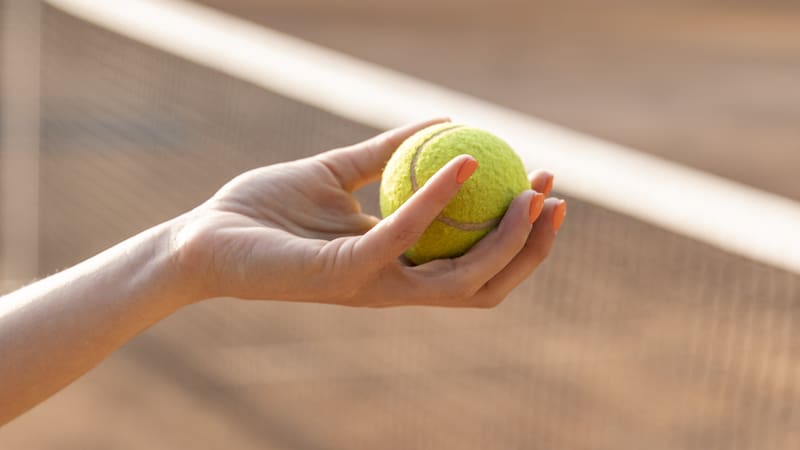
The yellow color of the balls is one of the most obvious requirements for professional use, but there are others of great importance that are not visible at a glance. As a general rule, all tennis balls used in official competitions must have been previously approved by the ITF, which carries out tests for:
- Environmental conditioning: the balls are kept for 24 hours in a climate-controlled laboratory and it is observed whether humidity and temperature affect them.
- Pre-compression and conditioning: they are subjected to a process to eliminate any deformation caused by storage.
- Weight: it is checked that they weigh between 56 and 59.4 grams.
- Size: it is verified that the ball to be used is the appropriate diameter.
- Deformation: it is assessed how much the ball could change when hit against the racket or the court.
- Bounce: the ball is dropped vertically from 254 cm to measure how much it bounces.
- Durability: this test was introduced in 2009 and measures the wear process.
If any of the manufacturing brands fails to pass the tests, it will not receive approval and will have to submit another sample.