
En esta noticia
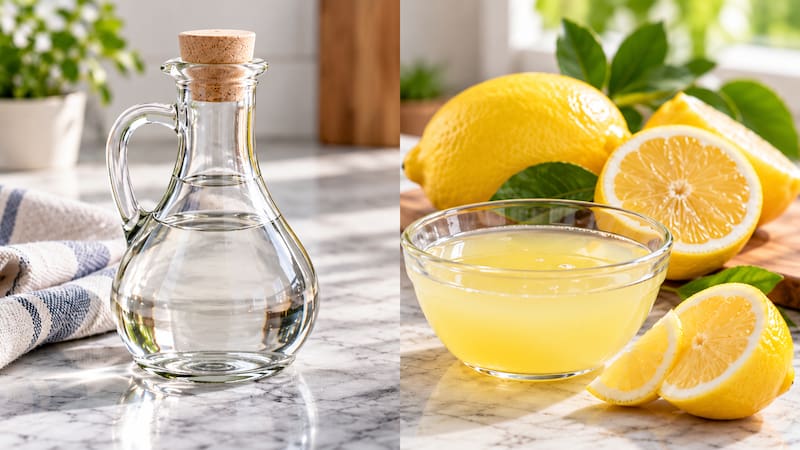
White vinegar and lemon juice are two ingredients that are often used as alternatives for household cleaning. Thanks to their chemical composition, both can help remove stains, limescale residue, and certain mineral deposits.
However, although they share some properties, they are two different acids and do not act in the same way on all materials.

How do vinegar and lemon juice act separately in cleaning, and which is better?
White vinegar and lemon juice contain acids that can help remove certain types of dirt. According to the University of Georgia, both are considered mild acids and can be used to remove hard water deposits, rust stains, and some discoloration on metal surfaces.
White vinegar contains acetic acid, which helps dissolve mineral deposits, such as calcium carbonate residue left by hard water. It can also help remove certain residues and odors.
Lemon juice contains mainly citric acid, which reacts with some mineral deposits and makes them easier to remove. Its acidity can be useful against limescale stains and certain rust residues.
As long as the material and its coatings are compatible with acidic substances, these ingredients can be used to remove certain deposits from:
- Windows and glass surfaces.
- Shower enclosures.
- Faucets with acid-resistant finishes.
- Certain metal surfaces, avoiding sensitive materials such as silver in the case of lemon juice.
White vinegar may be a more practical alternative for certain household cleaning tasks, due to its availability, low cost, and relatively consistent acidity concentration. However, this does not mean it is more effective than lemon juice on all surfaces, since the results depend on the type of dirt, the acid concentration, and the material to be cleaned.
Surfaces on which it is recommended not to use vinegar or lemon
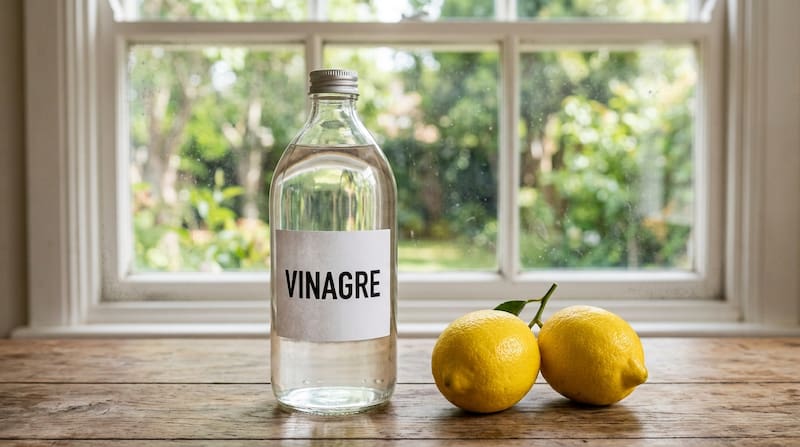
Although white vinegar and lemon juice can help remove mineral deposits and certain stains, their acidity can damage some materials and coatings.
For this reason, it is recommended to avoid using them on:
- Marble, limestone, and travertine: acetic and citric acids can react with the calcium carbonate present in these materials and damage their surface.
- Granite and other natural stones: they can affect certain finishes and sealants, so it is recommended to use specific products.
- Wood floors: the acidity can damage protective layers and affect their finish.
- Wood furniture: both ingredients can damage certain varnishes and finishes.
- Sensitive metal surfaces: they can cause alterations or damage some coatings. The University of Georgia specifically advises against using lemon juice on silver objects.
- Materials with special coatings: it is important to check the manufacturer’s instructions before applying acidic substances.
The American Cleaning Institute recommends checking product compatibility with each surface before using them, especially when it comes to delicate materials.
What precautions should be taken when cleaning with these acids?
The University of Georgia recommends taking safety measures when using these types of ingredients:
- Do not mix vinegar or lemon with bleach or products containing sodium hypochlorite: this combination can release chlorine gas, which is harmful to health.
- Keep areas ventilated: prolonged exposure to acidic substances can cause respiratory irritation.
- Use protection when necessary: especially gloves and eye protection if there is a risk of splashing.
- Avoid mixing different cleaners: some combinations can cause dangerous chemical reactions.
- Properly identify containers: label the mixtures and keep them out of the reach of children.
- Check compatibility with the surface: follow the manufacturer’s instructions and avoid applying them to acid-sensitive materials.