
En esta noticia
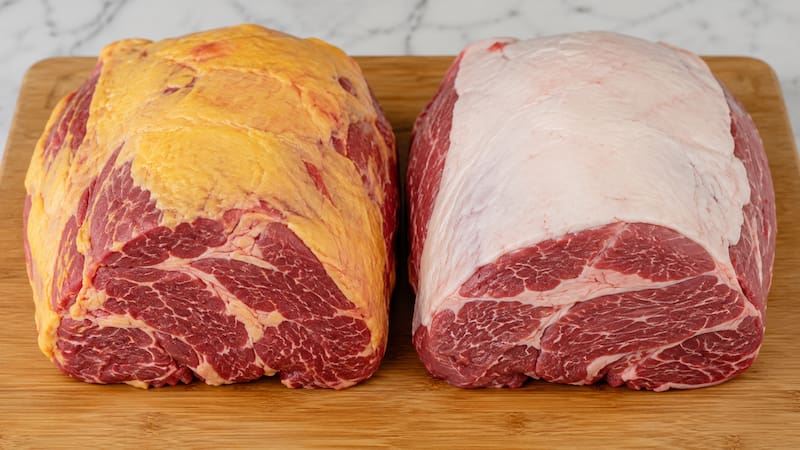
When buying beef, one detail that often stands out is the color of the fat. While some cuts have a white coating, others have a yellowish tint.
Although each color reflects factors tied to the animal’s diet and the cattle’s characteristics, many people associate the difference with the product’s freshness.

Why can beef fat be white or yellow
A scientific review published in 2009 in the journal Meat Science, titled Colour of bovine subcutaneous adipose tissue, identified diet as the main external factor influencing the color of bovine fat.
The researchers explained that animals raised on pasture-based systems, where they feed mainly on grass and green forage, tend to develop more yellow fat than those fed concentrated feeds and grains.
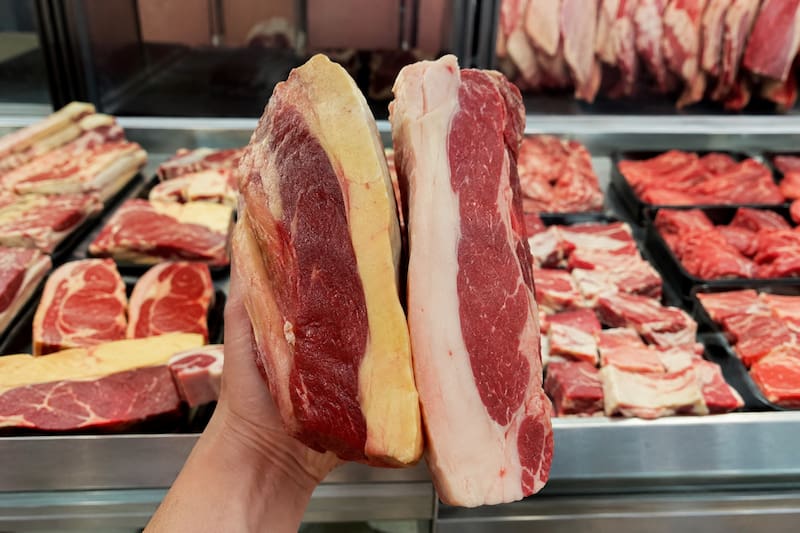
This happens because of the presence of carotenoids, natural pigments found in plants that can accumulate in fatty tissue.
What does yellow fat mean in meat?
The yellowish tint is mainly linked to beta-carotene, a plant pigment that also serves as a precursor to vitamin A.
A study published in 2018 in the scientific journal Agro Productividad, under the title “Physiological Processes in the Synthesis of Yellow Fat in Grazing Cattle,” explained how this process works.
Green forage contains carotenoids that, after being ingested by cattle, partially pass through the digestive system. Some reach the intestine, where they are absorbed and carried by lipoproteins to different tissues in the body.
There, these pigments can deposit in fat cells, known as adipocytes. Their buildup is what produces the characteristic yellow color.
So when a cut has yellowish fat, one possible explanation is that the animal consumed pasture for an extended period.
What does white fat mean
White fat is usually associated with production systems in which cattle receive a greater share of grains and concentrated feed.
Unlike green pasture, these feeds usually contain lower amounts of carotenoids. For that reason, the pigments accumulate less in fatty tissue, and the fat keeps a whiter appearance.
The study published in Meat Science also notes that animals shifted from a pasture-based diet to a grain-based diet may reduce the yellowish tint in their fat.
Which is better to buy?
The National Service for Agri-Food Health and Quality (Senasa) advises choosing beef with very white fat, rather than yellowish fat, as one of the first guidelines for assessing the freshness of the food.
In an official post on Feb. 13, 2023, the agency also recommended checking that the meat has a deep, intense, and bright red color, a firm and elastic texture, and that it does not release liquids that could contaminate other foods.
That does not mean all yellow fat is a sign of spoilage. Scientific research shows that this color can also have a natural origin related to the cattle’s diet.
That is why color should be evaluated along with the product’s other characteristics and the conditions in which it is stored.