
En esta noticia
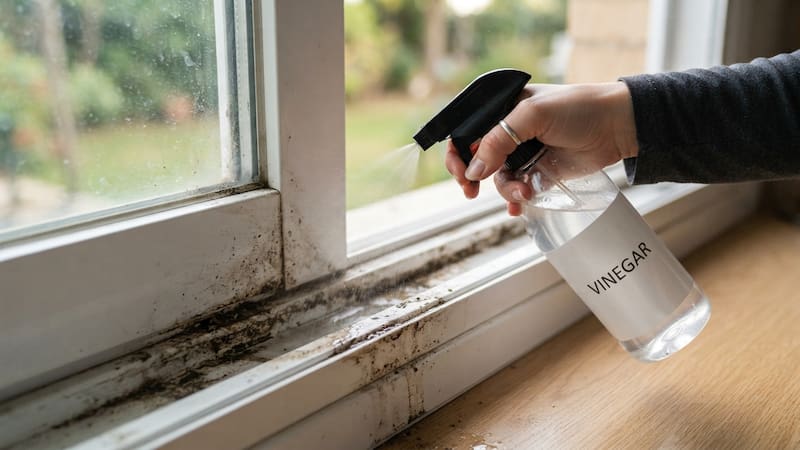
White vinegar is a household staple that can make cleaning window tracks easier, where dust, moisture, grease and mineral deposits often build up. Its main active component helps loosen some of that buildup and makes it easier to remove.
Why white vinegar removes dirt from tracks
The explanation lies in acetic acid, which gives vinegar its acidity. According to the American Chemical Society (ACS), household vinegar contains about 5% acetic acid.
This compound reacts with certain mineral deposits, especially those containing carbonates, and helps dissolve them. That makes it useful for removing hard-water stains and buildup that can collect in window channels.
It is worth noting that it does not remove all residue in the same way: dust, hair and grease require additional cleaning.

How long to leave white vinegar on
For routine cleaning, it is recommended to start with a contact time of 5 to 10 minutes. This is a practical guideline that allows the acetic acid to work on mineral deposits without leaving the product on for unnecessarily long periods.
The process is:
- Remove dust and hair with a vacuum or a small brush.
- Spray distilled white vinegar on the tracks, if the material is compatible.
- Let it sit for 5 to 10 minutes.
- Scrub the corners and channels with an old toothbrush.
- Wipe away the residue with a damp cloth and dry thoroughly.

Is it safe to use white vinegar on any type of window?
No. Although it is a household product, its acidity can affect certain materials, metal finishes, painted surfaces and sealants. Before using it, check the manufacturer’s instructions and test it on a small, inconspicuous area.
Never mix vinegar with bleach or color-safe bleach. The combination can release chlorine gas, which is toxic to the respiratory system.