
En esta noticia
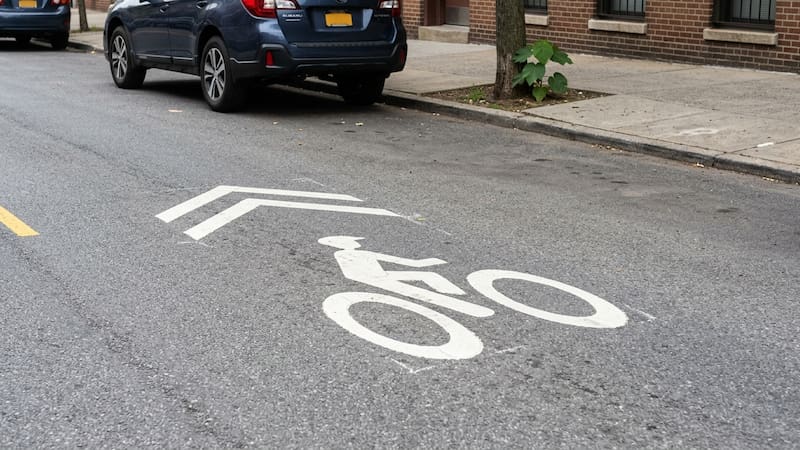
On streets in the United States, there is a traffic marking painted directly on the pavement that shows a white bicycle alongside two inverted-V chevrons. Although many drivers may not notice it, this marking has a specific purpose and is included in the federal government’s official manual on traffic control devices.

The traffic marking is known as a sharrow, and its two arrows serve a function related to the position cyclists should maintain to travel more safely.
The Federal Highway Administration (FHWA) sets out its use and explains how this roadway marking should be placed.
What the traffic marking with two chevrons and a bicycle painted on the pavement means
The roadway marking showing a bicycle accompanied by two white inverted-V chevrons is known in the United States as a “sharrow” or “shared-lane marking.” Its purpose is to indicate that cyclists and motor vehicles must share the same lane, so it does not represent a lane exclusively for bicycles.
According to the FHWA, this marking is meant to tell both drivers and cyclists that they must share the road space. It also helps indicate the recommended path for bicycles when there is no dedicated bike lane.
The marking is covered in section 9E.09 of the Manual on Uniform Traffic Control Devices (MUTCD), the federal document that sets the standards for signs and markings used on U.S. roads.
What the two inverted-V chevrons are for
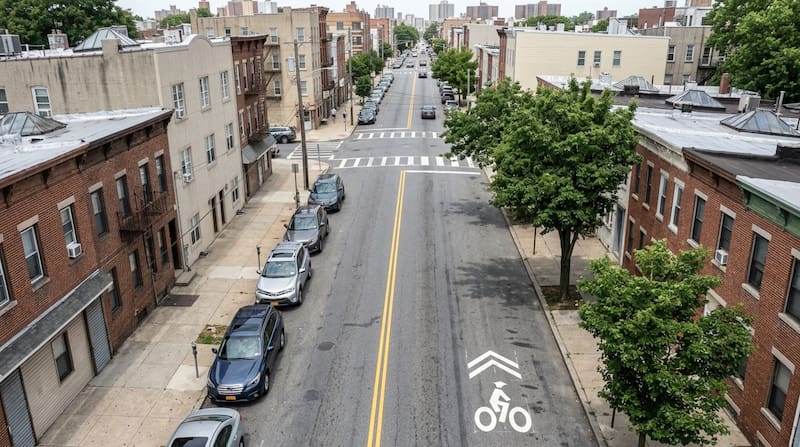
According to the FHWA, Sharrow markings help indicate the recommended position for bicycles and can help keep a safe distance from motor vehicles. This matters because a cyclist riding too close to a parked car could be injured if someone opens a door without noticing them.
The placement of the chevrons is key, since the MUTCD sets specific criteria for positioning them in relation to curbs, parking spaces, and lane width, with the goal of guiding cyclists and improving coexistence with motor traffic.
What drivers should keep in mind when they encounter this marking?
When drivers encounter a Sharrow marking painted on the pavement, they should watch for cyclists and share the lane safely. That means avoiding sudden maneuvers, respecting the space bicycles need, and passing with an appropriate distance.
The FHWA explains that these markings are meant to remind drivers that they may encounter cyclists riding in the roadway, especially on streets where there are no dedicated bike lanes.