
En esta noticia
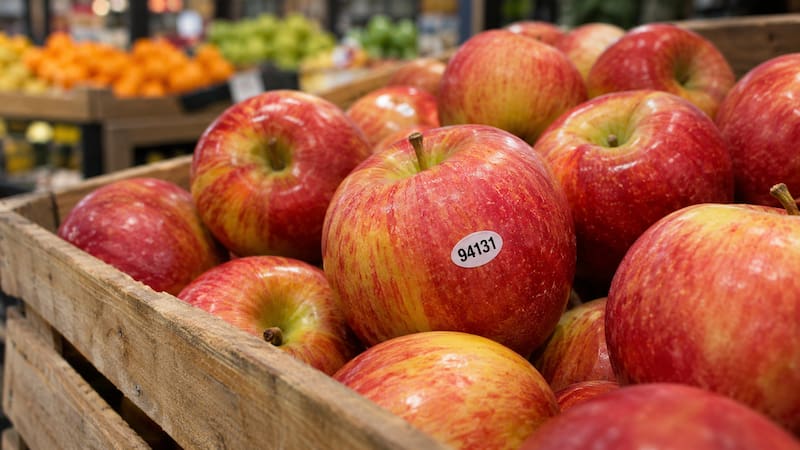
The small stickers on fruit can include a four- or five-digit code that helps identify the product at checkout. These are PLU codes, used by supermarkets to make sales and inventory control easier.
According to the International Federation for Produce Standards (IFPS), these numbers help distinguish characteristics such as the type of fruit, variety, size, and growing method. Within this system, adding a 9 in front of the standard four-digit code identifies the organic version.

What the codes are for and what the number 9 means
The PLU system, whose name comes from the English phrase Price Look Up, has been in use since 1990. Its goal is to help retailers identify the product correctly and apply the right price, without relying only on appearance.
The standard four-digit codes are assigned within certain number ranges. IFPS says each digit, on its own, has no specific meaning. It is the full code that identifies the product.
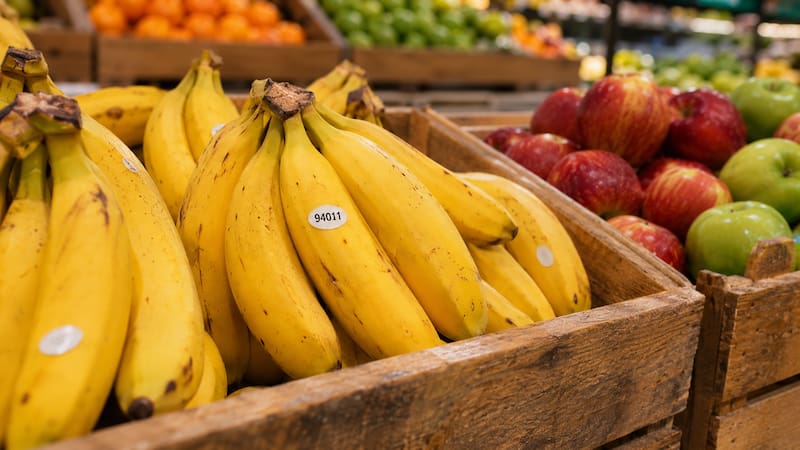
To indicate the organic version, the 9 prefix is added. The federation gives a specific example in its FAQ: a standard yellow banana has the code 4011, while its organic equivalent uses 94011.
What to know before interpreting a label
Use of the system is voluntary and driven by commercial needs. That is why not all fruits and vegetables carry an individual sticker. On some products, the code may appear on a sign or through another form of identification.
The IFPS also clarifies confusion about numbers that begin with 8. Although that prefix was once reserved for genetically modified products, it was never used for that purpose in retail. So it should not be interpreted that a fruit is genetically modified just because its sticker starts with that number.
Finally, the PLU code is a commercial identification tool. To verify that a product is certified organic in the United States, the federation recommends looking for the USDA organic seal. If there are questions about how it was grown, it is advised to ask the produce manager at the store.