
En esta noticia
In different countries, sitting or standing to urinate is a habit that sparks debate among men. While sitting down to use the bathroom is socially accepted in some places, in others, the idea that standing is the norm still prevails.
Beyond cultural differences and hygiene concerns, there is also a health question: which of the two positions allows for better urination?
On that front, a group of researchers compared both positions and analyzed what happens to urine flow and bladder emptying.

Sitting or standing to urinate: A debate that goes beyond hygiene
The posture chosen for using the bathroom carries strong cultural weight. In Germany, for example, there is a term known as Sitzpinkler, which is used pejoratively to refer to men who urinate while sitting.
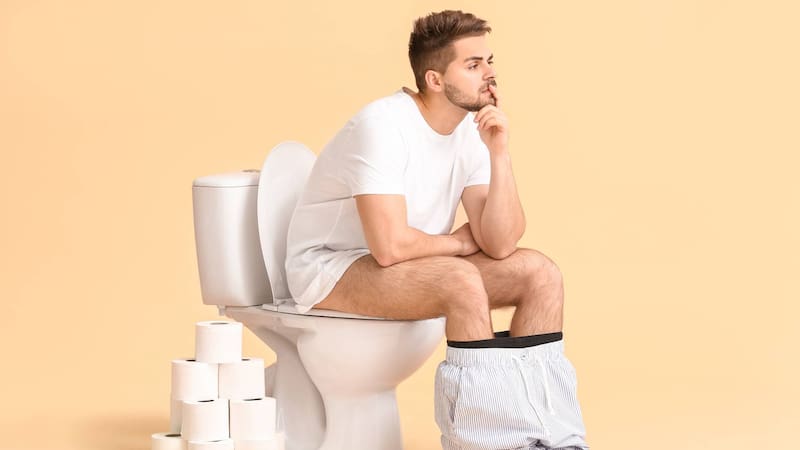
Although it is a common practice in the country, differences remain, and not just because of custom. The debate also involves other issues, such as splashing, bathroom cleanliness, and comfort.
In this context, the Colombian Urology Research Group conducted a study with 52 healthy men between the ages of 18 and 39. Each participant urinated in both positions, in tests separated by at least 24 hours, and the researchers measured urine flow and volume, finding one clear difference.
Which Position Allows the Bladder to Empty Better, According to the Study?
The comparison found no statistically significant differences in two key measures: maximum urine flow and total urine volume expelled. On average, the differences were 1.47 milliliters per second in peak flow and 14.7 milliliters in volume.
The difference, in this respect, was in how long it took participants to reach peak flow. When urinating standing up, they took an average of 3.32 seconds longer than when sitting, although the authors considered that figure to have little practical relevance because it was influenced by an outlier.
It is worth noting that the study, published in Neurourology and Urodynamics, did not formally prove that both positions were equivalent. For that reason, the authors said more research with larger numbers of participants is needed.
Can Sitting to Urinate Benefit Men With Prostate Problems?
An enlarged prostate, more common after age 50, can cause difficulty urinating. Among the main problems are a weak stream, delays in starting urination, or the feeling that the bladder has not been fully emptied.
In these cases, sitting may be a useful option. An analysis of 11 studies published in 2014 found that men with urinary symptoms achieved more complete bladder emptying when urinating in that position, although the same benefit did not appear among healthy men.