
En esta noticia
Knowing how long to wash your hands is one of the questions with the greatest number of possible answers. Considering that it is one of the simplest measures to protect health, the Centers for Disease Control and Prevention (CDC) in the United States decided to establish a standard.
According to the CDC, proper hygiene helps prevent respiratory infections and diarrheal illnesses, as well as reduce the likelihood of transmitting microorganisms to other people through contact with objects and surfaces.

How long should you wash your hands?
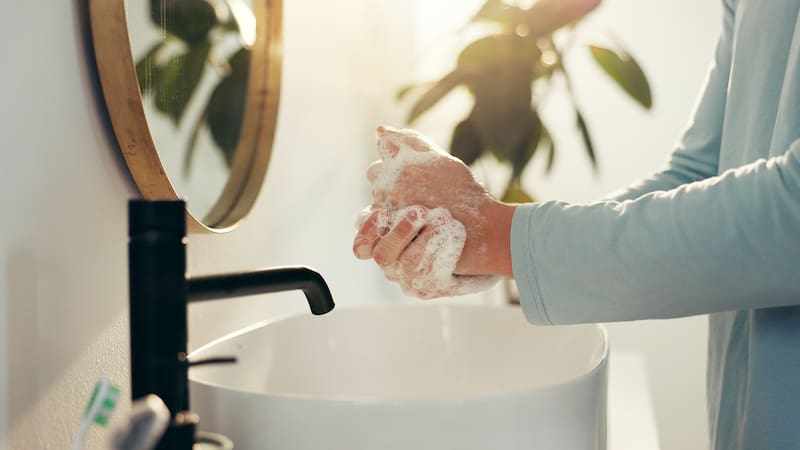
The time recommended by the CDC is 20 seconds of scrubbing with soap and water. It is not enough to wet your hands or rinse them quickly: it is necessary to cover all areas and generate enough lather to remove dirt and germs, among other things.
The agency also warns that when washing lasts for less time, not as many microorganisms are eliminated.
A practical way to measure those seconds without using a clock is to sing the full “Happy Birthday” song twice.
Why is it important to wash your hands
Handwashing helps interrupt the transmission of microorganisms that can cause illness. These can pass from one person to another or enter the body when someone touches their eyes, nose, or mouth with contaminated hands. There is also a risk when preparing food, eating, or sneezing into your hands and then handling shared objects.
The recommendation is to keep up the habit even when there are no visible stains on your hands. The absence of visible dirt does not necessarily mean they are free of microorganisms.
How to wash your hands correctly
For washing to be effective, the CDC recommends following this sequence:
- Wet them: place your hands under clean, running water, cold or warm, turn off the tap, and apply soap.
- Soap them: rub the palms, the backs, between the fingers, and under the nails.
- Rub for 20 seconds: keep moving for the recommended time, without leaving any areas uncleaned.
- Rinse: remove the soap with clean running water.
- Dry completely: use a clean towel or a hand dryer. This step is also important because, according to the CDC, germs can spread more easily when hands remain wet.
When should you wash your hands during the day?
The CDC recommends doing so at specific times when the chance of coming into contact with germs increases:
- Before, during, and after preparing food.
- Before eating and after finishing.
- After using the bathroom, even at home.
- After changing diapers or helping a child use the bathroom.
- After coughing, sneezing, or blowing your nose.
- Before and after tending to wounds.
- Before and after caring for a sick person, especially if they have vomiting or diarrhea.
- After touching animals, their food, or their waste.
- After handling garbage.