
En esta noticia
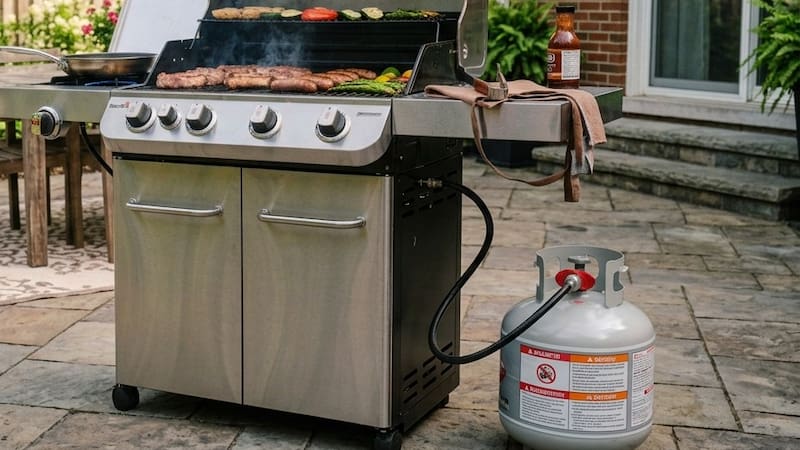
Propane can last indefinitely when stored properly in a well-maintained tank, so homeowners do not need to replace the fuel simply because their grill has been sitting unused for months or years. However, the condition of the cylinder and its connections should be checked before the grill is used again.
The U.S. Department of Transportation requires portable propane cylinders to meet specific inspection and requalification standards. Homeowners should also check for leaks and make sure the grill’s hose and regulator are in good condition before lighting the burners.
Propane does not expire, but the tank needs inspection
Unlike gasoline, propane does not degrade over time when stored properly. Ferrellgas, a propane supplier, says its shelf life is indefinite under proper storage conditions. That means fuel left in a properly maintained cylinder can still be usable after a long period without use.
The cylinder itself is a different matter. The Pipeline and Hazardous Materials Safety Administration (PHMSA) says propane cylinders must be requalified or replaced at intervals that vary by cylinder type and inspection method. Depending on the applicable requirements, these intervals can range from five to 12 years. The manufacturing date and any subsequent requalification marks are stamped on the cylinder.
Before refilling a tank, check for dents, cuts, cracks, harmful rust or corrosion, and damage to the valve or protective collar. Cylinders that are overdue for requalification or have disqualifying defects must not be refilled until the applicable requirements are met.
Check for leaks before lighting the grill
Weber recommends performing a leak test whenever a propane cylinder is reinstalled or refilled. With the grill’s control knobs turned off, connect the regulator according to the manufacturer’s instructions, open the cylinder valve, and apply a soapy-water solution to the connection. Bubbles indicate a possible leak.
Never use a flame to check for leaks, and do not operate the grill if a leak is detected. Follow the manufacturer’s instructions to shut off the gas and address the problem before using the equipment again.
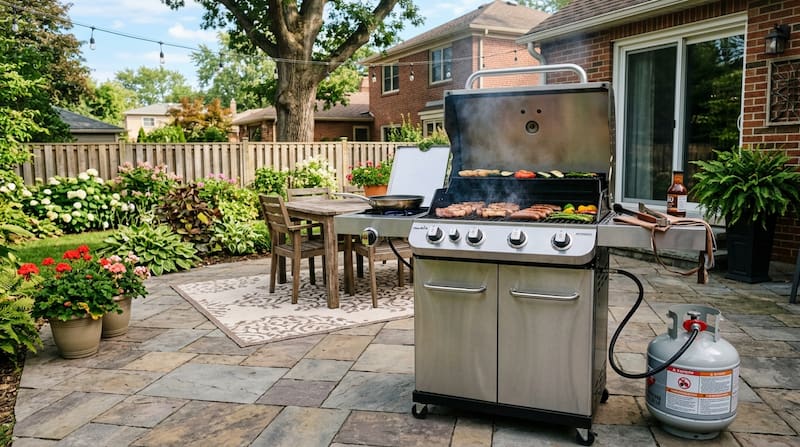
Homeowners should also inspect the hose and regulator for cracks, wear, or other damage, and check that the burners are not obstructed. If the cylinder or grill appears damaged, or the source of a suspected leak is unclear, have the equipment inspected by a qualified professional.
Store propane tanks outdoors and away from heat
The Propane Education & Research Council (PERC) advises homeowners to store propane cylinders outdoors, away from ignition sources and excessive heat. Tanks should remain upright and should never be stored in enclosed spaces such as garages, basements, or sheds. Spare cylinders should also be kept away from the grill and other propane appliances.
If you smell gas, hear hissing, or suspect a leak, keep away from flames and other ignition sources.