
En esta noticia
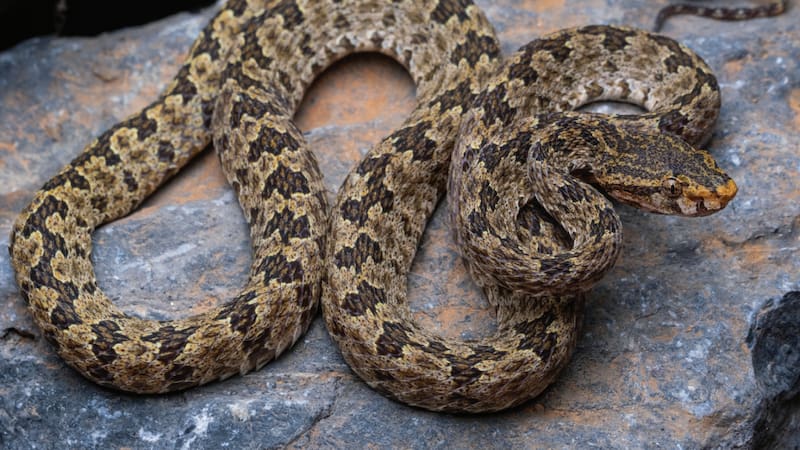
In October 2024, an orange-snouted pit viper found on the walls of a cave in Laos caught the attention of a group of researchers. What appeared to be just another venomous snake specimen turned into a scientific discovery because the vertebrate belonged to a species that had not yet been formally described.
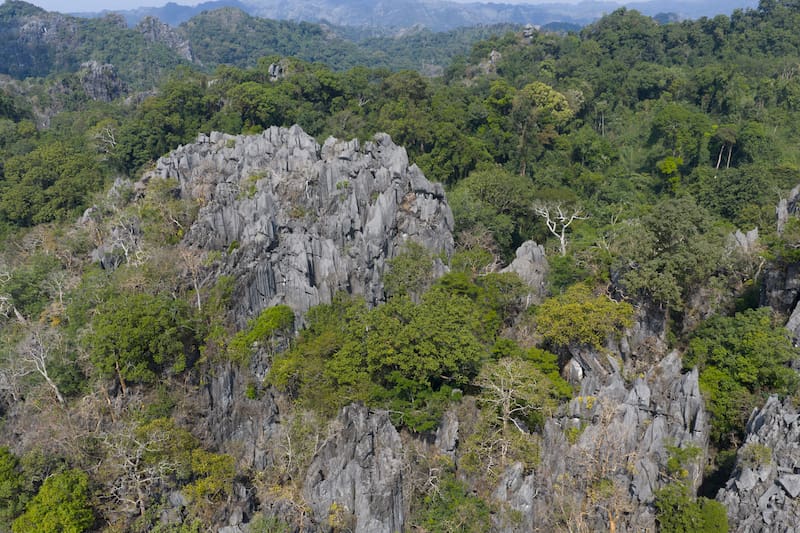
The find came in a region of rocky formations and natural caves, where researchers observed several specimens. But it was the analysis of DNA that solved the mystery and determined the animal did not belong to any species known at the time.
The snake has physical traits that set it apart from other pit vipers in its genus, but researchers still have questions about its range and the danger it poses to people.


What the new venomous pit viper looks like: It measures 82.5 centimeters and has an orange snout
The new species identified by researchers is Protobothrops flavirostris, a venomous pit viper distinguished by its orange snout and triangular head. The reference specimen used to describe it was an adult female measuring 82.5 centimeters in total length, with a dark brown head, a brown or grayish-brown body and large reddish cross-shaped markings edged in black.
The combination of its physical traits set it apart from other pit vipers in the genus Protobothrops. Among its distinguishing features are keeled dorsal scales, small longitudinal ridges on their surface. But scientists did not rely on appearance alone, since genetic analysis was key to confirming it was a species different from those already known.
Where the viper was found and how DNA confirmed the unexpected
The main specimen was collected on Oct. 21, 2024, near Khan Kham Cave in Vang Vieng District, Vientiane Province, Laos. Researchers also photographed three other individuals in nearby caves, where they observed the snakes on walls, stalactites and limestone surfaces. These records linked the species to karst environments, marked by limestone formations and caves.
To determine whether it was a new species, the team analyzed 6,092 base pairs of DNA from five mitochondrial genes and two nuclear genes, and compared the results with those of other pit vipers in the same genus. The analysis revealed genetic differences from known species, including Protobothrops kelomohy, its closest known relative.
Likewise, a 7.8% divergence in the mitochondrial cytochrome b gene, along with the physical differences, supported its formal description as a new species in a study published in Herpetozaa on Feb. 25, 2025.
What is known about the danger of its venom and the snake’s conservation
Protobothrops flavirostris belongs to the group of Asian pit vipers, venomous snakes that have heat-sensing organs between the eyes and nostrils. However, the study does not specifically determine the potency of its venom or show that its bite is fatal to humans. For that reason, it should not be presented as a lethal species without further evidence.
The known scientific records come from three caves in the Vang Vieng area, although researchers do not rule out the possibility that the species lives in other karst formations in Laos. Because of its limited range, the researchers recommended classifying it as Endangered on the International Union for Conservation of Nature (IUCN) Red List.