
En esta noticia
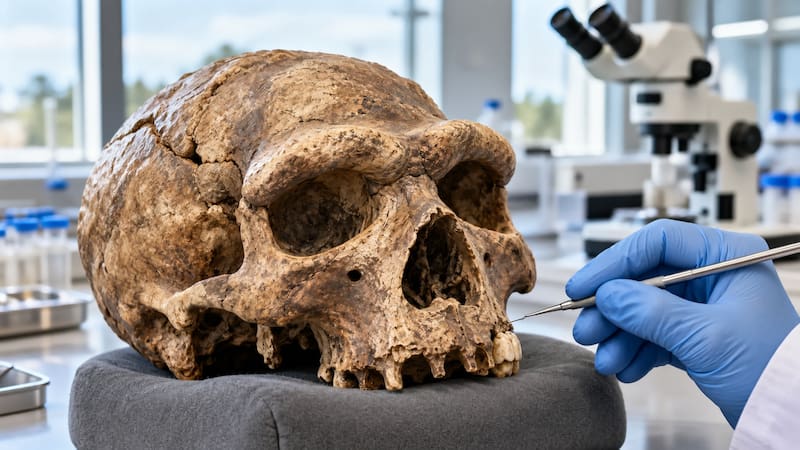
A nearly complete human skull discovered in Harbin, northeastern China, has provided an important clue about one of the most elusive groups in human evolution. Dating back at least 146,000 years, the fossil known as “Dragon Man” has been linked to the Denisovans through two investigations that examined ancient genetic material and proteins preserved in the remains.
The findings, published in the scientific journals Cell and Science in 2025, connect the skull to an extinct human lineage previously known mainly through genetic evidence and fragmentary fossils. Together, the studies also give researchers a much more complete anatomical reference for investigating what Denisovans looked like.

How ancient dental plaque helped identify Dragon Man
The Harbin skull was described in 2021 as belonging to a possible human species named Homo longi. Its large size, prominent brow ridges and robust jaw made it an important specimen for studying human diversity during the Middle Pleistocene.
Its evolutionary identity, however, remained disputed. The shape of the skull alone could not conclusively establish whether it belonged to Denisovans or another ancient human group from Asia.
To investigate the question, a team led by Qiaomei Fu of the Chinese Academy of Sciences searched for traces of ancient DNA in different parts of the fossil. Initial attempts to recover usable human genetic material from the bone and tooth samples examined were unsuccessful.
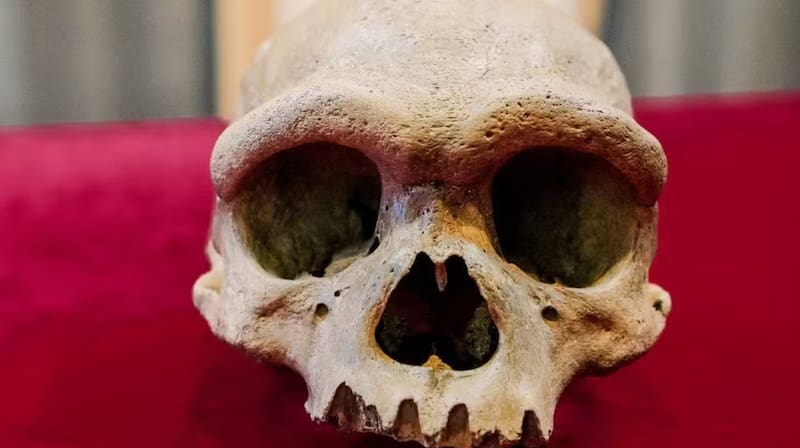
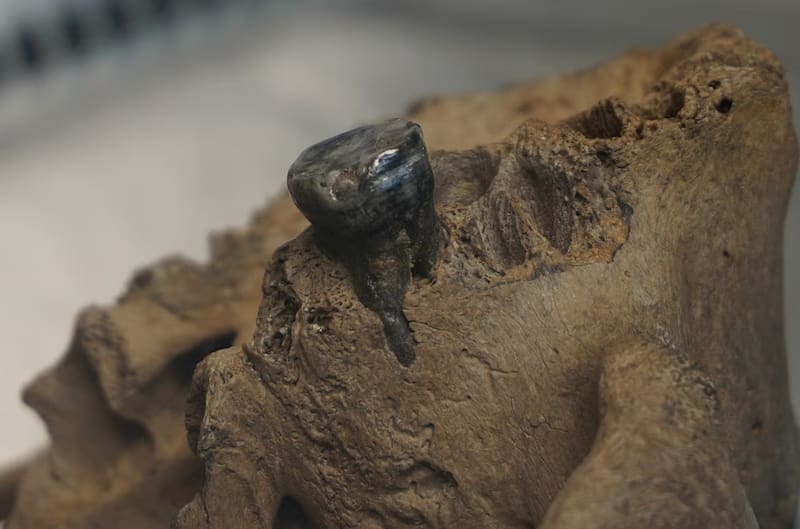
The researchers then turned to dental calculus, the hardened buildup of plaque that can preserve biological material for extremely long periods. A sample weighing just 0.3 milligrams, taken from the individual’s only surviving molar, yielded ancient mitochondrial DNA.
Mitochondrial DNA is found in the energy-producing structures inside cells and can provide information about maternal ancestry. When the researchers compared the recovered sequences with genetic material from other ancient humans, they found a match with the Denisovan lineage.
The analysis also linked Harbin to an early Denisovan branch previously identified in individuals from Siberia. The team did not recover a complete nuclear genome, but the mitochondrial evidence provided a molecular connection between the skull and the extinct human group.
Ancient proteins provided a second line of evidence
A separate investigation approached the question using a different type of biological material. Instead of analyzing dental plaque, researchers examined proteins preserved in the petrous bone, a dense region of the skull near the inner ear that can retain ancient biological evidence.
The team identified 95 endogenous proteins, meaning proteins that originated from the individual rather than from external sources. Their sequences allowed researchers to look for inherited variations that could help establish evolutionary relationships with Denisovans, Neanderthals, modern humans and other primates.
The analysis identified amino acid variants associated with Denisovans. One was supported with high confidence, while two others provided additional evidence with greater uncertainty. A broader comparison of protein sequences also grouped the Harbin individual with Denisovans.
The protein analysis, published in Science, provided an independent line of evidence supporting the Denisovan identification, complementing the mitochondrial DNA study published in Cell.
What the skull reveals about Denisovan appearance
For years, Denisovans were known mainly through fragmentary remains and DNA recovered from a small number of specimens, limiting scientists’ ability to reconstruct their physical appearance. The nearly complete, relatively undistorted Harbin cranium provides a more comprehensive anatomical reference, preserving prominent brow ridges, a large braincase and a robust jaw.
Scientists can now use the skull as a reference when evaluating other remains discovered across Asia. Similarities to Harbin may help identify specimens worth investigating as possible Denisovans, although anatomical resemblance alone cannot confirm their evolutionary identity.
The findings also strengthen evidence that Denisovans occupied a broad range of Asian environments. Other discoveries have linked the lineage to Siberia, the Tibetan Plateau and Taiwan. The Harbin fossil adds evidence of their presence in northeastern China during the Middle Pleistocene.

Why the scientific name remains an open question
Although the molecular findings support identifying Dragon Man as a Denisovan, the formal classification of these ancient humans remains debated. When the Harbin skull was described in 2021, researchers assigned it to Homo longi. How that name relates to Denisovans depends on how scientists classify the different fossils associated with the group.
If other specimens attributed to Homo longi are shown to belong to the same Denisovan lineage, researchers will need to assess how scientific naming rules apply and which name should be used. Identifying an individual’s lineage and determining the formal species name are therefore related but separate questions.