

En esta noticia
Walking, biking, or going to the gym are among the most recommended activities for staying fit and protecting cardiovascular health. But there is another type of exercise that can help lower blood pressure and does not require travel or constant movement.

It is isometric training, a type of workout that involves keeping the muscles contracted while holding a position for several seconds.
What exercise helps lower blood pressure and how to do it
The workout highlighted in the study published in the scientific journal British Journal of Sports Medicine is isometric training, a form of physical activity in which the muscles contract and generate tension without significant joint movement. Unlike walking or biking, which require continuous movement, this practice involves holding a position for several seconds. Some of the best-known examples include wall sits, planks, and handgrip exercises.
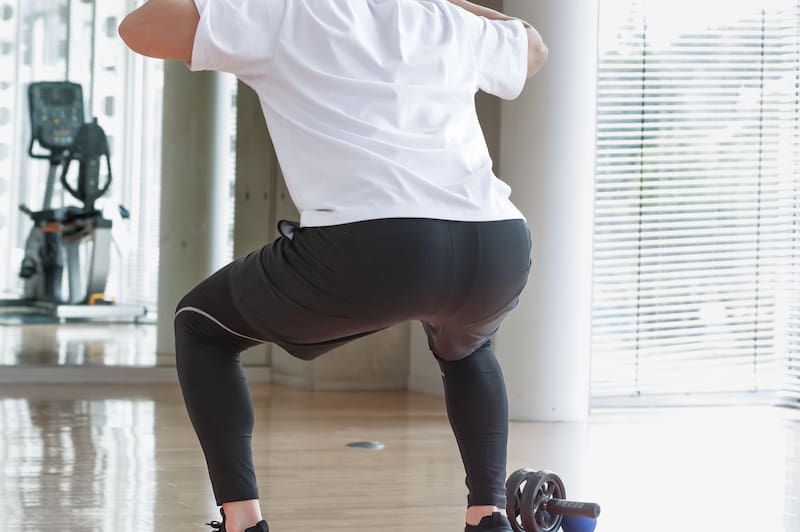
One of the simplest ways to do it is with an isometric wall sit. To do it, place your back against a firm surface, set your feet shoulder-width apart, and bend your knees until you are in a position similar to sitting in a chair. Then hold the position for a set period, without moving. The plank is another option and involves holding the body in a straight line, resting on the forearms and the balls of the feet, while contracting the abdominal muscles.
What the study found about isometric exercise and heart health
The effectiveness of this form of exercise was analyzed in a study published in October 2023 in the scientific journal British Journal of Sports Medicine. The paper, titled “Exercise training and resting blood pressure: a large-scale pairwise and network meta-analysis of randomized controlled trials”, brought together 270 randomized clinical trials involving a total of 15,827 participants and compared the effects of different types of physical activity on resting blood pressure. The modalities evaluated included aerobic exercise, dynamic strength training, combined routines, high-intensity intervals, and isometric exercise.
The results showed that isometric exercise achieved the greatest average reduction in blood pressure: 8.24 mmHg in systolic pressure and 4 mmHg in diastolic pressure. By comparison, aerobic exercise reduced it by 4.49 mmHg and 2.53 mmHg, respectively. This does not mean that walking, running, or biking are not beneficial, but rather that static exercises produced better results in this comparison.
According to the American Heart Association, controlling blood pressure is important for cardiovascular health, since keeping it elevated raises the risk of heart disease and cardiovascular events. For that reason, researchers consider isometric training a potentially useful option to include in physical activity strategies aimed at controlling hypertension, but under the supervision and guidance of a health professional.