

En esta noticia
After Democrats won control of both chambers of Congress in the midterm elections, the main Wall Street indexes were trading higher on Wednesday, Nov. 4, as investors digested the outcome.
In the Senate, where Republicans held a 53-47 majority, the opposition took at least seven seats, including those in Kansas, Iowa, Texas, Ohio, Maine and both Carolinas. Counting continues, but it was enough to give them the majority.
They also won the House of Representatives and the governorships of Georgia, Ohio, Iowa and Texas. In Texas, Gina Hinojosa became the first woman and first Latina to prevail in that historic Republican stronghold.


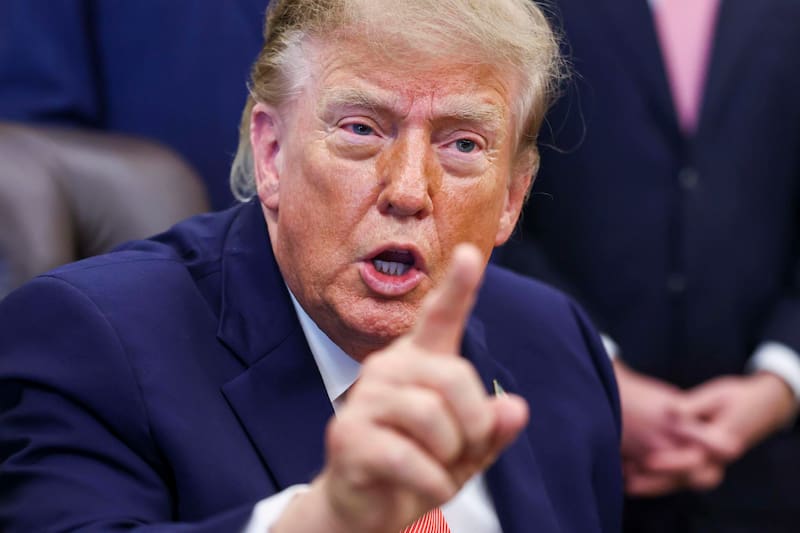
Starting Jan. 3, 2027, the opposition Congress will control committees and be able to investigate the administration. Trump, however, retains veto power. In an interview with Fox News, he acknowledged the defeat, though he said he does not see it as a personal blow.
The opening was cautious and then improved. Tech stocks had fallen sharply in Asia and Nasdaq futures slipped on fears of tighter regulation of artificial intelligence, but investors turned more positive as the result was digested. The bet is that a divided Washington will limit abrupt policy changes.
Among the tech giants, Amazon was up 7.1%, Alphabet 3.4% and Meta 1.6%. But companies tied to the buildout of AI infrastructure moved the other way: IREN, Hut 8, Applied Digital and Core Scientific fell between 1.2% and 13%. The sector will remain under the spotlight because Democrats made gains in key data center states such as Texas and Georgia, where public opposition is growing to the industry’s rapid expansion.
Chipmakers were steady, even after AMD forecast stronger-than-expected growth for 2027, driven by data center sales. Its shares were up 4.8% in a volatile session.
Tesla and SpaceX, Elon Musk’s companies, were among the worst performers, falling 3.9% and 1.9%, respectively. The mogul had spent about $500 million backing Republican candidates, including efforts to preserve the party’s control in Texas, the state where both companies are headquartered.

The dollar was weakening against most currencies and long-dated Treasury yields were falling. The benchmark 10-year yield dropped 2.1 basis points to 4.9291%, and the 2-year yield fell nearly 1.2 basis points to 4.6017%. Earlier, both had hit their lowest levels in nearly two months, but they trimmed some of those losses as global stocks moved back into positive territory.
Overnight, the 10-year yield briefly fell to around 4.89%, its lowest level since early September. On Tuesday, by contrast, it had climbed toward 4.95% after a stronger-than-expected JOLTS job openings report. The 30-year yield eased to around 5.29%.
The market view is that the Democrats’ decisive win complicates Trump’s agenda in Congress. That limits the room for new tax cuts and more government spending, and eases concerns about federal borrowing.

In addition, tighter regulation of AI could slow growth and reduce the need for further rate hikes. The odds of the Fed raising rates by 25 bps in December are around 77%, down from 84% a week ago.
What is happening in Europe and the crypto market
European stocks were in the green: the STOXX 600 was up 0.5% at 0816 GMT, the DAX and the CAC 40 also advanced, and Italy’s FTSE MIB rose 1.2%. STOXX futures had fallen as much as 1.4% at the open, but rebounded once the Democratic majority was confirmed and Trump accepted the result.
Banks were up more than 2% and clean energy names, the hardest hit by Trump’s policies, led the gains: Vestas rose 5%, Orsted 7% and Nordex 4.7%. Novo Nordisk gained 4.6% after raising its full-year outlook, and European tech stocks rose 0.4% on AMD’s solid forecast.
Cryptocurrencies saw a brief drop: bitcoin hit a six-week low and then recovered to trade nearly flat at $78,070, while ether was trading at $2,292 (+1%). A Democratic Congress could be a setback for the sector, which spent more than $300 million backing pro-deregulation candidates. Tim Sun of HashKey warned that political changes could slow structural legislation on crypto assets.
Bitcoin is down 41% from its October 2025 peak above $122,000, and last week’s cyberattack on Binance, which stole $6 billion, also weighed on sentiment.
Argentine bonds: relief after days of pressure
The improved mood also spread to emerging-market debt. Argentine sovereign dollar bonds were up as much as 0.6%, led by the Bonar 2037 and Global 2038, the longer-dated maturities, in line with Brazil and Chile.
The rebound follows days of selling: the bonds had fallen more than 1% and the country risk premium topped 830 basis points. The country risk premium, meanwhile, edged down slightly to 827, although it remains at its highest level since October 2025.

If prices keep recovering, pressure on the JP Morgan index could ease, but its performance will also depend on U.S. Treasury yields.
The broader question is how U.S. trade, fiscal and financial policies will change, and what effect they will have on rates, the dollar and flows into emerging markets.
A more hostile Congress could complicate Trump’s agenda on tariffs, spending and the deficit, but the impact on emerging-market assets is not automatic: it depends on Treasury yields, inflation expectations and the dollar. In Argentina’s case, domestic factors still matter: reserve accumulation, fiscal sustainability and access to external financing.