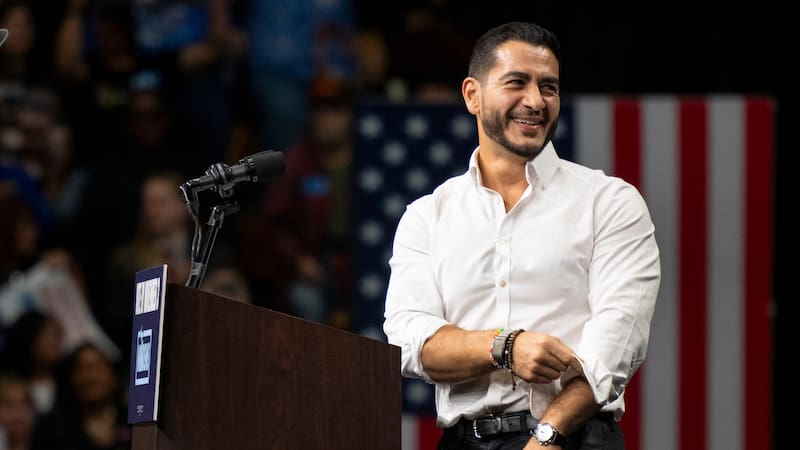

Abdul El-Sayed is the Democratic candidate for Senate in Michigan who made history: he will be the first Muslim senator in the United States. A trained physician and a leading progressive voice, entered one of the country’s most closely watched races, in a campaign that has also exposed divisions within his own party.
The midterm elections were held this Tuesday, Nov. 3, in the United States. The full House of Representatives and a third of the Senate were up for election in a vote that determined control of Congress for the final two years of Donald Trump’s presidency, with a historic Democratic victory.
From doctor to Senate candidate
El-Sayed was born in 1984 in Rochester Hills, Michigan, and is the son of Egyptian immigrants. He studied at the University of Michigan, was a Rhodes Scholar at Oxford, where he earned a doctorate in public health, and received his medical degree from Columbia University. Although he is trained as a doctor, he does not practice medicine.
His professional career has been tied to public health administration: he led Detroit’s Health Department from 2015 to 2017 and later held a similar position in Wayne County. In 2018, he ran in the Democratic primary for governor of Michigan and finished second behind Gretchen Whitmer, with about 30% of the vote.
In April 2025, he launched his Senate bid after Democrat Gary Peters announced he would not seek reelection. His platform calls for a universal health care system, paid leave, greater unionization and the abolition of the Immigration and Customs Enforcement (ICE). He also decided not to accept donations from political action committees.
A primary marked by divisions and accusations
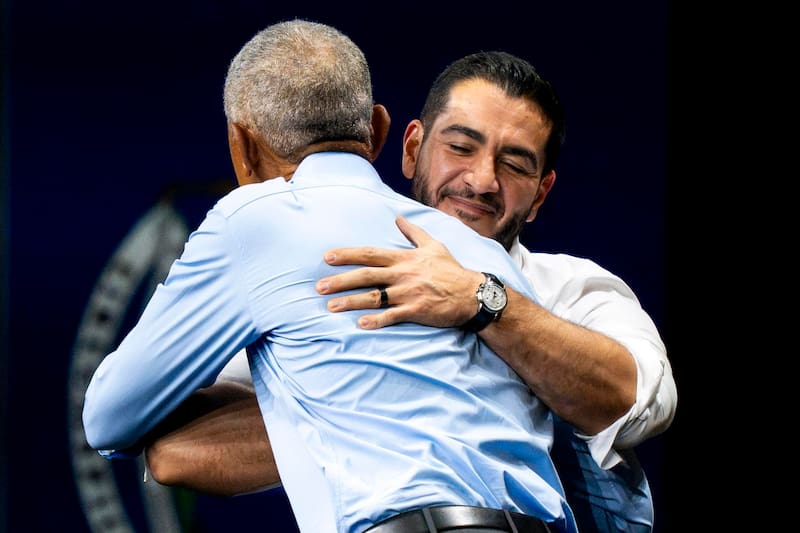
To secure the Democratic nomination, El-Sayed faced Rep. Haley Stevens, a strong supporter of Israel. In that primary, the United Democracy Project committee, linked to the pro-Israel AIPAC lobby, spent $30 million to back Stevens. El-Sayed won the August primary and became the party’s nominee.
His critical stance toward Israel and his response to the March attack on Temple Israel synagogue led to accusations of antisemitism from Republican and Democratic leaders. El-Sayed condemned the attack, but a later remark about people’s suffering was interpreted as an attempt to justify it. In August, he admitted: “I made a mistake.”
The primary left wounds that deepened in the final stretch. On Sunday, Nov. 1, Stevens announced her support for Republican Mike Rogers after Democratic leaders excluded her from a unity event. The decision drew sharp criticism within the party, while El-Sayed dismissed the episode and said he was not focused on his former rival.