
En esta noticia
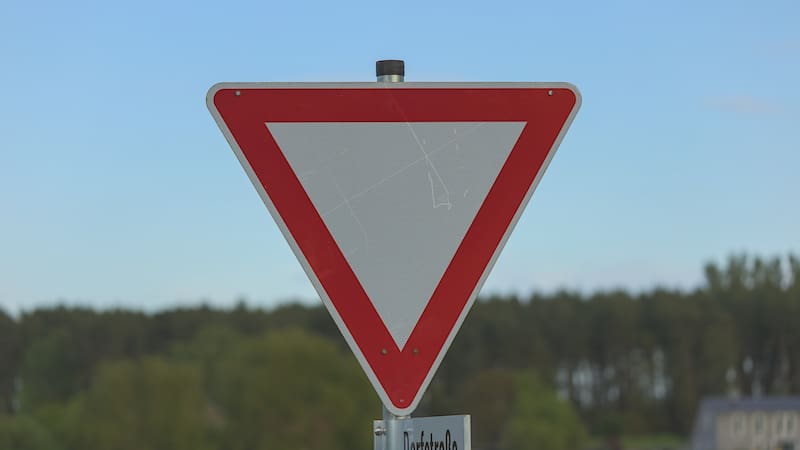
Among all the traffic signs in the United States, there is one that is easy to identify at a glance: a triangle with a red border and white background, resting on one of its vertices, that is, with the point facing down.

It is the only sign with that shape in the entire system, and its message is “Yield.” Although many confuse it with a STOP sign, it does not ask for exactly the same thing.
What the red-and-white triangular traffic sign with the point facing down means
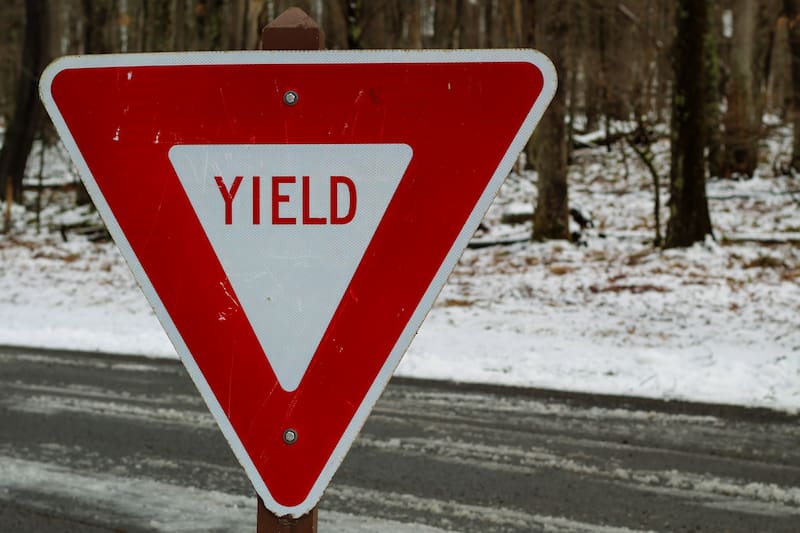
The sign belongs to the regulatory group, those that impose an obligation on the driver. According to the Manual on Uniform Traffic Control Devices (MUTCD), it is an inverted equilateral triangle, with a wide red border and the word “YIELD” in red on a white background.
Its function is to assign right of way: It indicates that the driver must yield to traffic, including vehicles and pedestrians, that are already moving or crossing.
In practice, that means that anyone approaching a “Yield” sign must reduce speed to a reasonable pace for the conditions at the moment, be prepared to stop and give priority to those who already have the right of way, and merge only when there is a safe gap to do so.
Why it is important to respect it
The reason is pure safety. The “Yield” sign sets the priority at points where two traffic flows cross or merge, which are places where side-impact and merging crashes are common.
Respecting it, that is, looking, slowing down, and yielding, prevents those crashes.
Ignoring it, on the other hand, or treating it as if the other driver were going to yield, is one of the typical causes of accidents in roundabouts and merges. Understanding that priority belongs to whoever is already on the road and not to whoever is merging is the basis for driving safely at those points.