
En esta noticia
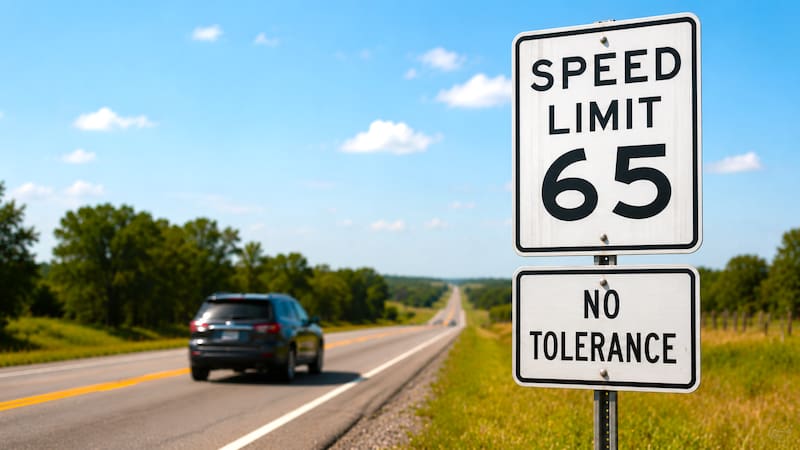
Drivers traveling through Oklahoma may notice something unusual beneath some speed limit signs: a smaller sign reading “No Tolerance.” While the message can sound intimidating, it doesn’t create a new traffic law or a lower speed limit.
Instead, the sign serves as a warning that authorities may strictly enforce the posted speed limit in those areas. For drivers unfamiliar with Oklahoma’s traffic rules, understanding what the message means can help avoid costly speeding tickets.
What Does ‘No Tolerance’ Mean on Oklahoma Speed Limit Signs?
The “No Tolerance” message reminds motorists that the posted speed limit must be followed exactly. Contrary to what some drivers may expect, the sign does not introduce a special speed restriction or an additional penalty.
Oklahoma follows an absolute speed limit system, meaning that driving above the posted speed limit can legally be considered a speeding violation. The signs reinforce that drivers should not assume there is an unofficial buffer or grace period before they can be pulled over.
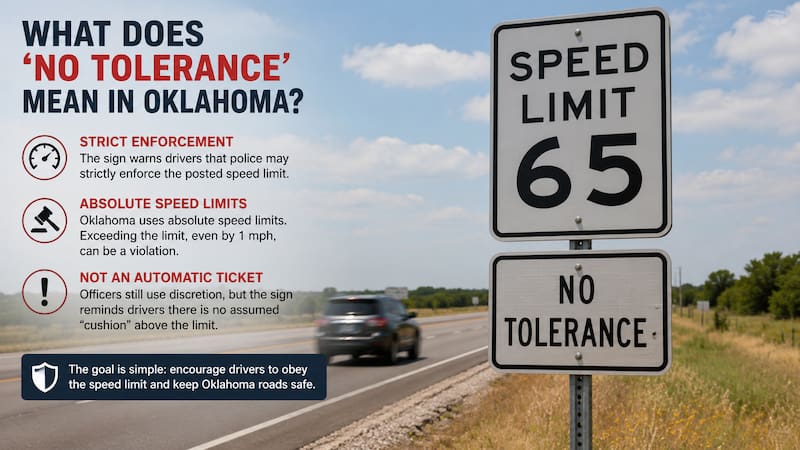
Although police officers still have discretion when enforcing traffic laws, the message is intended to encourage drivers to stay within the posted limit, particularly in areas where speeding has been a safety concern.
Can You Get a Ticket for Driving Just Over the Speed Limit?
Legally, exceeding the posted speed limit in Oklahoma may result in a speeding citation, even if the driver is only traveling slightly above the limit. However, whether a ticket is issued depends on the circumstances and the judgment of the law enforcement officer.
The “No Tolerance” sign does not automatically mean every driver exceeding the limit will receive a citation. Instead, it serves as a clear reminder that the speed shown on the sign is the maximum legal speed and that drivers should not rely on an assumed margin above it.
For anyone driving through Oklahoma, the safest approach is simple: obey the posted speed limit whenever a “No Tolerance” sign appears. Doing so can help motorists avoid fines while making the state’s roads safer for everyone.