
En esta noticia
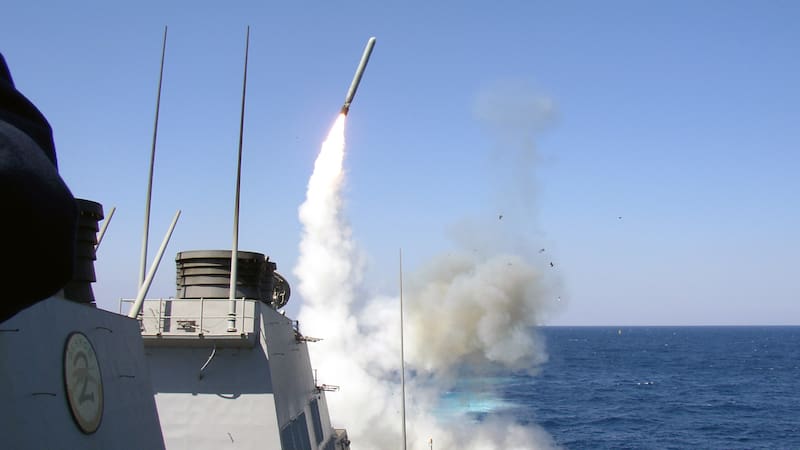
The U.S. Navy has awarded Raytheon, an RTX company, a $22.9 billion contract to dramatically increase production of Tomahawk cruise missiles, with the goal of eventually exceeding 1,000 missiles per year.
The seven-year agreement, announced on August 17, 2026, is part of a broader effort by the U.S. government to expand the country’s defense industrial capacity and replenish weapons inventories. The Navy said the contract will accelerate production of one of its most important long-range strike systems.

Tomahawk production will increase sharply
Under the agreement, Raytheon is expected to expand production to more than 1,000 Tomahawk missiles annually.
That represents a major increase from the production rate cited in recent reports. Reuters reported that the current rate is around 60 missiles per year, meaning the planned capacity would represent a dramatic expansion of the production line.
The contract follows an earlier framework agreement reached in February 2026, which established the foundation for the increase in production. The latest deal turns that framework into a formal multiyear procurement agreement.
Raytheon said the agreement supports a seven-year production ramp-up and a stable supply of Tomahawks for the U.S. military and its allies.
Why the Pentagon is increasing Tomahawk production
The decision comes as the United States seeks to rebuild stocks of precision-guided weapons after increased demand for U.S. munitions.
The Tomahawk has been heavily used by the U.S. military, including during operations connected to the conflict with Iran, putting additional pressure on existing inventories. Reuters reported that the Pentagon is seeking to replenish stocks while encouraging defense contractors to make long-term investments in manufacturing capacity.
The increase is also part of a broader U.S. effort to expand domestic production of critical munitions and reduce the time required to deliver weapons to the armed forces.
Navy officials said the new agreement will help expand the country’s munitions industrial base while speeding up the delivery of weapons needed for current and future operations.
What is the Tomahawk missile?
The Tomahawk is a long-range cruise missile designed to carry out precision strikes against targets at considerable distances.
The weapon is launched from surface ships and submarines and has been one of the Navy’s primary long-range strike capabilities for decades.
The new agreement covers production of both the Land Attack Tomahawk and the Maritime Strike Tomahawk variants, according to the source report.
The system’s ability to strike targets from far beyond the immediate battlefield makes it a major component of the U.S. military’s long-range precision strike arsenal.

Raytheon will have to expand its production capacity
Reaching an annual rate of more than 1,000 missiles will require Raytheon to expand its manufacturing capacity and supply chain.
The company said the multiyear agreement is intended to create a more predictable production environment, allowing suppliers to invest in the materials and infrastructure needed to sustain higher output.
The Navy has been pushing defense contractors to increase production of several critical weapons rather than relying exclusively on existing manufacturing rates.
Other agreements announced as part of the broader effort have also targeted systems such as Patriot and THAAD components.
The contract is part of a larger U.S. defense buildup
The $22.9 billion Tomahawk agreement is one element of a broader strategy to strengthen America’s ability to manufacture weapons at scale.
Pentagon officials have increasingly used multiyear contracts as an incentive for defense companies to expand factories, secure suppliers and invest in production lines.
The goal is not only to meet immediate operational demands but also to ensure the United States has sufficient inventories for a potential high-intensity conflict.
A recently released Navy budget document indicates that the Tomahawk program is moving toward an annual capacity of roughly 1,068 all-up rounds, highlighting the scale of the planned expansion.