
En esta noticia
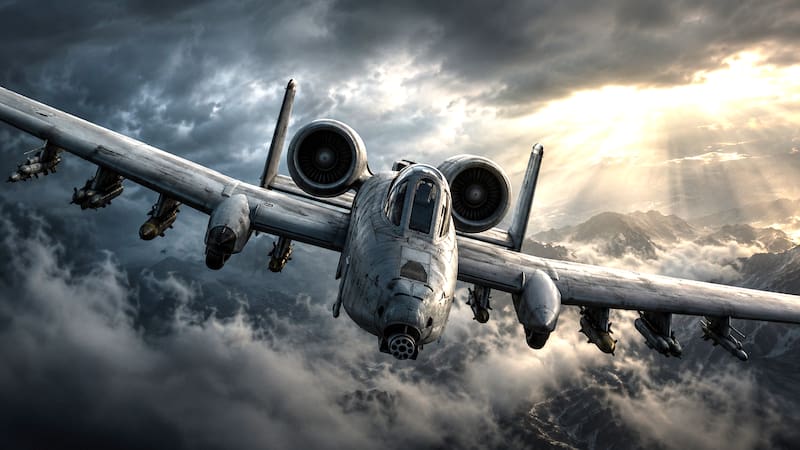
The United States Air Force confirmed that the F-35 and the F-15 will replace the A-10 Warthog in combat rescue missions. General Kenneth Wilsbach, Chief of Staff, reaffirmed this before the House Armed Services Committee: the retirement of the Warthog is irreversible and its successors will have to train specifically to take on that role.
The Air Force announced last month that the A-10 Thunderbolt II will operate in its last squadrons until 2029 and 2030. The extension aims to allow time for the transition to aircraft considered more capable in modern conflict scenarios, including a possible confrontation with China.
What is the “Sandy” role and why was the A-10 so hard to replace?
The A-10 Warthog was designed to operate at low altitude, in close combat, and in direct support of troops on the ground. Its “Sandy” mission consists of escorting rescue helicopters while suppressing enemy threats at close range —a combination of armor, firepower, and maneuverability that no other aircraft replicates in an identical way.
In the recent conflict with Iran, the Warthog took part in the rescue of the crew of a downed F-15E and was deployed to neutralize Iranian attack boats in the Strait of Hormuz. Those operations reignited the debate over whether the F-35 can fill that role with equal effectiveness.
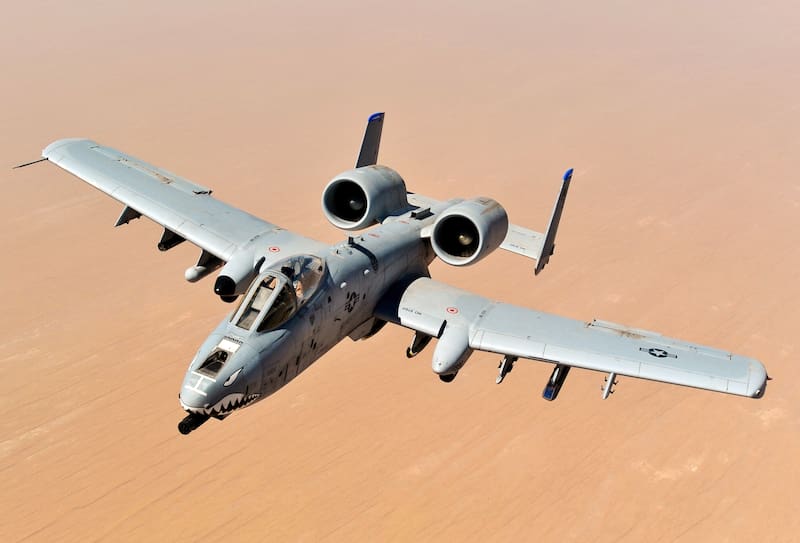
Can the F-35 replace the A-10 Warthog in combat rescue?
The Air Force has already requested funds to train F-35 pilots for combat rescue missions. Wilsbach was blunt: “It is our mission,” he told Congress, admitting that this training will have to be built from scratch.
Lawmakers, however, are not convinced that the handoff is equivalent. Representative Van Orden asked whether any current aircraft can “match” the Warthog; Wilsbach replied that “matching is a matter of perspective.”

Key concerns about the transition
- A-10 pilots have specific combat rescue training that does not yet exist for the F-35
- There is no certainty that the F-35 can operate with equal effectiveness at low altitude and low speed
- The gradual retirement through 2030 reduces —but does not eliminate— the risk of an operational gap