
En esta noticia
The United States Air Force took another step in its modernization strategy by starting the search for a very long-range weapon capable of destroying both aircraft and ground targets from distances of up to 1,000 nautical miles (1,850 kilometers).
The project is called Air Force Long Range Weapon (AFLRW) and responds to the need to operate in scenarios where air defenses and missile systems of rival powers are increasingly sophisticated.
The weapon that could revolutionize aerial combat: What will the Air Force Long Range Weapon be like?
The program envisions the development of a new family of weapons launched from aircraft with a minimum range of 1,850 kilometers. The Air Force intends to develop two variants:
- An air-to-air version, intended to intercept and destroy enemy aircraft.
- An air-to-surface version, designed to attack high strategic value ground targets.
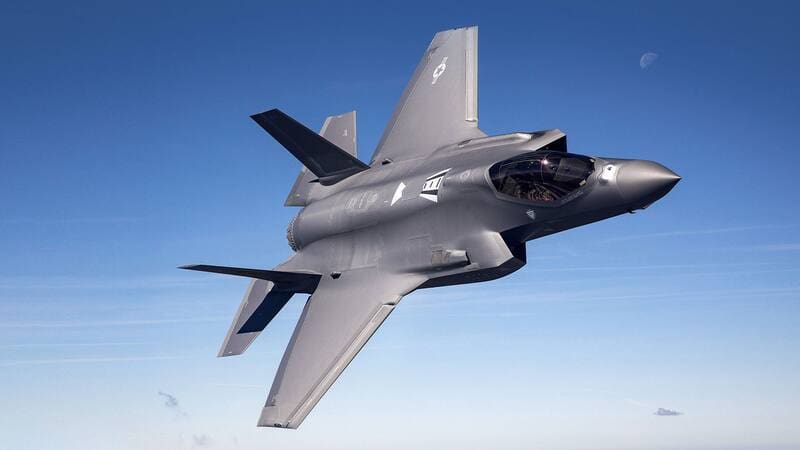
In addition, the new missile must have an open and modular architecture, which will allow sensors, electronic systems, software, and other components to be updated without redesigning the entire weapon. The intention is for different companies to develop parts of the system while a main contractor takes charge of integrating all the elements.
The United States seeks to develop a missile with a range of 1,850 kilometers to confront air and ground threats
Unlike traditional missiles, the AFLRW is not designed solely to fight enemy fighters. Among the targets it seeks to neutralize are:
- Early warning aircraft (AWACS).
- Aerial refueling tanker aircraft.
- Surveillance and intelligence aircraft.
- Command and control centers.
- Radar systems.
- Air defense systems.
- Other strategic ground targets.
The Pentagon believes that destroying this type of platform in the early stages of a conflict can significantly reduce the adversary’s response capability.

What technology will a missile with a range of 1,850 kilometers need?
One of the program’s main challenges is that a missile of this range cannot rely solely on the radar of the aircraft that launches it. For this reason, the Air Force plans to integrate it into a kill web, where multiple platforms will share information in real time.
The missile will be able to receive data from:
- Satellites.
- Early warning aircraft.
- Ground-based radar.
- Naval sensors.
- Other combat aircraft.
- Intelligence and surveillance systems.
Thanks to that network, the weapon will be able to update its trajectory during flight and track targets located far beyond the pilot’s horizon.