
En esta noticia
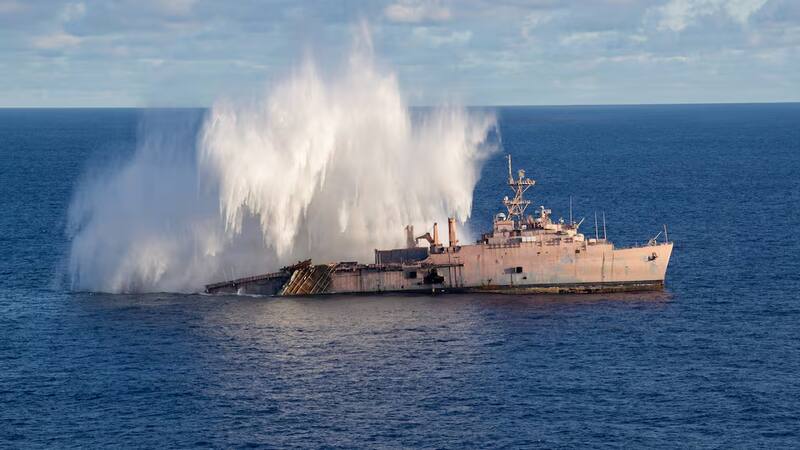
A decommissioned U.S. Navy ship has been deliberately sunk during the multinational Valiant Shield military exercise after being struck by a torpedo launched from a Japan Maritime Self-Defense Force submarine.
The operation took place in waters more than 200 nautical miles off the Mariana Islands, marking one of the most closely watched events of the large-scale drills involving the United States and its allies in the Indo-Pacific region.

Retired USS Juneau used as a live-fire training target
The vessel sunk during the exercise was the USS Juneau (LPD-10), an Austin-class amphibious transport dock ship that served in the U.S. Navy for decades before being retired.
According to the Navy, the sinking was carried out as part of a SINKEX (sinking exercise), a type of live-fire training designed to help allied forces improve coordination and evaluate the effectiveness of their weapons systems under realistic conditions that cannot be fully replicated through simulations.
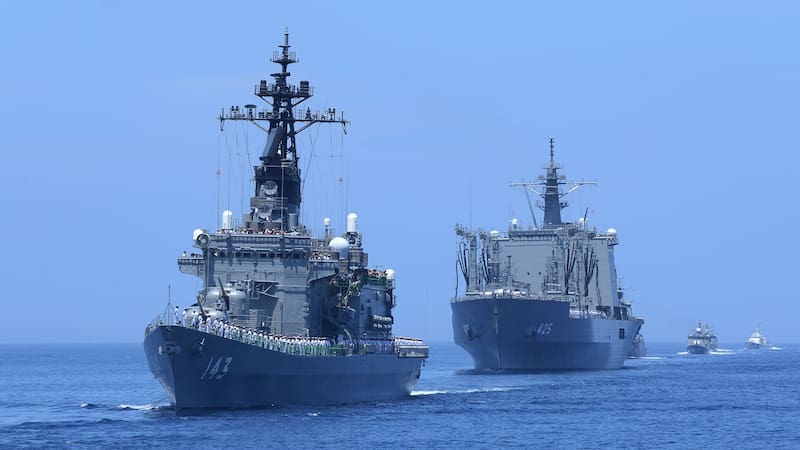
Rear Adm. Eric Anduze, commander of Carrier Strike Group 5 and Task Force 70, said the exercise allowed participating forces to strengthen joint operations across multiple domains.
“This SINKEX provided an outstanding opportunity for our joint team to integrate capabilities across domains, honing the lethal precision and coordination essential for high-end maritime operations in the Pacific theater,” Anduze said.
What is Valiant Shield?
Valiant Shield is a biennial military exercise that this year ran from June 22 through July 1.
The training brings together forces from the United States, Japan, Australia, Canada, and New Zealand to practice coordinated operations across sea, air, land, space and cyberspace.
According to the U.S. Navy, the drills are intended to improve the participating nations’ ability to detect, track and engage potential threats while strengthening interoperability among allied forces in the Pacific.
The history of the USS Juneau
The USS Juneau entered active service in 1969 and participated in several major military operations during its career, including the Vietnam War and Operation Desert Storm.
After nearly four decades in service, the ship was decommissioned in 2008 and later kept at the Naval Sea Systems Command Inactive Ships On-Site Maintenance Office in Pearl Harbor until it was selected for the live-fire exercise.
The Navy said retired ships used in SINKEX events provide valuable opportunities for service members to gain practical experience using weapons systems against full-size maritime targets.

Environmental safeguards before the sinking
Before any retired vessel is approved for a SINKEX, the U.S. Navy carries out an extensive environmental cleanup process.
Officials said this includes removing hazardous materials such as liquid polychlorinated biphenyls (PCBs) from transformers and large capacitors, eliminating trash and floating debris, extracting mercury- and fluorocarbon-containing components where required, and cleaning petroleum products from tanks, piping and onboard reservoirs.
The remediation process is also reviewed by a Navy environmental, safety and health manager and a quality assurance supervisor, who inspect the vessel before it is cleared for the exercise.