
En esta noticia
- The Second Amendment: the constitutional protection of the right to bear arms
- The National Firearms Act of 1934: the start of federal regulation
- The 1968 Gun Control Act that strengthened the federal system
- The Firearm Owners Protection Act of 1986 that changed the market forever
- The main gun debates in 2026
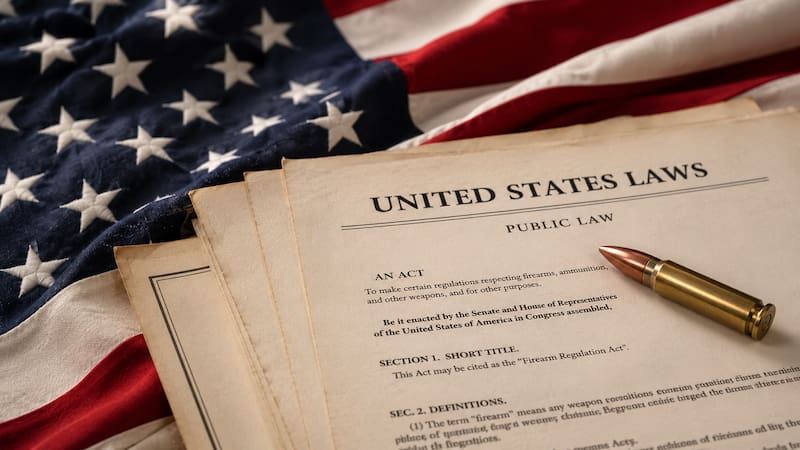
Automatic weapons occupy a central place in the debate over gun control in the United States. However, there is an important difference between fully automatic weapons, semiautomatic weapons, and the so-called assault rifles, concepts that are often confused even though federal legislation regulates them differently.
Although the Second Amendment of the Constitution protects the right of citizens to keep and bear arms, machine guns or automatic weapons have been subject for decades to a special regime that combines federal restrictions, administrative requirements, and state rules.

The Second Amendment: the constitutional protection of the right to bear arms
All firearms legislation in the United States is based on the Second Amendment to the Constitution, ratified in 1791, which states:
“A well regulated Militia, being necessary to the security of a free State, the right of the people to keep and bear Arms, shall not be infringed.”
For much of U.S. history, there were different interpretations of the scope of that right. However, in recent decades the Supreme Court consolidated an interpretation according to which the Second Amendment protects the individual right to own guns for lawful purposes, especially self-defense.
Among the most important rulings are:
- District of Columbia v. Heller (2008): recognized the individual right to own guns for defense in the home.
- McDonald v. City of Chicago (2010): extended that protection to state and local laws.
- New York State Rifle & Pistol Association v. Bruen (2022): established that restrictions on guns must be consistent with American historical tradition.
Nevertheless, the Supreme Court itself clarified that the Second Amendment does not absolutely protect every type of weapon, so certain categories may be subject to special regulations.
The National Firearms Act of 1934: the start of federal regulation
The first major federal law on automatic weapons was the National Firearms Act (NFA), approved in 1934 during the presidency of Franklin D. Roosevelt.
The law arose in response to the growth of organized crime during Prohibition, when criminal gangs used machine guns such as the Thompson to carry out robberies and armed confrontations.
Instead of banning them, Congress created a special system based on:
- Mandatory registration of certain weapons
- Prior authorization from the federal government to manufacture or transfer them
- Payment of a federal tax for manufacture or transfer
- Criminal penalties for those who possess unregistered weapons
In addition to automatic weapons, the NFA regulates:
- Suppressors
- Short-barreled rifles
- Short-barreled shotguns
- Destructive devices
- Certain weapons legally classified within the category “Any Other Weapon” (AOW)
The 1968 Gun Control Act that strengthened the federal system
After the assassinations of President John F. Kennedy, civil rights leader Martin Luther King Jr., and Senator Robert Kennedy, Congress passed the Gun Control Act of 1968 (GCA).
The law strengthened federal control over the manufacture, importation, and sale of firearms.
Its main changes include:
- The creation of the modern system of Federal Firearms Licenses (FFL)
- Greater restrictions for certain people, such as those convicted of felonies
- Stricter controls on gun imports
- The coordination of much of the regime established by the National Firearms Act
Today, the GCA remains one of the main laws regulating the gun market in the United States.
The Firearm Owners Protection Act of 1986 that changed the market forever
The most important change for automatic weapons came with the approval of the Firearm Owners Protection Act (FOPA) in 1986.
During the legislative debate, the so-called Hughes Amendment was added, which prohibited civilians from registering or acquiring new automatic weapons manufactured after May 19, 1986.
Since then, there have been two major categories:
- Weapons registered before May 19, 1986: they may be legally transferred between private parties as long as all federal requirements are met and state law allows it.
- Weapons manufactured after that date: with specific exceptions, they may only be intended for the Armed Forces, government agencies, law enforcement, or authorized manufacturers and importers.
As a result, the number of automatic weapons available to the civilian market has been frozen for nearly four decades, which has considerably increased their value among collectors.

Who can legally own an automatic weapon?
Federal legislation does not completely prohibit civilian ownership of automatic weapons, but it establishes one of the strictest control systems in the country.
The main requirements include:
- That the weapon be legally registered and transferable
- Submitting the corresponding paperwork to the Bureau of Alcohol, Tobacco, Firearms and Explosives (ATF)
- Passing a background check conducted by the FBI
- Providing fingerprints and photographs
- Paying the transfer tax provided for by the National Firearms Act
- Obtaining federal approval before receiving the weapon
- Also complying with the law of the state where the buyer resides
In practice, the combination of these requirements and the limited number of transferable weapons makes their acquisition uncommon.
The main gun debates in 2026
Although the federal laws regulating automatic weapons have remained practically unchanged since 1986, during 2026 the debate over the scope of the Second Amendment intensified again.
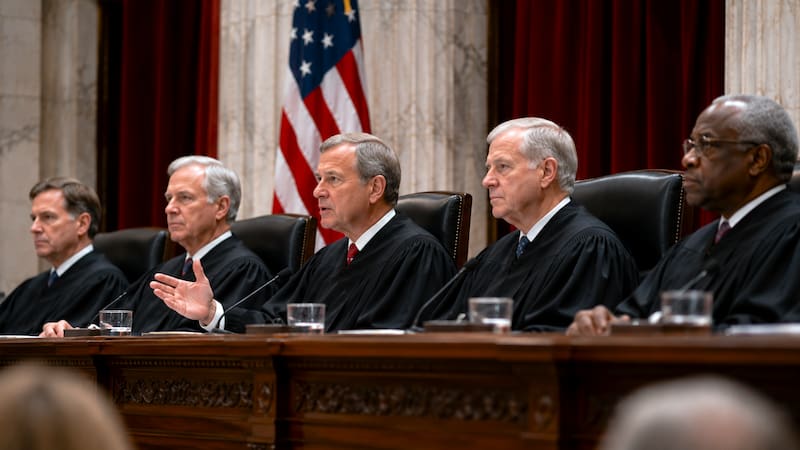
On June 30, 2026, the U.S. Supreme Court agreed to review bans on military-style semiautomatic rifles, such as the AR-15, in force in Connecticut and in Cook County (Illinois). Although the cases do not directly concern automatic weapons, the ruling issued by the court could redefine the constitutional standard used to assess future restrictions on different categories of firearms.
That same day, the Supreme Court also declined to review several cases related to restrictions on buyers of guns between 18 and 20 years old, leaving in place various lower-court decisions and showing that there are still different standards among the federal circuits on how the Second Amendment should be applied.
Weeks earlier, the highest court resolved another relevant case related to the Gun Control Act of 1968, by limiting the application of the federal ban that prevented people who regularly use marijuana from possessing guns. The Court concluded that the government had not shown that that restriction was consistent with the historical tradition required by the precedent Bruen.

It is expected that debates over this right will remain on the table, increasingly from different angles, to reconsider protections and restrictions that enforce this guarantee in the best possible way.