
En esta noticia
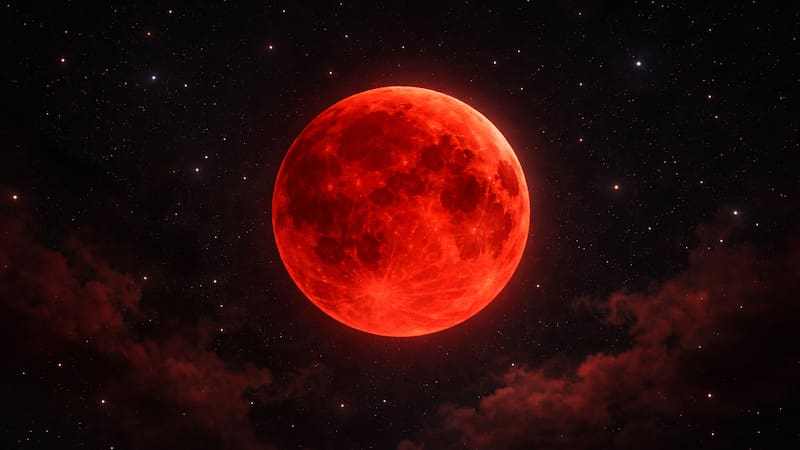
A total lunar eclipse will tint the Moon an intense blood red color on the night of June 25 to 26, 2029, according to astronomical calculations confirmed by the National Aeronautics and Space Administration (NASA). The phenomenon will be visible to the naked eye from the Americas, Europe, Africa, western Asia and other regions of the planet.
NASA records place this eclipse as the greatest umbral magnitude of the 21st century, with a level of darkening that only reaches peaks of that depth in cycles of several hundred years. No telescope or special filters will be needed to witness it.

Why is this total lunar eclipse so rare in 600 years?
The rarity of the event lies in the depth with which the Moon will pass through the Earth’s shadow. The greater the magnitude, the more intense and prolonged the reddish tone appears, and that level of depth reappears in cycles that astronomers calculate in several centuries.
According to NASA, the umbral magnitude will reach 1.84, the highest of the 21st century, while the totality phase will last 1 hour and 42 minutes, one of the longest ever recorded for a total lunar eclipse.
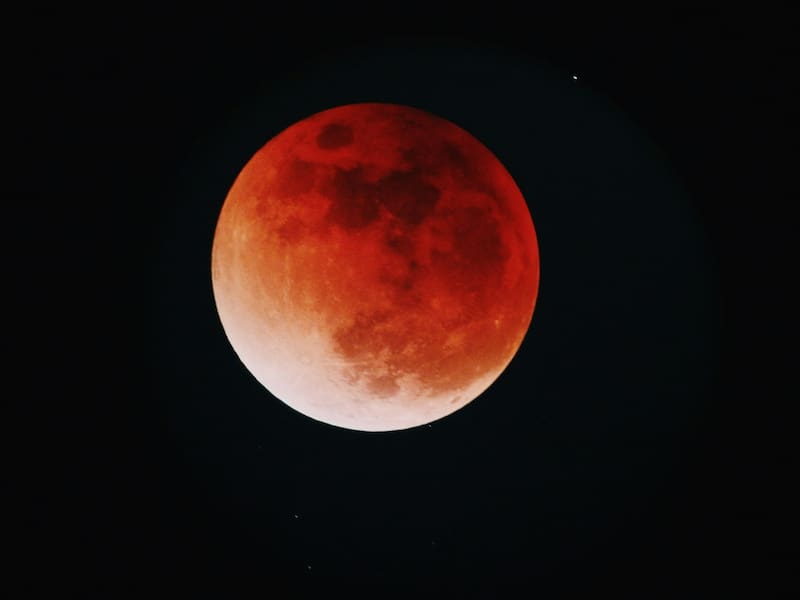
Eclipse times in the United States (June 25-26)
- Start of totality: 10:31 p.m. (Eastern) / 9:31 p.m. (Central) / 8:31 p.m. (Mountain) / 7:31 p.m. (Pacific)
- Peak: 11:22 p.m. (Eastern) / 10:22 p.m. (Central) / 9:22 p.m. (Mountain) / 8:22 p.m. (Pacific)
- End of totality: 12:13 a.m. on 6/26 (Eastern) / 11:13 p.m. (Central) / 10:13 p.m. (Mountain) / 9:13 p.m. (Pacific)

How to see the total lunar eclipse and what does the blood red Moon mean for the reader?
Unlike a solar eclipse, this phenomenon poses no risk to your eyesight. It can be observed directly, without special protection, from any place with a good view of the sky and no clouds.
Those who want to witness it do not need to travel: it will be enough to look toward the night sky at the totality time corresponding to their area. According to estimates based on population data, more than 3.5 billion people will be able to see at least part of the eclipse.