
En esta noticia
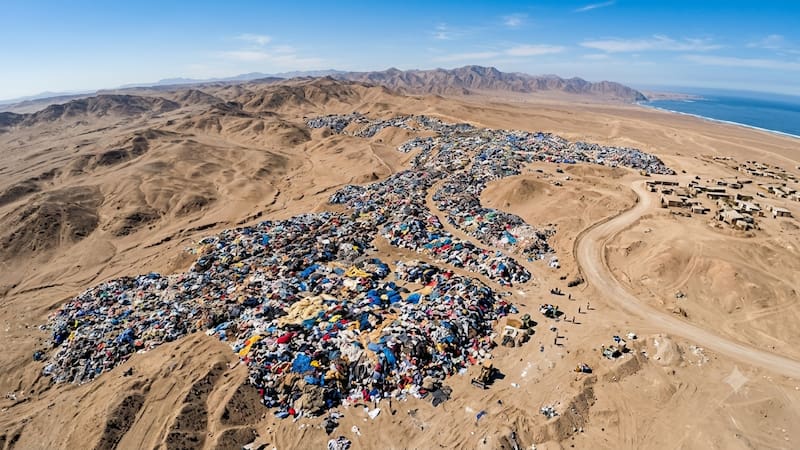
A huge buildup of discarded clothing is growing in one of the driest places on the planet. It is the Atacama Desert in Chile, where thousands of tons of garments end up abandoned after entering the country to be resold.
Chile receives around 60,000 tons of used clothing a year, which enter mainly through the free trade zone of Iquique.
Some get a second commercial life, but others remain unsold and end up in landfills located near Alto Hospicio.

The mountain of clothing growing in the Atacama Desert
Images of the area show a landscape that is hard to associate with the desert: huge piles of garments, shoes, and textiles appear on the arid ground.
The problem is linked to the operation of the international used-clothing market.
Garments from the United States, Europe, and Asia arrive in Chile with the expectation that they will be sorted and resold. However, those that do not find a buyer can end up discarded.
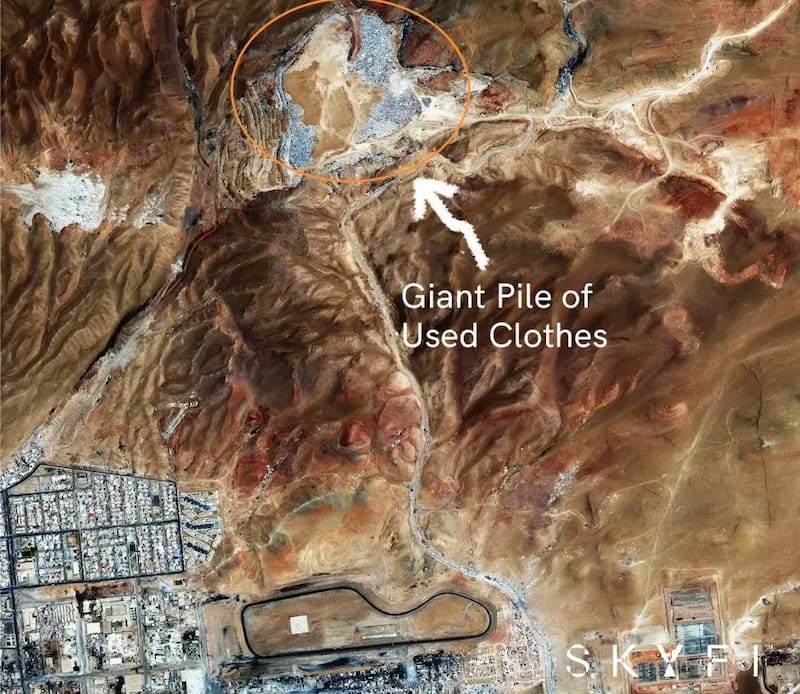
Some of these landfills are located in the vicinity of Alto Hospicio, in the Tarapaca Region. The buildup is so large that the textile dumps have been identified through satellite images, becoming one of the most striking images of the pollution generated by textile waste.
Why does so much clothing end up in Chile?
The origin of the problem is linked to Chile’s position as one of the main entry points for used clothing and textile surpluses in Latin America.
The port of Iquique and its free trade zone play a central role in this circuit. The garments enter the country and are sorted to determine which ones can be sold again.
The problem appears when certain products do not have enough commercial value. Instead of finding a new buyer, they can end up abandoned, buried, or even burned in desert areas.
The situation worsened over the years due to the growth in the production and consumption of low-cost garments, especially those associated with the phenomenon known as fast fashion.
The clothing that reaches the desert often was not even worn
One of the most striking aspects of the phenomenon is that not all the garments that end up in these landfills are old clothes.
Some of the waste consists of production surpluses or garments that failed to sell. Some even arrive with tags, which shows that the problem is not limited solely to clothing discarded by consumers.
The environmental impact of the mountain of clothing
The problem is not only visual. Many textiles contain synthetic fibers that can remain in the environment for long periods.
When garments are abandoned in the desert, a buildup of waste is created that is difficult to manage. In addition, burning textiles can release pollutants and worsen the environmental impact of these landfills.
The situation also affects the landscape of a region known precisely for its extreme natural conditions.
The Atacama Desert is one of the driest regions on the planet and, paradoxically, became the setting for one of the largest accumulations of textile waste in Latin America.