
En esta noticia
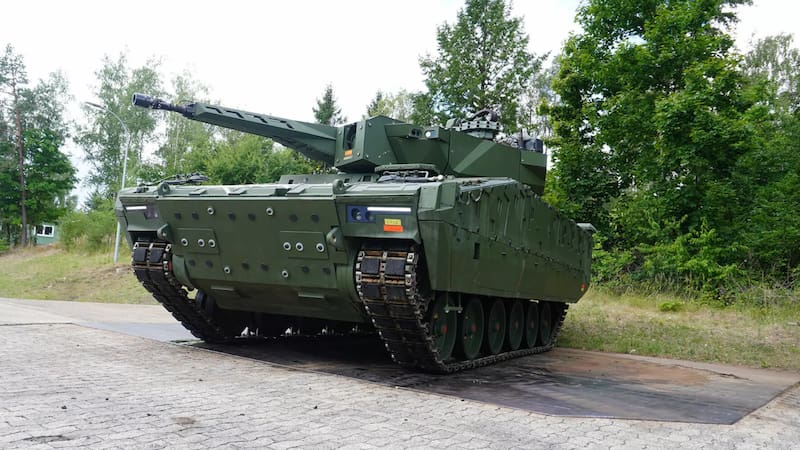
The U.S. Army, which is part of the Armed Forces, received on September 1, 2026, the first Lynx XM30 prototype, an infantry combat vehicle developed by American Rheinmetall to replace the M2 Bradley. The program calls for 8 prototypes in total and seeks to incorporate new capabilities for protection, mobility, and firepower for ground operations.

The armored vehicle is designed to combine a 50-millimeter cannon, a remotely operated turret, missile launch systems, and electric-hydraulic propulsion. However, these features are part of the planned design and must be evaluated during military testing.
The development contract, valued at approximately $764 million, includes the construction of the prototypes and validation of the system. The initiative is part of a competition in which General Dynamics Land Systems is also participating, so the Army will still have to evaluate the proposals before deciding which model will move on to production.
What anti-tank weapons, hybrid technology and combat systems will the XM30 incorporate
Weaponry is one of the XM30’s central components, since American Rheinmetall’s proposal includes an unmanned turret with a 50-millimeter cannon and a multi-mission launcher designed to integrate different weapons systems.
Among the planned capabilities are Javelin and TOW anti-tank missiles, intended to attack armored vehicles, and compatibility with Coyote Block 3 unmanned systems. In this regard, another of its new features is electric-hydraulic propulsion, which combines a combustion engine with electrical components to improve power generation and mobility, in addition to allowing certain operations with less noise when the thermal engine remains off, according to the manufacturer.

The XM30 also incorporates a modular and open architecture, designed to facilitate future upgrades to its electronic and combat systems without having to redesign the entire platform.
The United States ordered 7 more prototypes: what tests the armored vehicle will have to pass
The U.S. Armed Forces received the first prototype delivered by American Rheinmetall on September 1, 2026, and also ordered 7 more vehicles, which will be delivered throughout this year. Likewise, the development contract is worth approximately US$764 million and includes the design and construction of the prototypes and system validation.
The XM30 armored vehicles will have to go through different evaluation stages:
- Technical tests: to examine the operation and performance of the armored vehicle.
- Safety checks: before moving on to field maneuvers.
- Military training: the additional prototypes will also serve to train soldiers.
- Combat simulations: they will allow the performance of the vehicles in larger-scale exercises to be evaluated.
The XM30 is not the only model competing to replace the Bradley, since the U.S. Army awarded a development contract to General Dynamics Land Systems, so the delivery of the first Lynx XM30 does not guarantee that American Rheinmetall will be chosen for final production.
The goal is to develop a vehicle capable of responding to modern threats, such as drones, precision weapons, and electronic warfare. Before incorporating it into its fleet, the Army will have to evaluate whether the XM30 meets the protection, mobility, and firepower requirements established for the program.